Secured vs. Unsecured Personal Loans: Check the Collateral Risk
Identify pledged property, access restrictions and release conditions before deciding whether a secured personal loan’s savings justify the collateral risk.

U.S. personal loan education • Sources checked October 19, 2026
A secured personal loan pledges specified property as collateral. An unsecured loan does not begin with that agreed collateral pledge. With a secured loan, default can put the pledged property at risk. “Secured” describes protection for the lender, not a promise of safety for you. The CFPB’s secured and unsecured loan guide explains this basic distinction.
Neither label answers whether a particular offer is affordable or worthwhile. Your next step is to identify exactly what the agreement puts at stake, how that affects daily life, and whether any verified cost saving is worth accepting that exposure.
Compare the promises behind the labels
For a secured offer, begin with “What property am I pledging?” For an unsecured offer, begin with “What obligations am I accepting without a collateral pledge?” For both, ask for the actual agreement and repayment schedule.
Separate the decision into four questions:
- Access: Can I use, withdraw, transfer or sell the proposed collateral while this loan exists?
- Disruption: What would change in my daily life if that property became unavailable?
- Cost: What do the comparable offers actually require in scheduled payments and separate upfront cash?
- Exit: What documents and steps establish that the loan is paid and any security interest or hold has ended?
Do not choose from a claim that secured borrowing is always cheaper or easier to obtain. Evaluate the offers you receive. Also keep collateral and co-signing separate: pledging property and adding another responsible person are different choices that need different questions.
Find out exactly what is pledged
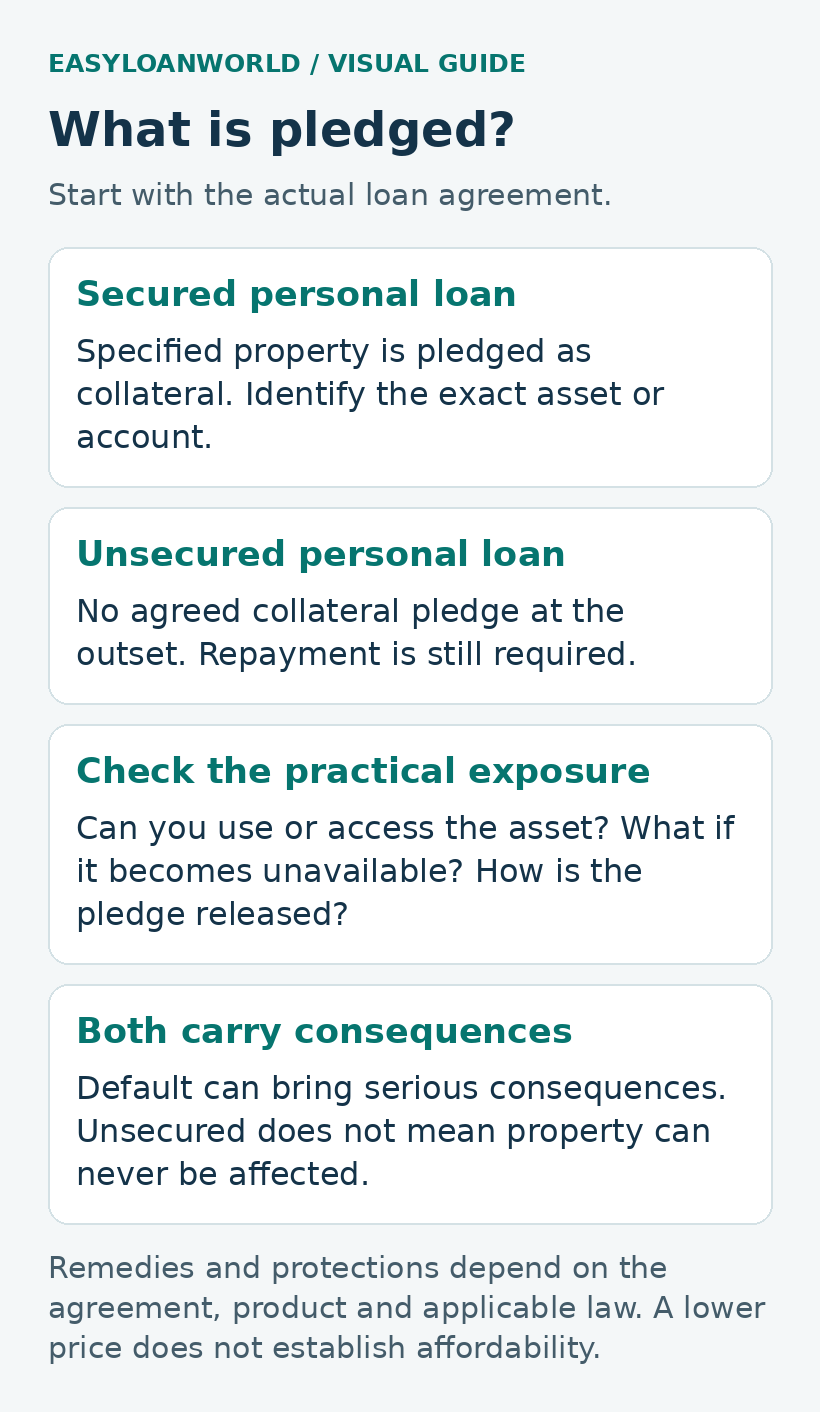
Identify the pledged property in your agreement. CFPB Regulation Z §1026.18(m) addresses security-interest disclosures, including cross-collateralization. This does not mean every loan secures other debts.
Write the asset or account name in your own notes. Then compare it with the document, not just a sales summary. Ask whether existing liens matter, whether the same collateral supports any other obligation, and whether there are provisions about replacement property. Treat each as a question to resolve, not a feature to assume.
For vehicle collateral, identify how dependent you are on that particular vehicle. For savings collateral, ask whether some or all of the account becomes unavailable, whether access changes as you repay, and what happens at payoff. Until you have those answers, do not count pledged, inaccessible savings as ready-to-use emergency money.
Keep different products separate. A savings-secured installment loan, vehicle-secured borrowing and a home-equity loan should not be evaluated as if their documents and consequences were interchangeable. If the offer’s product name differs from what you expected, clarify the product before comparing it.
Default may create more than one problem
For a vehicle-specific example, repossession and sale may leave a remaining debt, called a deficiency. State rules and the circumstances matter; surrendering or losing the vehicle does not necessarily clear the balance. The FTC’s vehicle repossession guidance explains these risks. Do not apply every vehicle procedure to savings or other collateral.
An unsecured debt can also lead to serious collection consequences. A creditor that obtains a judgment may gain additional enforcement options, subject to legal protections. “Unsecured” does not mean property and income can never be affected. See the CFPB explanation of debt-collection judgments.
Notice, opportunities to cure a default, repossession procedures, exemptions and remaining-balance rules depend on the agreement, product and jurisdiction. Take a specific dispute to a state consumer protection office or qualified local legal adviser. A general comparison article cannot determine the outcome of an individual contract.
Missed installment payments can also affect credit and lead to collection. If trouble develops, contact the lender promptly to ask what options exist; assistance is not guaranteed. See CFPB personal installment loan guidance.
An original decision exercise: is $450 worth this pledge?
Imagine two invented offers with the same usable proceeds, repayment term and payment dates. After checking all fees and scheduled payments, the secured offer would cost $450 less over the scheduled term. It requires the borrower’s only commuting vehicle as collateral. The unsecured offer does not require that pledge. This is a teaching scenario, not a lender quote or recommendation.
Before choosing, write a practical disruption plan. Could you get to work without the vehicle? Which regular responsibilities depend on it? Is alternative transportation actually available at the hours needed? What would it cost for a week or a month, and where did those estimates come from?
Compare the $450 saving with that exposure. Do not invent a default probability or describe possible vehicle loss as an “expected $450 expense.” The purpose is to make the collateral decision visible alongside the price. A saving can be real while the practical consequences remain unacceptable to you.
Finally, check the premise: can you sustain either payment schedule? If not, choosing the cheaper secured offer does not solve that problem. Consider reducing the borrowing need or changing the expense plan before deciding which property to pledge.
Your collateral worksheet
Make one card per offer and answer every line from documents or a written lender response. Mark gaps “unanswered.” Keep this card with the quote so later changes are easier to spot.
- Creditor, quote date and exact product: ___
- Usable cash, payment, term, disclosed APR, scheduled total and separate upfront cash: ___
- Secured or unsecured according to the agreement: ___
- Exact pledged asset or account, owner and everyday use: ___
- Existing liens, other secured debts or replacement-collateral provisions: present, absent or unanswered? ___
- Written restrictions on using, selling or accessing it: ___
- Default clauses, notice or cure provisions, fees and unresolved local-law questions: ___
- Could a balance remain after collateral is sold or applied? What calculation governs? ___
- Release procedure, expected timing and required documents after payoff: ___
- Practical backup if access to the property is lost: ___
- Unresolved question, lender answer and date received: ___
Useful lender question: “Please identify exactly what secures this loan, whether it secures any other debts, and how and when the security interest or account hold is released.”
Before you sign: four quick questions
Does unsecured mean no consequences?
No. Separate the absence of an agreed collateral pledge from the obligation to repay and possible collection remedies.
Can collateral be worth more than the loan?
Do not assume the loan amount caps the value of property described in the pledge. Identify the actual asset and ask about any surplus or remaining balance if it is sold.
Is every secured personal loan a title loan?
No. Ask for the exact product and collateral arrangement instead of applying a title-loan label to every secured offer.
Is release immediate after payoff?
Confirm the written release procedure and timing. Keep proof of payoff and any release documentation rather than assuming every administrative step happens immediately.
General U.S. educational information, not individualized financial or legal advice. Your agreement and applicable law matter.
Featured photo: Photo by revac film’s&photography on Pexels. Used under the Pexels license. Illustrative stock photograph of vehicle keys; not an actual collateral pledge or repossession.

Keep Savings or Pay Extra on a Personal Loan? Compare Cash and Debt
A fictional three-payment comparison shows how extra principal changes cash, debt, and interest, then tests which expenses the remaining cash can cover.
Payday Alternative Loans: Your Options
Screen three cash needs, then compare actual offers.

Stop Loan Autopay: Separate the Debit From the Debt
Review a fictional $210 payment, trace a $420 cash outflow, and compare the supporting records before treating an unexplained difference as resolved.