Canceled Debt: A Before-Cancellation Snapshot (2025 Example)
Historical 2025 canceled-debt record preparation. Fictional balances only.

This historical teaching guide uses the IRS publication for 2025 returns. It is not guidance for preparing a 2026 return. Have a qualified tax professional check the cancellation year’s rules. See the publication’s edition page.
The task here is practical: build a readable event folder before asking someone to evaluate your situation. Every balance below belongs to an invented person, Maya. Nothing in the example determines your tax treatment, tells you to withdraw retirement funds, or recommends changing what you own.
Start with the right kind of question
Maya’s monthly take-home pay is $2,900, and her monthly outgoings are $3,150. Subtracting the two produces a $250 monthly cash shortage. That describes money moving through a month. The lists below describe amounts at one moment. Keep the monthly budget on a separate page so its numbers cannot accidentally migrate into the event records.
For insolvency, compare liabilities with all assets’ fair-market value immediately before cancellation. Include protected assets, such as retirement interests; collateral is not automatically omitted. Nonrecourse debts have special rules. See Publication 4681.
Two snapshots of one fictional event
Assume a single cancellation on November 14, 2025, ordinary personal recourse debts, no bankruptcy, no collateral disposition, and no simultaneous payment or other transaction. The debt classifications and values are independently checked within this invented setup. All other values stay fixed solely to make the change visible.
Snapshot A: Immediately before cancellation
- Bank funds: $1,400
- Vehicle fair-market value: $7,200
- Household possessions’ fair-market value: $1,600
- Retirement-account interest: $9,800
- Total assets: $20,000
- Credit-card balance being canceled: $6,000
- Other credit-card debt: $7,400
- Recourse vehicle loan: $8,600
- Medical bills already owed: $2,000
- Total liabilities: $24,000
Comparison: $24,000 liabilities − $20,000 asset value = $4,000.
Snapshot B: Immediately after cancellation
Remove the $6,000 obligation and change nothing else. Liabilities become $18,000, while assets remain $20,000. The new comparison is $18,000 − $20,000 = −$2,000. The difference between the two results is exactly $6,000. These are two records of the same imaginary event, with different timestamps.
Insolvency uses the before snapshot; after figures cannot replace it. If that exclusion applies after required checks, the ceiling is min($6,000 canceled, $4,000 shortfall) = $4,000.
The remaining $2,000 needs separate tax analysis; it is not a tax bill. Do not multiply it by a guessed rate or treat the conditional ceiling as an eligibility decision.
Check the missing-item mistake
Cross out the $9,800 retirement interest on a spare copy. The listed assets would fall to $10,200. Subtracting that amount from $24,000 produces $13,800. Restore the missing item and the comparison returns to $4,000. Keep this deliberately incorrect copy clearly marked “practice error,” away from the records you intend to use.
The missing item falsely inflates the insolvency comparison.
Separate the calculation from the tax decision
Canceled debt is generally taxable unless qualifying rules apply. Consider exceptions before exclusions. A form error does not decide the correct tax treatment: raise discrepancies with the creditor. Continued collection can indicate that cancellation has not occurred. See IRS Topic 431.
Bankruptcy takes priority over insolvency; qualified principal-residence debt involves an election interaction. Insolvency precedes applicable qualified farm and real-property-business exclusions.
Form 982 instructions explain qualifying exclusions and associated tax-attribute reductions. Losses, credits, carryovers, or property basis may be affected under ordered rules and exceptions. Even personal debt can have basis-reduction consequences. Certain basis calculations use immediately-after information, so retain that snapshot separately. Fair-market value is not tax basis. Elections can have deadlines and revocation restrictions. This example cannot establish a numerical basis adjustment.
Build a private, reviewable event folder
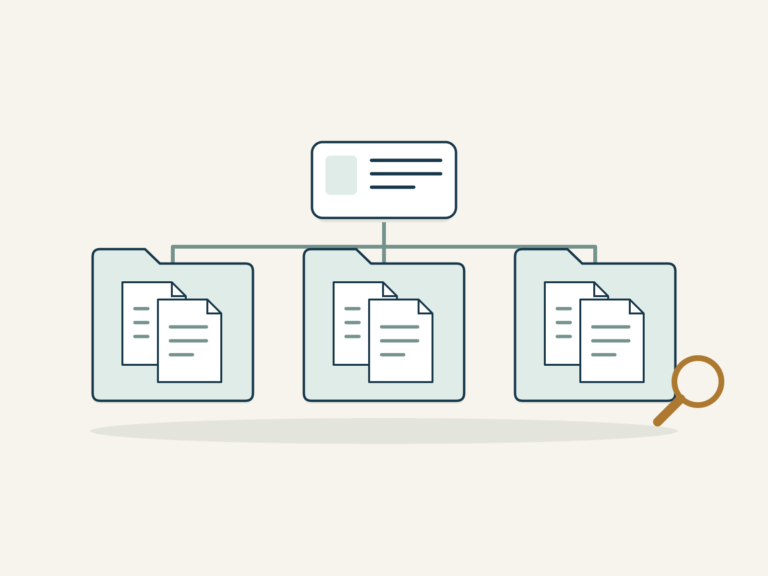
Use five short sections rather than one crowded spreadsheet. Give each document a plain filename, keep the original unchanged, and put your questions beside the relevant record. A reviewer should be able to distinguish a copied figure from an estimate without guessing.
- Event: Record the claimed date, the document supporting it, and a masked creditor reference. Flag conflicting dates instead of silently choosing one.
- Values: Give each item its own row with an estimated event-date value, evidence, evidence date, and an uncertainty note. Label assumptions visibly.
- Obligations: Pair each recorded balance with its source. Put unresolved classification questions in a separate column rather than burying them in a total.
- Timeline: Label the two snapshots prominently. If a payment or another change sits between them, add it to the timeline instead of forcing your records to resemble Maya’s simplified example.
- Questions: Ask about exceptions, exclusion ordering, ownership, nonrecourse issues, required Form 982 treatment, future attribute or basis effects, and any separate state-tax issue.
Keep financial records private. Do not post account numbers, tax documents, or completed personal worksheets in comments. If you share a folder with your adviser, use the secure channel they provide. This article’s exercise needs no submission of your own balances.
Taxpayer Advocate Service guidance recommends reviewing forms and considering cancellations for which no form arrived. Professional help can be useful for complicated cases. Low Income Taxpayer Clinics generally do not prepare returns except in a tax controversy.
For a different decision, see our guide to debt-settlement costs and risks. Here, the finished deliverable is simply a clearly labeled folder, with evidence and unresolved questions ready for review.

Credit-Builder Loan vs. Secured Card: A Cash-Access Checklist
Work through three fictional situations and four private questions before deciding whether a new account fits your needs.

Hotel Card Hold: Compare Two Checkout Payment Paths
Compare two fictional hotel checkout choices while keeping the original card’s capacity and the actual payment in separate records.
Overdraft Fee? Look Beyond the Online Bill Label
Compare three fictional document packets behind the same $60 ONLINE BILL entry, then identify what the records still leave unexplained.