Divorce Retirement Order: Court Approval Is Not Plan Qualification
Keep the court-issued order, plan determination and payment questions distinct when reviewing retirement-benefit records.
Estimated reading time: 5 minutes
A court-signed retirement order and a plan’s qualification determination are different records. For an ERISA-covered retirement plan, don’t treat “the judge signed it” as confirmation that the plan has completed its review or that a particular payment is ready.
Identify who decides what
The Department of Labor explains that a domestic relations order may address support or marital-property rights. The plan administrator is initially responsible for determining whether it meets the requirements of a qualified domestic relations order, or QDRO.
A QDRO need not always be a separate document: qualifying provisions can appear in a divorce decree or court-approved settlement. Conversely, an agreement signed only by the parties doesn’t, by itself, become a domestic relations order. The document’s title isn’t a complete legal test.
Identify the administrator through the plan’s Summary Plan Description, rather than assuming every employer contact performs that role. DOL QDRO overview.
Confirm the plan and the actual review status
This guide concerns ERISA-covered retirement plans, generally private-employer plans. Governmental and church plans are typically outside that coverage. Ask the employer or administrator which rules govern the actual plan; this isn’t a guide to dividing an IRA or public pension.
DOL recommends gathering the plan document, Summary Plan Description, QDRO procedures and participant-specific benefit statements early. A model order, if available, doesn’t guarantee qualification. Some plans offer draft pre-review, but they aren’t required to do so.
After court issuance, the signed order still needs the plan’s review. Even an earlier favorable draft response doesn’t establish that the issued version qualifies. Obtain the written qualification determination and retain the exact order it addresses. Ask qualified counsel promptly about a rejection or missing step rather than assuming a general acknowledgment resolves it. DOL practical guide.
The award must fit the benefit
The IRS explains that a QDRO must contain specified information, including the participant and alternate payee’s identities and the amount or percentage of benefits assigned. It can’t award a benefit amount or form unavailable under the plan.
Tax treatment also depends on the recipient. The IRS distinguishes benefits received by a spouse or former spouse from payments to a child or other dependent; the latter are taxed to the participant. A spouse or former spouse may be able to roll over an eligible distribution, but that possibility doesn’t make every payment tax-free.
These are reasons to involve qualified legal and tax advisers, not instructions for drafting an order or selecting a distribution. Keep the legal award, available plan benefits and tax questions separate. IRS QDRO explanation.
Qualification doesn’t supply every payment detail
The IRS notes that access to a former spouse’s share can be immediate or deferred, depending on the plan and benefits. Don’t insert an expected award into a household’s available-cash column without checking when and how the plan can actually pay it.
Ask the administrator what distribution information or further administrative steps remain. Record the answer without choosing a payment form through this checklist. A future entitlement, a proposed payment date and money already received should have different labels.
Beneficiary records can also require separate attention after divorce. Discuss their relationship to the order with counsel and the administrator; don’t assume a general account update overrides rights assigned by the order. IRS retirement-and-divorce guidance.
Don’t substitute an IRA withdrawal
IRAs follow a different divorce-transfer framework. The IRS distinguishes a qualifying transfer incident to divorce from withdrawing traditional IRA funds to pay a former spouse. The latter can create taxable income and possibly an additional early-distribution tax. Don’t improvise a withdrawal as a substitute for the required process. IRS divorce-tax guidance.
A practical version-control exercise
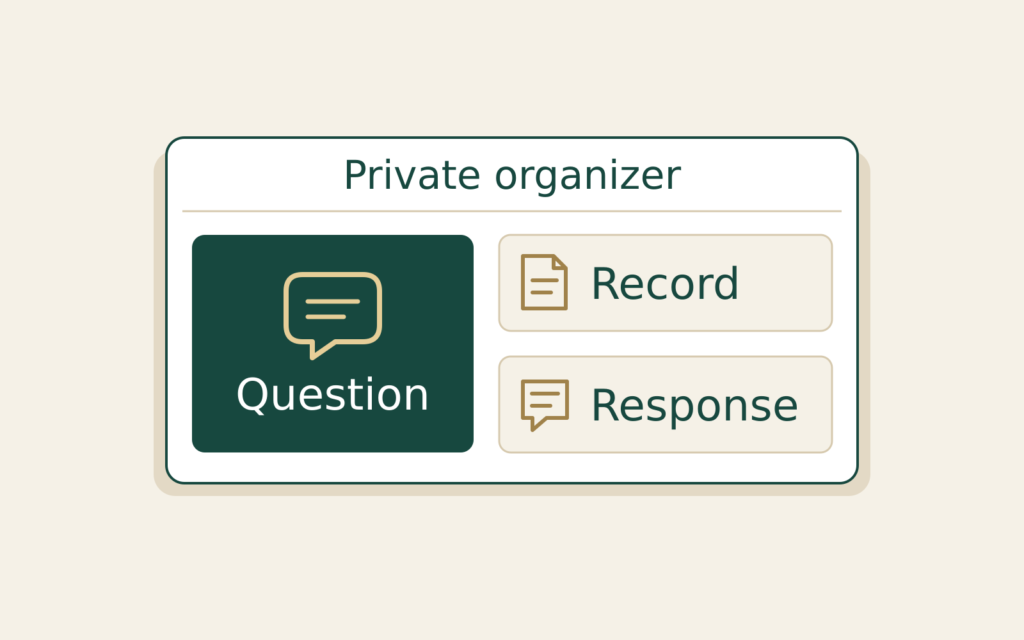
Imagine a private file containing Draft A, an email discussing Draft A, and a later signed document labeled Version B. Those labels are fictional. The immediate organizing question is whether the email actually refers to Version B—not whether the filenames sound similar.
| Record | Private index entry |
|---|---|
| Draft A | Date and original file location |
| Exact version named and unresolved question | |
| Version B | Date and changes needing explanation |
Retain both versions and ask the responsible reviewer to identify which one its answer covers. Don’t alter the signed document to match an earlier comment. If an attachment is missing, list it as missing instead of describing a requested copy as already enclosed.
Keep a brief contact log with the date, person or office, exact question and promised response. An acknowledgment that a message arrived proves less than an answer to its substance. Preserve both, with their different meanings.
Keep court records, account identifiers and family information private. This guide doesn’t determine anyone’s share, validate an order, authorize a transfer or replace advice about state law and plan-specific rights.


Roth Conversion and Account Clocks
Separate five-year tests.

ABLE Distributions Across Month-End
Separate retained purposes.