Texas Home Deductible: Same Percentage, Different Dollars
Check the percentage base before comparing renewal records.
Estimated reading time: 5 minutes
Convert the percentage using the correct base
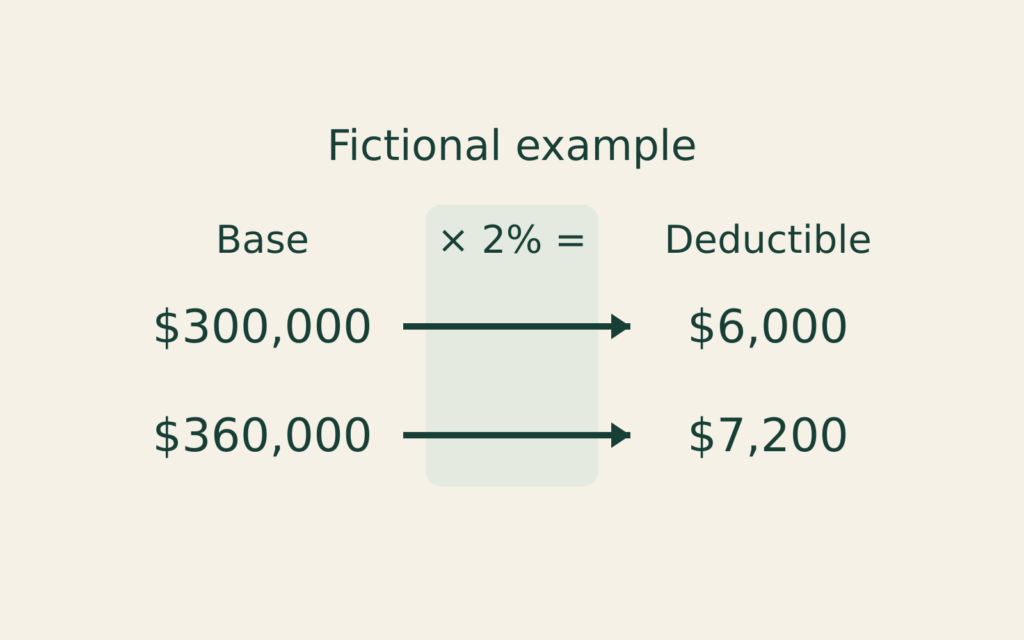
Texas OPIC explains that a percentage home deductible uses the insured amount, not the claim amount. These fictional renewal records stipulate that the listed dwelling limit is the deductible base.
| Component | Earlier | Renewal |
|---|---|---|
| Base | $300,000 | $360,000 |
| Rate | 2% | 2% |
| Deductible | $6,000 | $7,200 |
The percentage stays unchanged, but its dollar result rises. Neither record supplies a repair estimate, claim payment or premium. These aren’t actual policy offers or recommendations.
A deductible isn’t a repair invoice
TDI’s deductible guide distinguishes fixed-dollar and percentage deductibles and illustrates a loss below the deductible receiving no insurance payment. The deductible figure doesn’t mean that every small repair costs that entire amount.
Keep the applicable deductible separate from the covered damage calculation. This article doesn’t calculate an insurer’s settlement or the homeowner’s complete recovery budget. Other policy terms and the actual loss still matter.
Read both declarations pages, then the policy
OPIC’s declarations-page guide identifies the policy period, property, coverage limits, deductibles, premium and endorsements. The page is a summary, not the complete contract. OPIC advises reviewing the full policy and asking questions.
Compare the expiring record with the renewal offer for the same property. Check the effective dates before assuming that a new figure governs an earlier event. Locate any listed endorsement and read the corresponding wording instead of treating its title as a complete explanation.
A practical question for the agent is: which policy provision supplies the applicable base and deductible for this cause of loss? Ask for the supporting page or endorsement, not just a repeated percentage. Keep the response with the version of the policy it explains.
Separate rebuilding cost from sale price
TDI distinguishes rebuilding costs from an appraisal that includes land and local market prices. Ask how the insured amount was developed. Reducing coverage can leave a shortfall after damage; a smaller limit isn’t proof of better protection. This example doesn’t value a home or establish adequate insurance.
Confirm that wind coverage is actually present
TDI’s windstorm guide explains that Texas coastal homeowners may need separate wind and hail coverage because their homeowners policy might exclude it. Elsewhere in Texas, wind and hail are commonly included, but the deductible may differ from other damage.
Don’t read a homeowners-policy summary as proof that every storm loss belongs under that policy. Identify the insurer and policy providing the relevant protection, then check its terms. If separate policies are involved, keep their coverage periods and claim questions distinct.
TDI also notes that a mortgage lender may require coastal windstorm coverage. Verify the lender’s written requirement separately from the insurer’s terms.
This guide doesn’t determine the cause of actual damage, eligibility for TWIA or which insurer must pay. Ask the agent to explain any exclusion or separate-policy requirement before relying on a quoted deductible.
A current renewal example has a narrow provider scope
The Texas FAIR Plan Association’s April 27, 2026 notice says its homeowners wind-and-hail deductible options changed on or after July 1, 2026. Its former 1% option changes to 2% at renewal. The notice also permits separate wind-and-hail and other-peril deductibles and says deductibles can’t be changed on policies currently in force.
This is a TFPA notice, not a statement that every Texas insurer has the same minimum or renewal rule. It also doesn’t describe TWIA’s product. Read the insurer’s actual renewal communication rather than importing a percentage from another company’s announcement.
For an affected policy, match the offer’s effective date and deductible entries to the notice. If they appear inconsistent, ask the agent to reconcile them. The example doesn’t establish that a particular household qualifies for TFPA or should choose it.
Keep the whole comparison visible
TDI’s shopping checklist treats coverage, deductibles, discounts and payment pricing as separate questions. It also distinguishes all-risk from named-peril coverage and asks whether claims use replacement cost or actual cash value. Those differences can matter even when two quotes display the same deductible.
For each quote, ask which coverage basis applies to the dwelling and which applies to belongings. Ask about separate protection for detached structures and additional living expenses. The checklist raises these as different coverage questions; an attractive headline price doesn’t answer them. Record any unanswered coverage question before comparing costs. Request actual quotes using consistent property information. Compare the coverage and full payment arrangement rather than selecting the lowest displayed price. A monthly figure and an annual figure need a common basis before the totals can be meaningfully compared.
TDI cautions against canceling existing coverage before receiving the new policy or written proof of coverage. Reviewing a renewal or requesting a quote isn’t itself replacement coverage. This is Texas document-reading education, not a recommendation to purchase, cancel or change insurance.


Roth Conversion and Account Clocks
Separate five-year tests.

ABLE Distributions Across Month-End
Separate retained purposes.