Essential Tips to Keep Your Bank Account Safe
No single security measure can eliminate all risks. Data breaches can occur at banks, payment processors, retailers, and other organizations, as criminals constantly adapt their methods. While you cannot control the entire financial system, you can control how you access your accounts and report suspicious activity. With a few simple steps, you can effectively prevent fraudsters from compromising your financial security.
Start by Setting a Strong Password
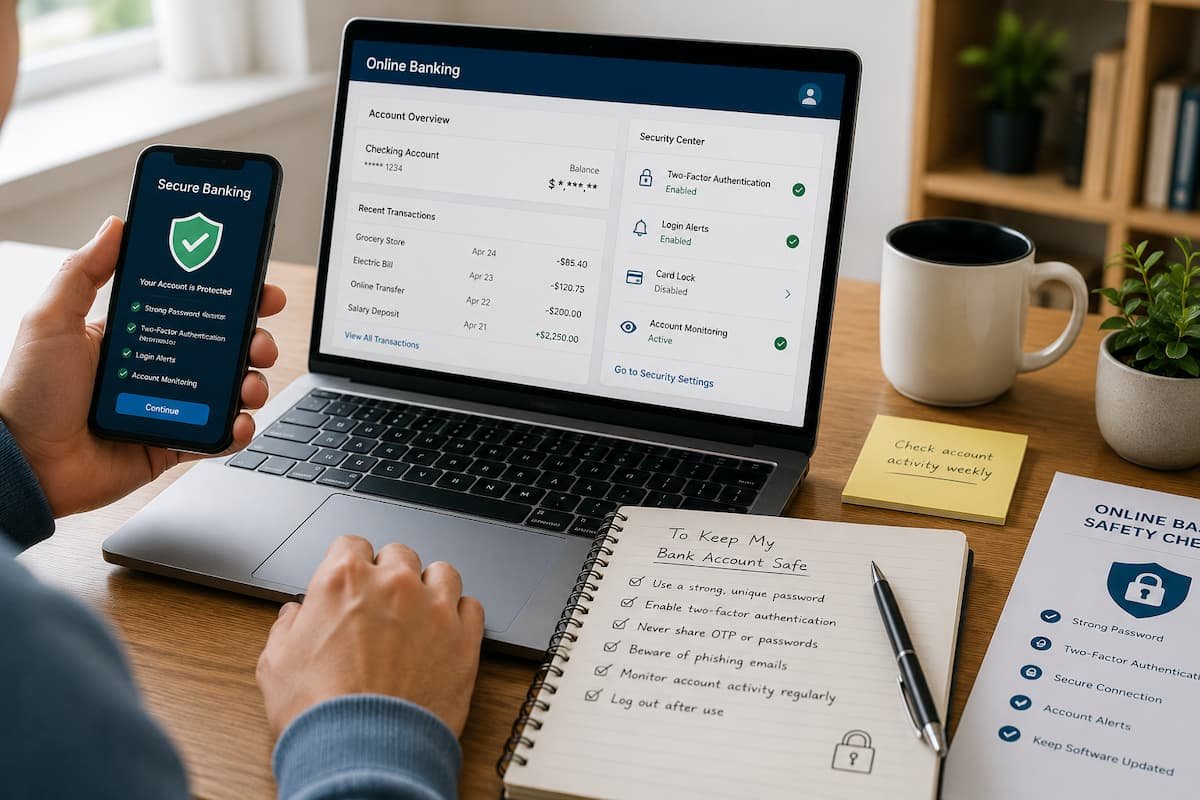
Your online banking password is a crucial barrier protecting your money. If you use the same password across multiple websites, your funds are at risk; a security breach on one site could lead to your bank account being compromised. Every important bank account requires a unique password. Ideally, the password should be long, difficult to guess, and unrelated to your public information. Avoid using dates of birth, names, phone numbers, addresses, or common combinations. A reliable password manager can help you create and store unique passwords without needing to memorize them. This is particularly useful if you have multiple bank accounts, credit cards, investment accounts, or other financial services. If your bank supports it, consider using passkeys or other modern authentication technologies. You can check your bank’s website or app for other security options.
Enable Multi-factor Authentication (MFA)
Passwords alone are not always sufficient to secure your online bank accounts. Multi-factor authentication (MFA)—or two-factor authentication—adds an extra verification step when you log in or perform sensitive actions. Depending on the bank, additional verification methods may include authentication apps, security keys, SMS, or other accepted methods. Some methods offer better protection than others. If your bank offers multiple options, choose the one that is both secure and user-friendly. Even if someone steals your password, they may still be unable to access your account, so multi-factor authentication is crucial. While it does not guarantee absolute security, it makes unauthorized access more difficult. Please check your verification codes carefully. Never share one-time security codes via phone, SMS, or email. Scammers may pose as bank employees and ask for the code under the guise of “protecting” your account. In reality, they may be trying to use the code to gain access to your account.
Understanding How Bank Fraud Creates
Many financial scams use tactics designed to pressure people into acting quickly. For example, you might be told your account is blocked, there are suspicious outstanding payments, or your identity needs to be verified within minutes. This pressure is created intentionally. When people are anxious or in a rush, they are more likely to click on unverified links, reveal passwords, or share security codes. Please stop immediately and verify any unexpected information regarding your bank account. Never click on links in messages. Instead, try using your bank’s official mobile app, entering the bank’s website address directly into your browser, or calling the phone number on your debit card. Caller ID cannot verify identity; criminals can spoof caller ID to make it appear as though the call is coming from a legitimate company. If someone suddenly asks for sensitive information, please hang up and contact your bank directly.
Check your Account Regularly
One of the easiest ways to spot financial issues is to check your accounts regularly. You don’t need to spend hours reviewing your transaction history; a quick check every few days or at regular intervals can help you detect unauthorized activity. Look out for unusual withdrawals, transfers, purchases, and changes to your account details. Pay attention to both small and large transactions. Unauthorized transactions—even for small amounts—are easy to spot. Keep in mind that some legitimate transactions may appear under a different name; the provider or service you use might be listed under a payment processor or parent company instead. Before reporting fraud, check your receipts, subscription details, and recent purchases. If you cannot identify a transaction, contact your bank through official channels. Do not delay reporting it, even if the amount seems small. Early reporting helps the bank investigate and take action.
Enable Bank Alerts
Bank alerts can help you stay vigilant. Many banks notify customers about transactions, withdrawals, transfers, login attempts, password changes, and other account activities. Choose the alerts that suit your needs; you might want notifications for transactions, large withdrawals, transfers, and changes to account details. Financial institutions offer various options. The advantage of notifications is that they enable the prompt reporting of activity. This allows you to quickly detect unauthorized transactions rather than discovering them on your account weeks later. Do not assume that a notification automatically means a transaction is fraudulent; the alert is simply a reminder to check the event. If you recognize the activity, there is no issue. If you do not recognize the activity, contact your bank and provide your contact details.
Protect Your Email
Financial security may depend more on your email than you realize. Many banks use email for account notifications and password recovery. Anyone with access to your email can reset passwords for other accounts. Enable multi-factor authentication and set strong passwords for your primary email account. Regularly check your account’s backup email address and phone number. Be alert to unsolicited password recovery emails and login notifications. Do not assume that unexpected password recovery emails are legitimate. Do not click on unexpected links; log in via the official website or app. Email security can also protect other digital assets. This is crucial if your email address is linked to bank, credit card, investment, or payment accounts.
Use Secure Banking Devices
The security of your bank account depends on the devices you use. Keep your computer, mobile phone, browser, and banking apps up to date. The latest software usually includes security patches for known vulnerabilities. Lock your phone and computer screen. By setting strong passwords, PINs, or biometric authentication, you prevent others from accessing your banking apps through physical contact with your device. Be cautious when using shared or public computers for online banking. These devices may not be as secure as your personal devices. Avoid saving passwords or allowing your browser to remember your login details on shared computers. Report lost or stolen devices as soon as possible. Use your device’s security features to lock or locate it, and contact your bank if your financial accounts are at risk. Change important passwords using a secure device if necessary.
Be Careful with Public Wi-Fi
While public Wi-Fi is convenient, exercise caution when handling sensitive financial data on unfamiliar networks. Networks at airports, cafés, hotels, and other public places are often shared. Use mobile data for sensitive banking transactions when you are away from a trusted network. Only use public Wi-Fi when connected to a legitimate network and using a secure connection. A reliable VPN can offer privacy but cannot replace account security. Do not assume a network is safe simply because it is associated with a reputable company; criminals use deceptive names to lure people onto their networks. For everyday banking, a home network with an updated router and strong passwords is safer than a public network connection.
Protect the Privacy of Your Banking Details
Although your bank account number is essential for legitimate financial transactions, you should not share it indiscriminately. Be cautious when entering or sending financial information, especially when dealing with strangers or institutions. Never disclose your online banking password; banks can verify customer identities without it. Exercise caution when sharing one-time verification codes and other security details. Be careful when discussing financial matters over the phone. Do not trust calls asking for “confirmation” of sensitive information; hang up immediately and contact your bank using a number you trust. Be aware of your surroundings. Keep your account details secure and dispose of financial documents safely.
Use your Debit Card with caution.
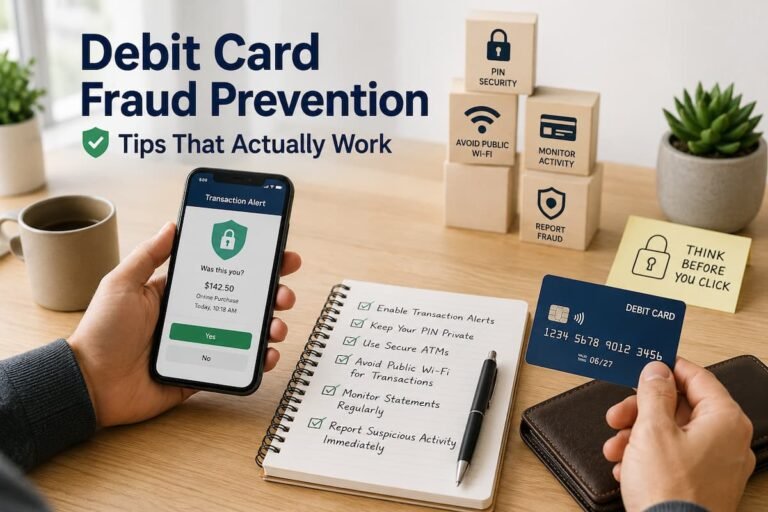
Unauthorized transactions involving your debit card can increase your daily expenses, as the card is linked directly to your bank account. That is why securing your debit card is crucial. Do not write your PIN on the card itself. Cover the keypad on the ATM or payment terminal when entering your PIN. Exercise extra caution if the machine appears damaged, tampered with, or loose. Consider whether you need to use your debit card for online shopping or if other payment methods offer better security. The right choice depends on your specific circumstances and the terms of the payment method. Check your transaction history regularly. If your card is lost or stolen, contact your bank immediately and follow their security guidelines.
Check Linked Accounts and Automatic Payment.
Automatic payments make life easier but can also mask suspicious activity. An unusual transaction can easily go unnoticed amidst a large number of legitimate bills and automatically deducted subscription fees. Review recurring payments regularly. Cancel unnecessary subscriptions and verify merchant details; this helps distinguish suspicious transactions from legitimate ones. Check which apps and services have access to your financial data. Revoke access for budgeting apps, payment services, and other financial tools you no longer use. Reducing unnecessary connections simplifies financial management and gives you a clearer picture of how your banking data is being used.
Beware of Fake Banking Apps and Websites
Criminals sometimes create fake websites or apps posing as financial institutions. These fraudulent services often use familiar colors, logos, and layouts. Only download banking apps from official app stores and verify that the provider is a legitimate bank. Access online banking via known URLs in your browser or trusted bookmarks, rather than clicking on suspicious links in emails or text messages. Exercise extra caution when searching for banks online. Paid advertisements and search results can redirect users to pages designed to steal login credentials. When in doubt, use the official contact details found on your bank card or statement. Be alert for unusual URLs, urgent requests for passwords, spelling errors, and unexpected requests for sensitive information. While there is no single warning sign that a website is fake, various unusual occurrences may warrant further investigation.
What to do if You Notice Something Unusual
Take immediate action in the event of unauthorized transactions, suspicious login attempts, or changes to your account. Contact the bank using its official phone number, website, or app. Explain your findings and follow the bank’s instructions. Ask the bank what steps to take if your online banking credentials have been stolen. You may need to change your password, secure your device, or implement other security measures for your account. Report lost or stolen payment cards immediately. Do not wait for someone else to find them or for unauthorized transactions to occur. Keep a record of important communications from your financial institutions. Save confirmation numbers, dates, and messages if necessary. This information can assist in the follow-up process.
Consider Additional Measures to Protect Against Identity Theft
Securing your bank account is just one part of protecting your financial identity. If your personal information has been compromised, you may need to take further steps. Regularly checking your credit report allows you to spot unfamiliar accounts or activity. US residents can obtain their credit report via AnnualCreditReport.com. If you suspect identity theft, look into fraud alerts and credit freezes. The primary purpose of these tools is to prevent and detect new account fraud; they do not replace security measures for your bank accounts or debit cards. Consult government resources and contact your financial institutions to report identity theft. Be wary of companies that claim they can quickly recover stolen funds but demand large upfront payments.
A Simple Monthly Account Security Routine
Developing financial security habits makes life much easier. Check your bank transaction history, contact details, and alert settings every month. Take the time to review your finances and services. Change your passwords, delete unnecessary apps, and check for unusual activity. Regularly check your devices: install security updates, remove apps, and lock your phone and computer screens. These routine tasks take very little time. The key is to integrate account security into your daily financial management, rather than waiting until the last minute to think about it.
FAQs
1. Is it okay to use the same password for my bank and email?
Nope. Different, unique password for your main email and bank account. If one password is compromised by another site, then reuse allows the attacker to try to access both accounts. Both accounts should be secured with strong passwords and, if possible, multi-factor authentication.
2. Can a bank employee ask for my password or a one-time security code?
Be very cautious about any unexpected request for your password or authentication code. Because someone on the phone sounds credible, don’t give them your personal information because they claim to represent your bank. End the chat and call your bank using an official route to check the situation.
3. Is it safe to use mobile banking apps?
Official mobile banking apps can be a simple method to manage your account, but you should download them from reliable app stores and make sure the app is from the correct financial institution. • Update your phone software • Use a secure lock screen • Don’t install apps from unknown sites
4. What if I accidentally click on a dodgy banking link?
If you clicked a questionable link and did not provide any information, dismiss the website and do not connect with it any further. In case you used any password, contact your bank through an official channel and replace the hacked password from a trusted device. If you have submitted other sensitive information, explain what happened to the relevant financial institution and follow its instructions.