Managing Multiple Digital Wallets Without the Confusion
Using more than one digital wallet has become normal. You might have one for online shopping, another for sending money to friends, a third connected to your bank, and perhaps another linked to work or freelance payments. Each service offers different features, making it tempting to keep adding new payment apps whenever they promise greater convenience. Before long, however, your financial activity becomes spread across several platforms, making it harder to understand where your money is actually going.
The challenge isn’t having multiple wallets—it’s managing them without a clear system. Many people discover this only when they forget which wallet paid for a subscription, struggle to find a recent transaction, or realize they have money sitting unused in several different accounts. These situations rarely happen because digital wallets are difficult to use; they happen because no structure exists behind them.
Building a simple payment system allows you to enjoy the convenience of multiple wallets while keeping your finances organized. Instead of checking every app throughout the day, you’ll know exactly which wallet serves which purpose and how each one fits into your overall spending habits.
More Wallets Don’t Always Mean Better Financial Flexibility
Adding another payment app often feels like a harmless decision. Perhaps one retailer offers cashback through a particular wallet, while another service provides lower transfer fees or faster payments. Individually, these choices make sense. Over time, though, each new wallet becomes another place where balances, payment methods, transaction histories, and subscriptions need attention.
What starts as flexibility can slowly become fragmentation. Money ends up scattered across different platforms, making it difficult to answer simple questions like how much you have available to spend this week or whether you’ve already paid a particular bill. Even people who regularly budget may struggle if their spending information is divided between too many accounts.
Rather than asking whether another wallet offers useful features, it helps to ask whether it genuinely improves your financial routine. If it creates more complexity than value, the convenience may not be worth the additional management.
Give Every Wallet a Clear Purpose Instead of Letting Them Overlap
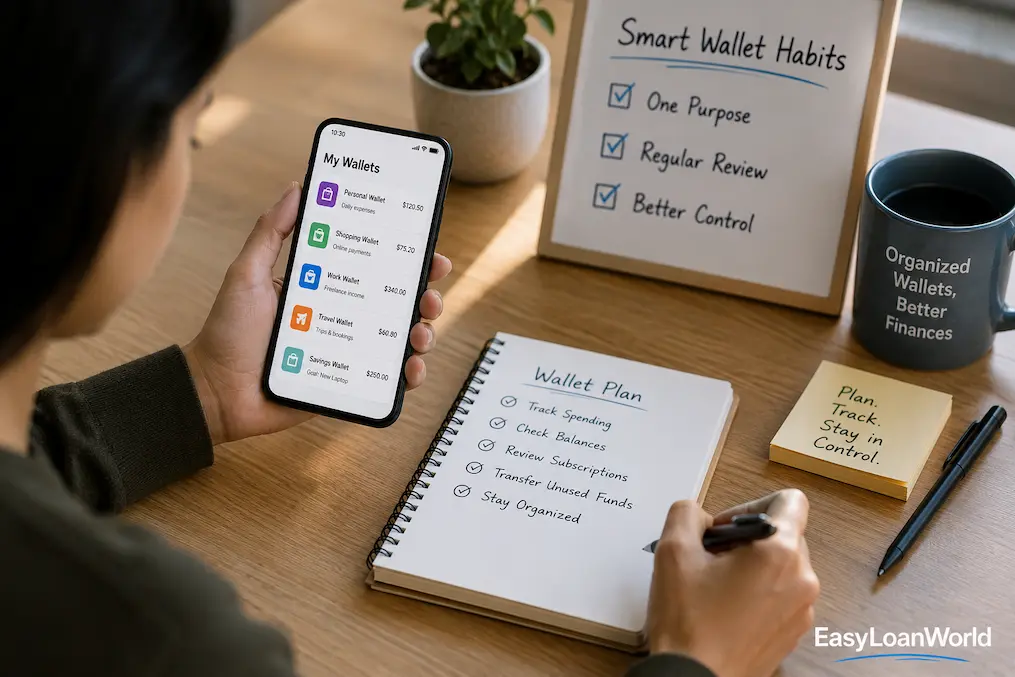
One of the easiest ways to stay organized is to assign each wallet a specific role. When every payment app has a defined purpose, there’s less guessing about which one to use and fewer opportunities for transactions to become scattered.
A freelance graphic designer, for example, might dedicate one wallet to receiving client payments, another to everyday household spending, and a third to online subscriptions. A university student may separate educational expenses from personal spending, making it easier to understand where money is going throughout the semester.
The exact system will differ from person to person, but consistency matters more than complexity.
| Digital Wallet | Suggested Purpose |
|---|---|
| Wallet A | Everyday purchases and contactless payments |
| Wallet B | Online shopping and subscriptions |
| Wallet C | Freelance or side-income transactions |
| Wallet D | Travel or occasional international payments |
Once each wallet has a clearly defined role, reviewing transactions becomes far less confusing because every payment already belongs to a logical category.
Organize Around Spending Habits Rather Than Payment Providers
Many people build their payment system around whichever wallet happens to be popular at the moment. A more practical approach is to organize around your own financial habits instead.
Think about the types of spending you make every month. Groceries, transport, subscriptions, bills, entertainment, freelance income, and savings all follow different patterns. If your wallets reflect these patterns, you’ll spend less time trying to remember where each payment originated.
Someone working as an online tutor, for instance, may receive payments several times each month while paying business-related software subscriptions separately from household expenses. Keeping those activities in different wallets makes future budgeting and expense reviews considerably easier without requiring additional financial tools.
Don’t Leave Small Balances Sitting Everywhere
One overlooked issue with managing several digital wallets is the accumulation of unused balances. A few pounds in one wallet, a small refund in another, and leftover travel funds in a third may seem insignificant individually, but together they can represent money that quietly disappears from your day-to-day awareness.
These scattered balances also make budgeting less accurate. You may think your primary account is running low while forgetting that several other wallets still contain available funds. The opposite can also happen, where money appears available overall but isn’t immediately accessible because it’s divided across multiple platforms.
Setting a regular schedule to review and consolidate unused balances can simplify your finances without reducing the benefits of using multiple wallets.
Create One Place Where You Review Everything
You don’t necessarily need another budgeting application to stay organized. Many people simply need one reliable place to review all of their financial activity.
This could be a spreadsheet, a budgeting notebook, or a trusted finance app that allows you to monitor different payment accounts together. The goal isn’t to record every individual purchase but to maintain an overall picture of where your money currently sits.
Consider reviewing details such as:
- Current balance in each wallet
- Linked payment cards
- Active subscriptions
- Recent transfers
- Pending refunds
- Wallets used during the past month
Keeping this information together reduces the temptation to open multiple apps several times a day simply to understand your financial position.
Some Wallets Deserve Regular Use—Others Don’t
Not every digital wallet needs to remain active indefinitely. Payment habits change over time, and the app that once seemed essential may no longer provide much value.
Every few months, ask yourself whether each wallet still serves a useful purpose. If you haven’t used one in several months, it may be worth removing saved payment methods, withdrawing remaining balances where appropriate, and closing the account if you no longer need it.
Reducing unnecessary wallets doesn’t mean limiting your options. It simply means making your financial system easier to understand and maintain.
When One Subscription Turns Into Several Hidden Payments
Subscriptions are one of the main reasons people lose visibility over their spending when using multiple digital wallets. A music service might be billed through one wallet, cloud storage through another, and streaming platforms through a third. Months later, remembering where each payment comes from becomes surprisingly difficult.
The bigger issue is that subscriptions often continue unnoticed after they are no longer useful. Because each wallet only shows part of your financial activity, it’s easy to overlook recurring charges that would stand out if everything appeared in one place. This is especially common after switching phones, changing banks, or trying promotional offers that automatically renew.
A simple habit is to keep a single subscription list outside your wallet apps. Record the service, monthly cost, renewal date, and which wallet pays for it. Reviewing this list every few months makes it easier to identify subscriptions that no longer deserve a place in your budget.
Avoid Linking Every Card to Every Wallet
Many users automatically add every debit and credit card they own to every digital wallet. While this offers flexibility, it can also make payment management more confusing and increase the number of places where your financial information is stored.
Instead, think about which card best matches the purpose of each wallet. If one wallet is dedicated to everyday spending, linking only the account you use for daily purchases may be enough. Another wallet used for travel or online shopping can have its own payment method based on how you plan to use it.
| Wallet Purpose | Better Payment Method |
|---|---|
| Everyday purchases | Primary debit account |
| Online shopping | Card used for internet purchases |
| Freelance income | Business or work-related account |
| Travel spending | Account reserved for travel expenses |
This approach doesn’t eliminate flexibility, but it creates clearer boundaries that make spending easier to monitor.
Notifications Can Help You Stay Organized Instead of Feeling Overwhelmed
Notifications from multiple financial apps can be overwhelming. Many people choose to disable notifications entirely, causing them to miss crucial information. A better approach is to select the notifications that truly matter.
In general, it is wise to receive notifications for payment confirmations, login attempts, new device alerts, and unusually large transactions. Promotional offers, marketing messages, and rewards notifications are distracting and often irrelevant to financial management.
By filtering notifications, you can identify relevant account activity and avoid the tendency to ignore all alerts due to notification overload.
Build a Monthly Review Instead of Constantly Checking Every Wallet
Opening multiple payment apps several times a day rarely improves your financial control. It often creates stress without providing valuable information. Continuous monitoring is far less effective than a formal monthly review.
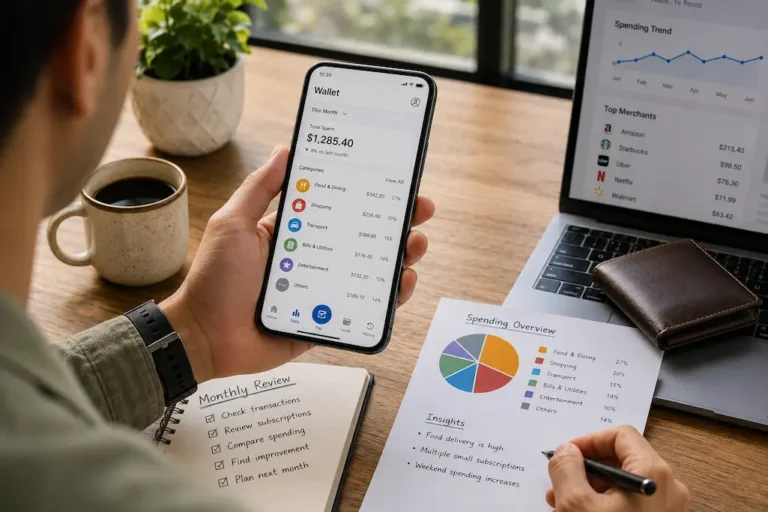
Pick one day a month to review all your wallets using the same checklist. Compare balances, view recent transactions, look for overdue payments, check subscription renewals, and remove payment methods or accounts you no longer need. This process is quick yet offers an in-depth look at your digital finances.
If you earn income through freelance work or a side job, this review can also help you understand how your clients actually use payment methods. If a wallet has shown little activity for several months, you may no longer need to keep it in your system.
Managing Multiple Wallets: Security is Paramount
Every additional wallet represents an account that requires protection. Using multiple payment platforms without carefully checking the settings can create security vulnerabilities. Enable two-factor or biometric authentication wherever possible, keep your account recovery details up to date, and review the list of devices linked to each account. If you replace your primary device, consider revoking access for any phones or tablets you no longer use.
Managing security becomes much easier when you have a clear overview of how many wallets you have, their purposes, and where you log in. Organization and security are more closely linked than many people realize.
Financial Control Comes From Simplicity, Not More Apps
It’s tempting to think adding more payment apps will solve all your management issues, but it won’t. The only way to truly master your finances is to understand how money moves between your accounts, eliminate unnecessary complexity, and regularly review your system.
Having multiple digital wallets is useful if you have a valid reason for doing so. Problems usually arise when you add a new wallet without changing old habits or removing accounts that are no longer in use. Generally speaking, simpler systems are easier to maintain, more secure, and easier to understand, which makes it simpler to make daily financial decisions.
Conclusion
Digital wallets make managing money faster and easier, but convenience shouldn’t come at the expense of clarity. By setting specific goals for each wallet, minimizing unnecessary overlap, regularly checking accounts, and organizing subscriptions, you can ensure that different payment systems complement rather than compete with each other.
Your financial system doesn’t need to be complex to work effectively. A few well-considered changes can often clear up the clutter, improve your insight into spending, and help you make better use of your available funds.
Frequently Asked Questions
Is it wise to have multiple digital wallets?
Yes, but each wallet should have a clear purpose. Creating separate wallets for different types of expenses can improve management efficiency, but without a plan, too many wallets often lead to unnecessary complexity.
How many digital wallets should you have?
There is no set number. Your financial needs determine what works for you, but for most people, a few well-managed wallets are sufficient, rather than a multitude of overlapping accounts.
Can multiple digital wallets affect budgeting?
That’s true. However, when you spread expenses across different platforms, it’s easy to overlook subscriptions, duplicate purchases, or unused balances. “Checking regularly gives you a clear overview.”
Should I keep money in every wallet?
Not necessarily. If you hold large amounts across multiple accounts, tracking your finances can become difficult—unless a specific wallet requires a balance for a particular service. Consolidating unused balances regularly simplifies your financial management.
How often should I check all my e-wallets?
In most cases, a quick check once a month is sufficient. When you check, review your balance, recent transactions, linked payment methods, active subscriptions, and security settings to keep your payment system organized and secure.