Currency Loans and Repayment
Compare matching funding.
Estimated reading time: 1 minute
HMRC’s corporate-finance explanation shows why a weakening home currency can make foreign-currency debt more expensive to repay. The example below concerns cash, not tax treatment.
A fictional dollar-funded business borrows €100,000 at a fixed 5% for one year. It immediately converts the proceeds at $1.10 per euro, receiving $110,000. Principal and interest are payable together at year-end: €105,000.
Assume no fees, conversion spreads, interim payments, hedges or euro receipts. All rates are invented.
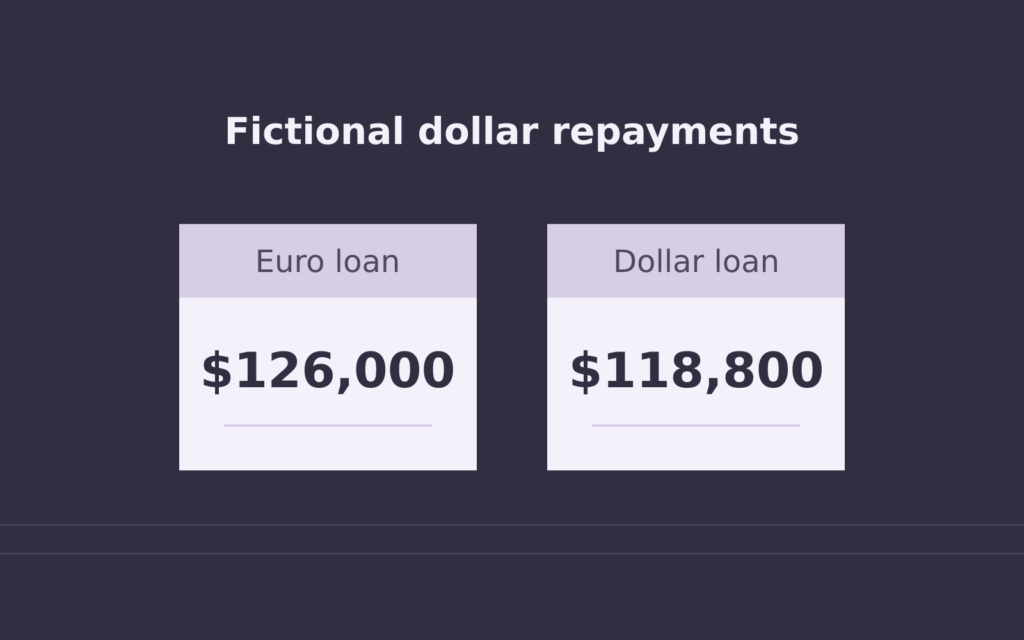
If repayment conversion costs $1.20 per euro, buying €105,000 requires $126,000. Compared with the $110,000 received, the dollar financing cost is $16,000, or 14.55%, rounded—not 5%.
An alternative $110,000 dollar loan at 8%, with the same timing and exclusions, requires $118,800. The euro loan costs $7,200 more in that scenario despite its lower stated interest rate.
The matching exchange rate is $118,800 ÷ €105,000 = approximately $1.13143 per euro. Above it, the euro repayment costs more; below it, less. This is a break-even calculation, not a forecast. Compare actual currency obligations and conversion terms before borrowing.