Dimensional Shipping Weight
Compare packed alternatives.
Estimated reading time: 1 minute
FedEx explains that shipping charges use the greater of dimensional and actual package weight. Its U.S. guide calculates dimensional weight by multiplying dimensions in inches and dividing by 139.
Fictional comparison: every packed option weighs 12 pounds. Assume whole-inch outside dimensions, a divisor of 139 and rounding each calculated dimensional weight upward to a whole pound. These assumptions are not a shipping quote.
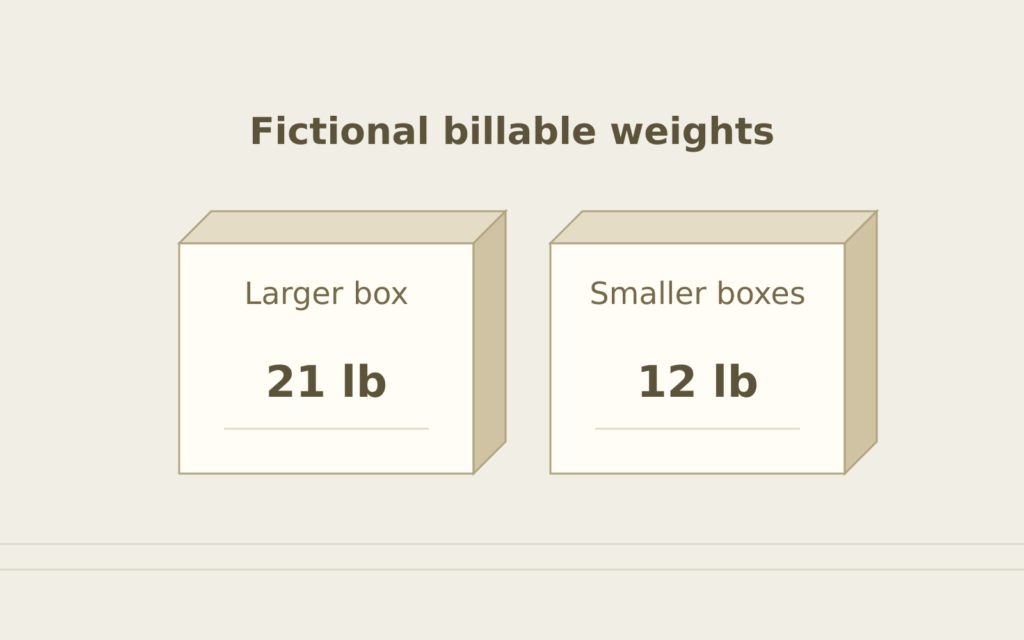
A 20 × 14 × 10-inch package gives 2,800 ÷ 139 = 20.14 pounds: rounded to 21, exceeding actual weight. Billable weight is 21 pounds.
A 14 × 10 × 10-inch package gives 10.07, rounded to 11. Actual weight is greater, so billable weight is 12 pounds—not 11.
A 12 × 10 × 10-inch package gives 8.63, rounded to 9. Billable weight remains 12 pounds. Further size reduction produces no weight reduction in this model.
Compare service quotes, packaging costs and adequate product protection before budgeting savings. Confirm applicable measurement rules, minimums and surcharges; fewer billable pounds do not establish a proportional price reduction.