Federal Work-Study: Build a Paycheck Plan
Connect hiring, hours and actual paydays before counting work-study earnings toward a bill.
Estimated reading time: 3 minutes
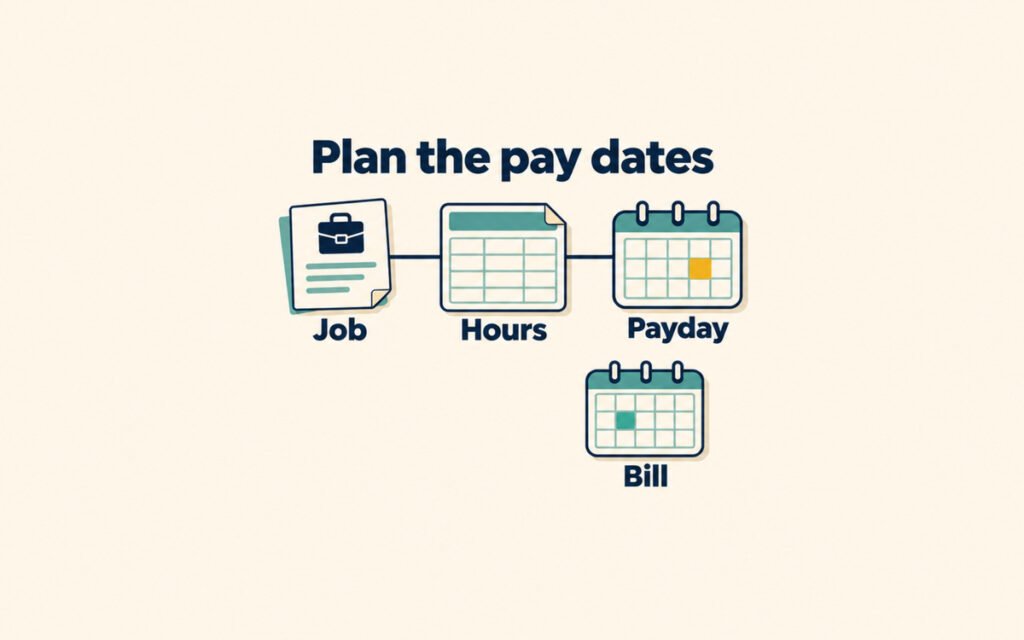
An offered Federal Work-Study amount is not a payday. To use the earnings in a borrowing or bill-paying plan, connect the award to an eligible job, worked hours and actual payment dates.
Turn the offer into a job plan
Federal Student Aid says jobs and funding are not guaranteed each year. Most schools require students to find positions, apply and interview, although some match students to jobs.
Ask the school and supervisor to confirm the job, pay rate, approved hours and how to track the earning limit. Check what happens as funding runs low. Do not assume another job automatically qualifies or that you can continue in the same role after work-study funding ends.
Trace the hours into the payment
The 2026–27 FSA handbook says the school must notify you, before the initial payment for an award period, of the total you are authorized to earn and how and when you will be paid. Work-study compensation is earned through work, with payment required at least monthly.
Undergraduates are paid hourly; graduate students may be paid hourly or by salary. Timesheets must record daily hours and payment-cycle totals, with the required certification.
Compare the period and approved hours with the payroll record. Keep gross earnings, deductions and net earnings separate. An hourly-rate calculation alone does not establish the amount deposited.
Crediting your cash FWS earnings to a school account requires separate written authorization. A noncash institutional share in tuition, fees, services or equipment needs no permission, but requires a written explanation before employment. Ask whether pay will reach your bank, arrive by check or include that share.
Put the first payday beside the bill date
The University of Georgia gives one school example: work-study earnings are paid directly to students every two weeks for hours worked, and are not automatically applied to university charges. That schedule is not a nationwide promise.
Consider a fictional student with a $1,500 bill due September 1 and $1,200 already allocated to it. Assume the student’s first expected net paycheck is $300 on September 15.
The September 1 gap is $300: $1,500 minus $1,200. Counting the later paycheck as money already available would hide that gap. A $2,000 work-study offer does not make $2,000 available on the bill date.
Confirm the actual first payday and ask the billing office about available arrangements before the deadline. A future paycheck or an unanswered request does not, by itself, change the bill’s due date. The example is a timing exercise, not a recommendation to borrow the gap.
Keep a short paycheck record
Record these separately:
- The job and approved earning period.
- The pay rate and permitted schedule.
- Hours submitted and certification status.
- The pay period, payday and actual net receipt.
- The next bill date and money allocated to that bill.
If a payment differs from your records, ask payroll about the specific period and entry. Ask the aid office separately about award authorization or changed eligibility. This guide does not decide eligibility, tax treatment or an individual borrowing choice.
For the separate task of comparing aid offers, use the college aid-offer practice exercise.

Transcript Hold? Check Each Payment Period
Separate paid periods, payment-plan status and the remaining balance.
2026–27 FAFSA: Family Business and Farm Assets
Check business size, farm residence and related debt before reporting assets.
Perkins Childcare Cancellation: Compare Local Salaries
Check the local salary benchmark before relying on early-education cancellation.