Approved for a Loan, but Received a Risk-Based Pricing Notice?
Identify the document and separate report-review questions from the actual loan offer.
Estimated reading time: 4 minutes
You can receive a risk-based pricing notice even when a lender agrees to provide a loan. The notice and the approval answer different questions: one concerns the credit-report information behind pricing, while the other concerns the credit decision. Don’t discard the notice as irrelevant simply because the application succeeded.
This guide focuses on U.S. consumer personal-loan paperwork. It doesn’t determine whether a particular lender complied with the law or whether an offer is affordable. Keep the complete offer, notice and application correspondence together privately.
Identify what the notice is telling you
Under Regulation V’s general rule, subject to exceptions, a notice is required when consumer-report information contributes to granting consumer credit on materially less favorable terms than the most favorable terms available to a substantial proportion of the lender’s consumers. The comparison isn’t simply with a rate you saw advertised elsewhere.
Start by matching the lender, product and application. If the packet contains both an offer and an unfamiliar credit document, read each document’s stated purpose. Don’t classify the whole packet from one heading or a prominent score.
An actual denial belongs in the separate loan-denial notice workflow. This article doesn’t replace those instructions or convert a pricing notice into a demand to reapply.
A score disclosure isn’t automatically a worse-price notice
Section 1022.74(e) permits a credit-score disclosure exception for non-mortgage consumer credit, with specified notice content and delivery requirements. The required information includes the score, its range and date, its source, a comparison with other consumers’ scores, and report-access information.
The FTC’s explanation describes this alternative as providing a score disclosure to consumers regardless of the terms granted. Receiving that disclosure alone therefore doesn’t establish that you received worse terms. Ask the lender which notice it provided if the purpose is unclear.
Keep the distinction attached to the document. A saved filename such as “credit score” is less useful than a note recording its title, stated purpose and the lender’s clarification. Don’t delete a document because another page contains the same number; their functions may differ.
Follow the report instructions on the actual notice
A general risk-based pricing notice must identify the reporting companies whose reports were used, explain how to request the reports and describe the right to a free copy for 60 days after receipt of the notice. It also encourages accuracy checks and explains the right to dispute inaccurate information. These requirements appear in section 1022.73.
The score-disclosure exception instead includes information about the separate annual-report right and centralized request source. Don’t copy the pricing notice’s receipt-based request instruction onto every score disclosure. Our free-report guide explains general access routes.
For a pricing notice, preserve when it arrived and use its verified reporting-company instructions promptly. A personal reminder isn’t an extension. Requesting a report is a different action from asking the lender to review an offer.
Make a small record before contacting anyone
This original organizer separates questions; it isn’t a notice template or legal form. Use account nicknames rather than sensitive identifiers in your working summary.
| Question | Record to preserve |
|---|---|
| Which application? | Matching offer, lender and product |
| Which document? | Full notice and any clarification of its purpose |
| Which information? | Named report source and the specific entry questioned |
| Which follow-up? | Request, recipient, dated reply and remaining issue |
One fictional packet can create two separate questions
Suppose a fictional applicant receives a personal-loan offer and a risk-based pricing notice naming Report Company A. The applicant’s monitoring app displays information from Company B. The useful first step is to obtain and identify the report named in the notice, not assume the app shows the identical file.
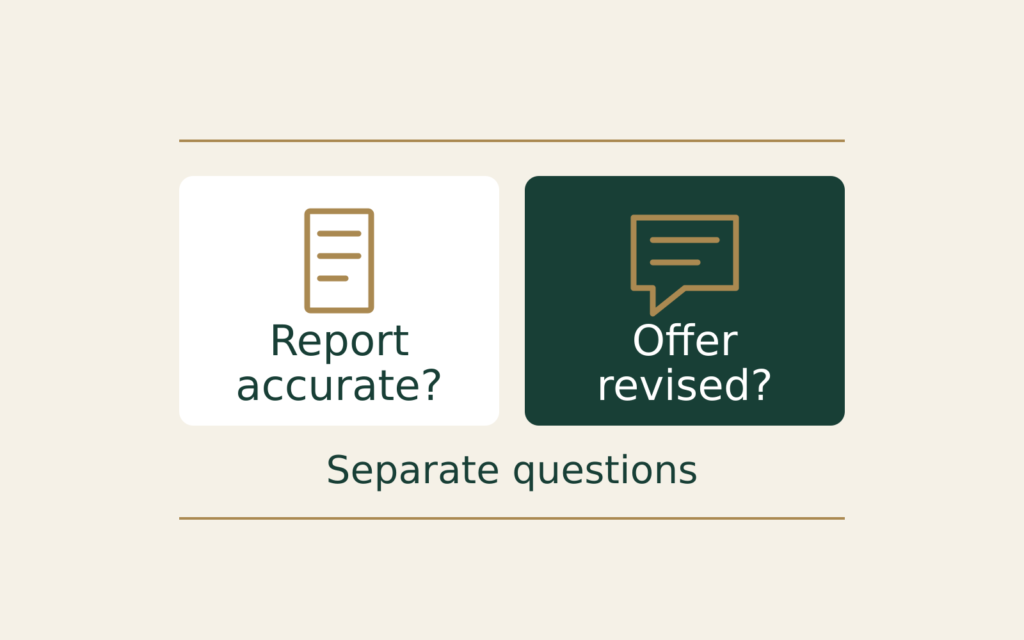
Now assume the obtained report contains an account entry the applicant believes conflicts with payment records. That creates an accuracy question to investigate. Separately, the applicant wants to know whether the lender will reconsider the offered terms after any correction. Keep those requests distinct, with separate responses.
A message acknowledging receipt of a dispute doesn’t answer whether the entry changed. A corrected report doesn’t, by itself, document a revised loan offer. Before replacing an old offer in your comparison, obtain the lender’s actual updated terms and identify what changed.
Don’t reverse-engineer the price from one score
The CFPB’s consumer explanation notes that lenders use their own processes and can consider income, employment, existing debts and other factors alongside credit information. A score by itself isn’t the lender’s complete pricing formula.
Ask focused questions about the offer rather than inventing a guaranteed rate for a particular score. Keep document review separate from deciding whether to borrow: compare the actual payment obligations and costs with the borrowing need. Neither approval nor a notice resolves that decision for you.
U.S. financial education. Sources checked October 29, 2026. The example is invented; no reports, disputes or applications are collected or submitted through this article.
Changing Loan Autopay: Check the Notice
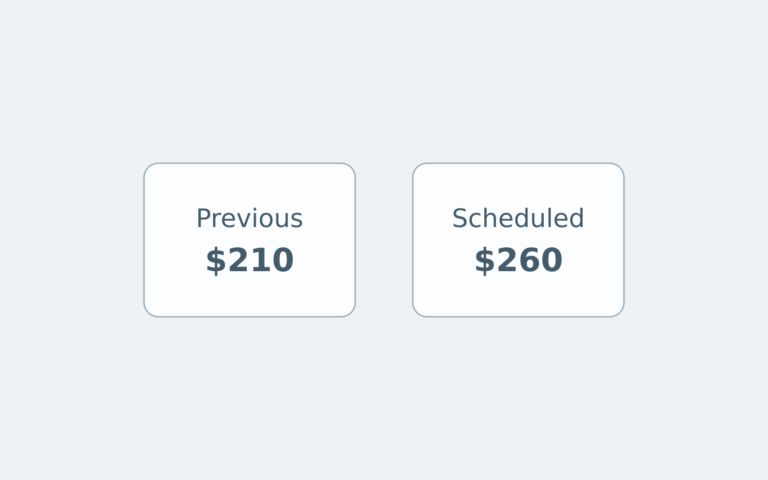
Compare the debit and notice.

Paycheck Loan Reserve: Annual Share or Half the Bill?
Compare two reserve allocations without changing the lender’s payments.