Change a Card Due Date? Test the Transition Month First
Compare paired statement records and four fictional cash calendars before relying on a revised credit card payment schedule.

A later card-payment date can look better on a calendar while leaving the hardest cash squeeze untouched. In the fictional example below, December’s lowest cash balance rises from $400 to $1,000, yet the November–December low stays at $400.
The practical test is a pair of statement records: the bill already in hand and the first bill that actually uses the new date. This guide concerns ordinary U.S. consumer credit cards.
In the fictional example, if the next statement still shows December 3, keep that deadline in the plan. Use December 10 only when the changed statement and confirmation agree.
Build a two-statement evidence record
Keep the statements and confirmation privately. Use A and B as local labels; there is no need to upload an account number. A request acknowledgment belongs in your notes, but does not establish that statement B has changed. If the statement and confirmation disagree, resolve that mismatch with the issuer before relying on a revised calendar.
Copy the statement balance and minimum separately. The example plans a $600 payment; its assumed $30 minimum is not the modeled cash outflow.
| Record field | A: current bill | B: first changed bill |
|---|---|---|
| Statement closing date | October 9 | November 16 |
| Statement balance | $600 | $600 |
| Minimum due | $30, assumed | $30, assumed |
| Payment due date | November 3 | December 10 |
| Planned bank outflow | $600 on November 3 | $600 on December 10 |
| Evidence to retain | Current statement; unchanged in every branch | Issuer confirmation identifying this cycle, matched to this statement |
| Payment status | Planned; verify crediting and bank debit | Planned; verify crediting and bank debit |
Every statement detail, confirmation and outflow above is invented. No issuer has approved this example. The longer cycle is stipulated, not calculated by adding eight days to any account’s closing date. Keeping both balances at $600 is also an assumption, not a promise about interest, fees or extra grace time.
Separate the requested date from the effective statement
Due-date changes are permitted under the rules, but that does not entitle you to your preferred day. CFPB: due-date rules.
An occasional change can create a transitional billing cycle of different length. There is no universal closing-date adjustment to apply. CFPB: transitional cycles.
Ask whether the change is available, when it takes effect, the next payment amount and any charges. A later first payment can mean a larger bill. CFPB: requesting a change.
Capital One describes a change taking 4–6 weeks and starting with the next billing cycle; the current statement still needs paying on its existing deadline. That is provider guidance, not confirmation for your account. Capital One: payments.
Run the unchanged calendar alongside the proposed one
Start with $2,000 of usable cash on November 1, after other earmarks and pending items. Four $1,600 paychecks become usable on November 6 and 20 and December 4 and 18. Rent is $1,000 each month; other bills and spending total $1,600 each month.
This simplified model includes no other transactions, fees, deposit interest or expected refunds. It assumes successful payment crediting by the deadline and bank outflow on each listed payment date. Actual crediting and bank-debit dates can differ: check both, and keep money reserved until completion. Holiday and weekend entries are assumed cash events, not bank-processing promises.
All four scenarios share this November ledger:
| Date | Cash event | Change | Cash after event |
|---|---|---|---|
| November 1 | Rent | −$1,000 | $1,000 |
| November 3 | Statement A payment | −$600 | $400 |
| November 6 | Usable paycheck | +$1,600 | $2,000 |
| November 12 | Other bills and spending | −$800 | $1,200 |
| November 20 | Usable paycheck | +$1,600 | $2,800 |
| November 25 | Other bills and spending | −$800 | $2,000 |
November ends at $2,000, but its low is $400 immediately after paying statement A. Moving statement B does nothing to that earlier squeeze.
For December, subtract $1,000 rent on the 1st, add the two paychecks on the 4th and 18th, and subtract $800 other spending on both the 12th and 25th. Then place the card outflow according to the evidence:
- Unchanged: B closes November 8 and is due December 3. Subtract $600 on December 3.
- Confirmed change: the hypothetical confirmation and B both establish December 10. Subtract $600 on December 10.
- Delayed change: B still closes November 8 and shows December 3. Keep the $600 payment on December 3. The later effective cycle remains unresolved; do not invent a January date.
- Extra-debit stress: add an unreconciled $600 outflow on December 3 while retaining the December 10 payment. This adverse scenario tests two withdrawals, not an issuer’s policy.
| Scenario | November low | December low | Full transition low | December ending cash |
|---|---|---|---|---|
| Unchanged | $400 | $400 | $400 | $2,000 |
| Confirmed December change | $400 | $1,000 | $400 | $2,000 |
| Delayed change | $400 | $400 | $400 | $2,000 |
| Extra-debit stress | $400 | $400 | $400 | $1,400 |
Without the extra debit, each plan receives $6,400 and pays out $6,400 over two months. Timing changes December’s low, not total income or ending cash. The stress case pays out $7,000 and ends $600 lower. None of these positive projections guarantees a payment will process.
Check payment instructions before trusting the result
Capital One’s general payment and specific AutoPay pages differ on extra-payment treatment. Confirm your setting, processing status and next debit after a manual payment; do not assume it stays unchanged or disappears. Capital One: payments Capital One: AutoPay.
Use the stress branch only while two outflows remain plausible. If the account has already reduced or canceled the old instruction, remove that hypothetical withdrawal. Reconcile scheduled instructions and posted entries before concluding there was an error. This exercise assumes neither a refund nor permission to skip another bill.
Close the transition, not just the request
- Match A and B to the actual documents, rather than overwriting the old entry with the hoped-for date.
- Mark each planned payment complete only after checking the issuer’s credit and the bank entry.
- Rerun the lowest balance across the whole transition whenever a confirmed amount or outflow changes.
Choose a date only after the confirmed transition fits your cash plan. In this example, December improves while November still needs attention. If you may miss a bill, contact the issuer before the deadline. A date-change request is not immediate payment relief.
Hotel Card Hold: Compare Two Checkout Payment Paths
Compare two fictional hotel checkout choices while keeping the original card’s capacity and the actual payment in separate records.
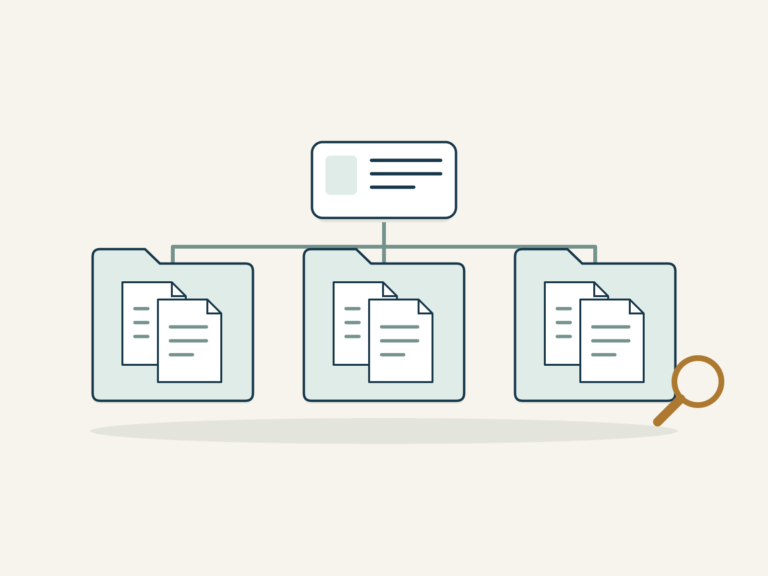
Overdraft Fee? Look Beyond the Online Bill Label
Compare three fictional document packets behind the same $60 ONLINE BILL entry, then identify what the records still leave unexplained.
Temporary Debit Credit: Reconcile What Stays and What Reverses
Follow a fictional $800 checking-account snapshot through three separate outcomes, then compare a $50 removal with reversing $300 and rebooking $250.