Deferred Interest: A Six-Payment Promotion Payoff Ledger
Follow a fictional $1,200 promotion through six payment opportunities, compare actual allocations, and rebuild the remaining target when the numbers change.

A $200 reduction target is easy to write into a budget. The harder question is whether $200 actually reaches the purchase you are trying to clear. This worked exercise follows one fictional promotion through six payment opportunities, then rebuilds the plan after a different allocation.
Deferred interest can become payable if the offer’s conditions are unmet. Required minimums remain due, but may not clear the purchase in time. Check the offer’s expiry separately from the regular due date. CFPB’s consumer guide explains these risks.
Start with one purchase and six opportunities
Imagine $1,200 on one deferred-interest purchase and $600 on an ordinary interest-bearing purchase balance. You have confirmed six payment opportunities before the promotion expires. There are no new transactions, refunds or fees affecting the promotion, and all required payments arrive on time. The minimums below are invented inputs, not forecasts of what an issuer will charge.
For this fictional ledger, minimums go to the ordinary balance; the issuer has accepted your request to send all excess to this promotion. Acceptance is optional, not an entitlement.
Ordinary interest is outside the calculation. The ordinary balance remains large enough to receive the allocations shown, including any ordinary interest paid through those minimums. This is a reconciliation of one purchase, not a full card repayment schedule.
Divide $1,200 by six: the target is $200 credited to the promotion each time. Under these assumptions, the whole account payment equals the current minimum plus $200. Those are two different budget figures.
| Opportunity | Minimum to ordinary balance | Whole account payment | To promotion | Promotion remaining |
|---|---|---|---|---|
| 1 | $45 | $245 | $200 | $1,000 |
| 2 | $50 | $250 | $200 | $800 |
| 3 | $55 | $255 | $200 | $600 |
| 4 | $60 | $260 | $200 | $400 |
| 5 | $55 | $255 | $200 | $200 |
| 6 | $50 | $250 | $200 | $0 |
| Totals / ending balance | $315 | $1,515 | $1,200 | $0 |
The check is $1,515 = $315 + $1,200. The $315 is money allocated to the ordinary balance, not necessarily principal repaid. Even if every dollar reduced ordinary principal, $600 minus $315 would leave $285. Clearing the promotion therefore does not clear this card.
Why the routing assumption matters
Regulation Z §1026.53 governs excess payments, not minimum allocation. Deferred balances count as zero-rate for allocation; excess generally goes to higher-rate balances first. The final two qualifying billing cycles prioritize deferred balances, unless an accepted consumer request applies. Expiry before that cycle’s due date excludes that cycle from those two. True temporary 0% offers without deferred-interest liability are different programs.
Rebuild the target after opportunity three
In a separate branch, before opportunity three, you explicitly request a different excess allocation and the issuer accepts: $80 to the promotion, $120 to ordinary. This occurs outside the final-two-cycle window.
The statement confirms that split. Your $255 payment still includes the $55 minimum, but only $80 reduces the promotion. Starting from $800 after opportunity two, the new balance is $720. The original table’s $600 no longer describes your position.
With three confirmed opportunities left, divide $720 by three: the new promotion target is $240 each time. These totals require renewed confirmation that all excess reaches the promotion:
- Opportunity four: $60 + $240 = $300; promotion remaining $480.
- Opportunity five: $55 + $240 = $295; promotion remaining $240.
- Opportunity six: $50 + $240 = $290; promotion remaining $0.
The revised account payments total $1,635: $1,200 to the promotion and $435 to ordinary. The extra $120 is exactly the amount redirected at opportunity three. If routing is unconfirmed, $240 remains a target, not a payment instruction. If it is unaffordable or fewer opportunities remain, this exercise cannot establish an on-time payoff; ask the issuer about account-specific options.
Give the deadline its own check
Separately, suppose $200 remains: expiry is June 15; the regular payment due date is June 25. Scheduling that $200 for June 25 leaves it unscheduled before expiry. This date example is separate from the six-opportunity ledger.
Confirm the issuer’s receipt and cutoff instructions, allow time, and verify the promotional balance is cleared before expiry. Submitting a transfer alone is not that verification.
Keep a three-number record
For each opportunity, record the whole account payment, the amount credited to this promotion, and its remaining balance. Label the purchase and date the record. Compare the actual remaining balance with your plan, then divide that balance by the confirmed opportunities left. A bank withdrawal alone cannot fill all three columns.
This U.S. consumer-credit-card example is general education. It does not estimate ordinary interest or any deferred-interest charge, and it is not an individualized repayment recommendation.

Credit-Builder Loan vs. Secured Card: A Cash-Access Checklist
Work through three fictional situations and four private questions before deciding whether a new account fits your needs.
Hotel Card Hold: Compare Two Checkout Payment Paths
Compare two fictional hotel checkout choices while keeping the original card’s capacity and the actual payment in separate records.
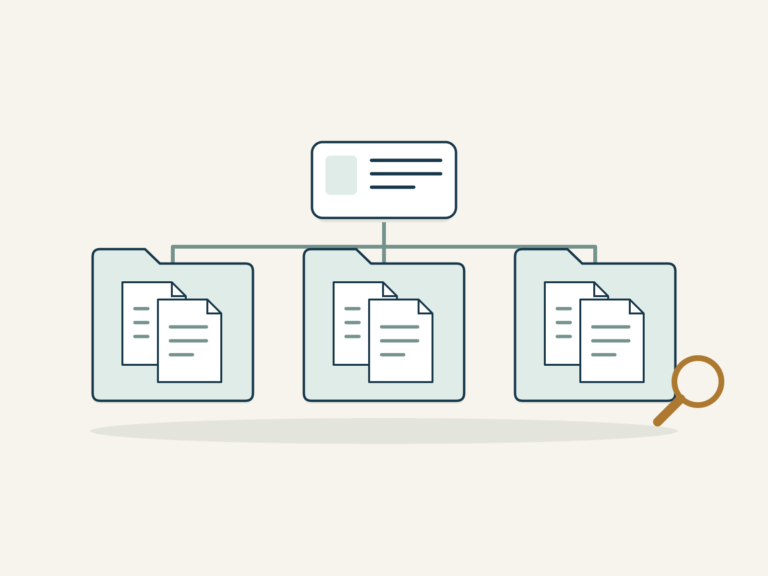
Overdraft Fee? Look Beyond the Online Bill Label
Compare three fictional document packets behind the same $60 ONLINE BILL entry, then identify what the records still leave unexplained.