Privacy Risks to Check Before Using a Micro-Loan App
Before You Apply, Look Beyond the Loan Amount
When comparing different lending options, people naturally focus on the loan amount, the repayment term, the costs, and the associated interest or fees. While these details are important, they are not the only factors that matter. When you borrow money online, lenders also obtain your personal data. Once you have created an account and submitted an application, the company may hold data that identifies you and reveals information about your finances. If the service offers a mobile app, they may also collect additional information about you via your device and how you use it.
In addition to the question “How much do I need for this loan?” the inquiry raises a second question: “What happens to my data when I use this service?” The answer to this inquiry should be obvious before you submit an application. A trustworthy service should not make users struggle to locate information on obscure pages or force them to accept vague requests; instead, it should make it easy for users to access information regarding the privacy policy.
| What to Check | Why It Matters |
|---|---|
| Information collected | Shows how much personal data the app wants |
| Purpose of collection | Helps you understand why the information is needed |
| Third-party sharing | Shows whether other companies may receive your data |
| Retention | Explains how long information may be stored |
| Security practices | Helps you understand how sensitive information is protected |
| User choices | Shows whether you can control certain data uses |
Start With the App’s Permissions
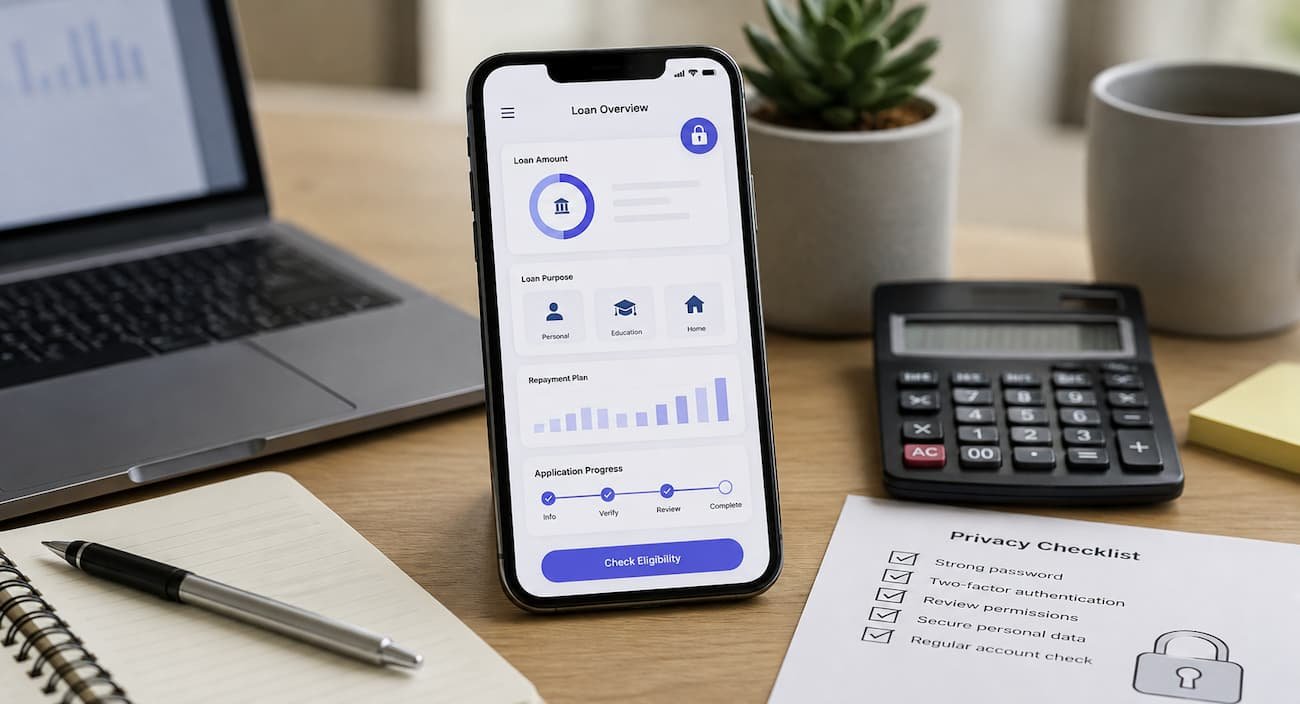
One of the easiest but most overlooked privacy checks is to examine the permissions requested by the application. A phone permission gives an app access to a particular device feature or category of information. An app asking for permission does not mean it is misusing that information, but the request should make sense for the service provided.
For example, a lending application may reasonably need access to information you enter into the application yourself. Other permissions may require more careful consideration. If an app requests access to contacts, precise location, photos, microphone functions, or other device features, ask why that access is necessary. The important question is not simply whether a permission sounds alarming. It is whether there is a clear connection between the permission and a legitimate function of the service.
Questions to ask about permissions
- Does the app explain why each sensitive permission is needed?
- Can the loan application be completed without granting an unrelated permission?
- Can permissions be denied while still using essential features?
- Does the app continue accessing information after the original purpose has ended?
- Can permissions be reviewed or withdrawn through the device settings?
Mobile operating systems generally provide tools for managing permissions, but users still need to pay attention when an app asks for access. Granting every request just to finish an application quickly can give an app more access than is necessary.
Contact Access Deserves Special Attention
Contact information can be particularly sensitive because it does not only relate to the person applying for a loan. A phone’s address book may contain information about family members, friends, colleagues, customers, or other people who have never agreed to provide their information to a lender. For that reason, a request for contact access deserves a clear explanation. If an app wants to know who is stored in your phone, ask what legitimate purpose that serves and whether the loan application can proceed without providing that information.
This is also an area where people should avoid assuming that a familiar-looking app is automatically trustworthy. An application can have a professional interface while still collecting information in ways that users may not expect. If contact access appears unnecessary, consider refusing the permission. If the application will not function without access to a large amount of unrelated personal information, that should be part of your decision about whether the service is appropriate for you.
Privacy check: Information belonging to other people is still sensitive. Before giving an app access to your contacts, make sure you understand why that access is required.
Read the Privacy Notice Before Sharing Financial Information
Privacy notices are often ignored because they can be long and written in formal language. However, you do not necessarily need to read every sentence to find the sections that matter most. Look for practical answers about what information is collected, how it is used, who receives it, and how long it is kept.
Pay particular attention to sections describing financial information, identity verification, marketing, analytics, fraud prevention, service providers, and information sharing. These sections can reveal whether the data is used only to provide the loan or for broader purposes. A privacy notice should also help you understand whether information may be shared with affiliated companies, technology providers, credit-related organizations, marketing partners, or other third parties. The exact categories vary by service and jurisdiction, so avoid assuming that every lender handles data in the same way.
Another useful point to check is whether the company explains how users can exercise privacy rights. Depending on where you live, applicable law may give you rights concerning access, correction, deletion, objection, restriction, or other forms of data control.
Separate Necessary Data From Optional Data
Not every piece of information requested by a lending app has the same importance. Some information may be directly connected to evaluating an application. Other information may support marketing, analytics, personalization, or additional services.
The distinction is worth understanding because people sometimes assume that every field in a loan application is equally necessary. It may not be.
| Type of Information | What to Consider |
|---|---|
| Identity information | Understand why it is needed for verification. |
| Income information | Check how it is used in the lending decision. |
| Banking information | Understand why account access or details are requested. |
| Device information | Please verify if collection is necessary for the service. |
| Location information | Ask whether precise location is genuinely required. |
| Contacts | Look for a specific and understandable purpose. |
| Marketing preferences | Determine whether promotional use can be declined. |
A useful habit is to pause whenever a request seems unrelated to the basic service. You do not need to assume that the request is malicious. Simply identify the reason, check the privacy information, and decide whether you are comfortable providing it.
Watch for Data Sharing That You Did Not Expect
A company may need outside service providers to operate its technology, process payments, verify identity, detect fraud, or provide customer support. Third-party processing is therefore not automatically a privacy problem. The important issue is understanding the categories of organizations that may receive your information and why. A privacy notice should provide enough information for users to understand the broader data-sharing arrangement.
Marketing is another area worth checking. Some services may use customer information to provide offers, personalize communications, or work with advertising or marketing partners. Different rules and choices may apply to these activities depending on the jurisdiction.
If you are uncomfortable with a particular type of data use, look for available controls before applying. It is better to understand those choices before submitting sensitive financial information than to discover them later.
Do Not Assume a Loan App Is Legitimate Because It Is Easy to Download
Availability in an app store is not by itself a complete guarantee that a financial service is appropriate or trustworthy. Before submitting identity or financial information, investigate the company behind the application.
Look for a clearly identified business, legitimate contact information, understandable terms, privacy information, and evidence that the service is authorized to provide lending services where required. Financial regulation differs by country, so the relevant licensing or registration system will depend on where you live. Be especially careful with applications that make unusually aggressive promises, pressure users to provide information immediately, or make it difficult to understand who operates the service.
A legitimate borrowing decision should involve more than downloading an application and accepting permissions. Take a few minutes to identify the provider and understand the service before entering sensitive information.
Think About What Happens After the Loan Is Repaid
Privacy decisions should not stop once the application is approved. Data may continue to be stored after a loan has been paid, depending on legal requirements, business practices, record-keeping needs, and the company’s privacy policies.
This is why retention information matters. A company may need to retain certain records for legal or regulatory reasons, but that does not mean every piece of collected information is necessarily kept forever.
Look for explanations about retention and deletion where they are available. Also check what happens if you close your account or stop using the application. Understanding the full data lifecycle gives you a better picture of the privacy trade-off. You are not only deciding whether to share information today. You are also considering how that information may be handled later.
Protect Your Account Before You Apply
Privacy protection also depends on the security of your account and device. Even a company with strong security practices cannot protect information if someone easily takes over a user’s account.
Use a unique, strong password if the service uses password-based authentication. Enable multi-factor authentication when it is available. Keep your phone’s operating system and applications updated, and avoid installing financial applications from unofficial sources.
Be careful with links sent through unexpected messages. If you receive a message claiming that your loan account needs verification, it is safer to open the official application or website directly rather than clicking a questionable link. These steps are simple, but they address a different part of the privacy problem: protecting access to the information you have already provided.
What to Check Before Pressing Submit
The final review does not need to take long. Before submitting a micro-loan application, please take a moment to review the basic privacy questions one more time.
- Do I know which company operates this app?
- Have I checked whether it is authorized or regulated where required?
- Do I understand what sensitive information it collects?
- Do the requested permissions make sense?
- Have I read the important parts of the privacy notice?
- Do I understand whether information is shared with third parties?
- Do I know what choices I have about optional data use?
- Have I protected my account with appropriate security settings?
If several answers are unclear, that is a reason to pause. Borrowing money is already an important financial decision. There is little benefit in rushing into an application before understanding how your personal information will be handled.
Privacy Red Flags That Should Make You Pause
Some privacy concerns are easy to identify, while others become visible only after you look more closely at how an application works. A major warning sign is a lack of basic information about the company operating the service. If you cannot easily tell who provides the loan, where the business is based, or how to contact it, be cautious before sharing personal information.
Another concern is an application that requests broad access without explaining why. A request for information that appears unrelated to assessing or servicing a loan deserves questions. The same applies when the privacy notice is difficult to locate, does not clearly describe data practices, or gives vague explanations about sharing information.
Pressure can also be a privacy warning sign. If an application repeatedly pushes you to grant permissions immediately or suggests that refusing unrelated access will automatically prevent you from using the service, take a moment to understand what is actually required. None of these signs alone proves that an application is fraudulent or unlawful. They are signals that the service deserves additional investigation before you provide sensitive information.
Be Careful With Location Tracking
Location information can reveal more about a person than many users realize. A precise location can indicate where someone lives, works, travels, shops, or spends time. Because of these factors, location access should not be granted casually to a financial application.
Some services may have legitimate reasons for requesting location information, depending on how they operate and the legal requirements in their market. But users should still understand whether the application needs precise location, approximate location, or any location information at all.
Check the permission settings on your device and review the application’s explanation of its data practices. If location access is optional, consider whether the feature is valuable enough to justify sharing that information. It is also useful to review permissions periodically. An application may receive updates over time, and its features or permission requests can change. A quick review can help you avoid leaving unnecessary access enabled.
Device Data Can Reveal More Than You Expect
Financial applications may collect certain technical information about the device used to access their services. This can include information related to the operating system, device configuration, application activity, network information, or identifiers used for security and analytics.
Some technical information can be useful for legitimate purposes such as preventing account abuse, detecting suspicious activity, maintaining the application, or resolving technical problems. The privacy question is how much information is collected, why it is collected, and how it is used.
Do not assume that technical information is harmless simply because it does not look like your name or address. When different pieces of information are combined, they can create a more detailed picture of a user’s behavior. The privacy notice should help explain the categories of device information collected and the reasons for collecting it. If those explanations are missing or unusually vague, consider that part of your overall assessment.
Understand Marketing and Promotional Uses
A lending company may use customer information for purposes beyond processing an application or managing a loan. Depending on applicable law and the company’s practices, information may be used to communicate offers, personalize services, or promote related financial products.
Marketing does not automatically mean that a company is mishandling data. The important question is whether you understand these uses and what choices are available to you. Look for separate marketing preferences and communication settings. If the company gives you choices about promotional messages, review them instead of accepting every option automatically.
Also pay attention to language that lets the company use your information for broad categories of purposes. The more general the wording, the more important it becomes to understand the company’s privacy policy and applicable consumer protections.
Check What Happens to Your Credit Information
Loan applications may involve credit-related information, depending on the lender, country, and type of financial product. This can include obtaining information from credit reporting organizations or providing information about your borrowing activity to them.
Before applying, make sure the lender explains how it uses your credit information. In some situations, the type of credit inquiry may matter, and repeated applications with multiple providers may not be appropriate for someone simply comparing options.
Do not rely on an app’s marketing language to understand its credit practices. Read the lending terms and relevant privacy or credit information carefully. If you are unsure how an application may affect your credit record, seek information from the lender or an appropriate consumer-finance authority in your country before proceeding.
Review Permissions After Installation
Privacy management should continue after the application has been installed. People often approve permissions during setup and never look at them again. That can leave unnecessary access active long after the original reason for granting it has disappeared.
Open your phone’s privacy or permission settings and review what the application can access. Depending on your device, you may be able to control access to location, contacts, camera, microphone, photos, notifications, and other features.
If you no longer use a particular feature, consider whether the associated permission is still necessary. You can also review other applications on the device, especially those that handle sensitive financial or personal information. Regular permission reviews are a simple form of digital housekeeping. They do not replace careful selection of financial services, but they reduce unnecessary access over time.
Avoid Risky Networks When Handling Financial Accounts
The security of your internet connection is another part of protecting financial information. Public networks are not automatically dangerous, but users should be cautious when accessing sensitive accounts on networks they do not control.
Avoid entering sensitive information through links in unexpected messages, and make sure you are using the legitimate application or website. Keep your device software updated because security updates can address vulnerabilities that attackers may exploit.
A secure connection is only one layer of protection. Account security, device security, application security, and careful behavior all work together. Users should not assume that a padlock icon or familiar-looking login screen proves that an application is trustworthy.
Know the Difference Between a Privacy Risk and a Loan Scam
Privacy concerns and outright scams can overlap, but they are not exactly the same problem. A privacy risk may involve excessive data collection or unclear sharing practices by a real company. A scam may involve a fake lender attempting to obtain money or personal information without providing a legitimate financial service.
This distinction matters because the response can be different. If you are dealing with an unfamiliar lending service, first determine whether the company actually exists and is authorized to provide loans where required. Check official regulatory or consumer-protection resources when appropriate. Be particularly cautious if an alleged lender asks for unusual upfront payments before releasing a loan, pressures you to act immediately, or refuses to explain basic terms. Do not provide sensitive information simply because an application promises rapid approval.
Important: A fast application process should never be a reason to skip checking who operates the service and how your information will be handled.
A Better Way to Compare Micro-Loan Apps
Comparing financial apps only by how quickly they approve a loan can lead to poor decisions. A more complete comparison includes both financial and privacy factors.
| Question | What a Careful Borrower Should Look For |
|---|---|
| Who operates the service? | A clearly identified and verifiable provider |
| What data is collected? | Clear categories and understandable explanations |
| Why is it collected? | Specific purposes connected to the service |
| Who receives it? | Clear information about relevant third parties |
| How long is it kept? | Retention information and applicable legal requirements |
| What permissions are requested? | Permissions that have understandable reasons |
| What security is offered? | Reasonable account and data protection measures |
| What privacy choices exist? | Accessible controls and rights information |
This approach helps separate the convenience of an application from the actual risks involved. A service that is easy to use is not necessarily a service that offers the privacy protections you want.
What to Do After You Finish Your Application
Once you have submitted an application, continue paying attention to your account and communications. Watch for unexpected messages requesting passwords, verification codes, additional payments, or sensitive information.
Do not share one-time authentication codes with someone who contacts you unexpectedly. If a message claims to come from the lender, access the account through the official application or website rather than using a link provided in the message.
If you decide that you no longer want to use the service, review the account-closure process and available privacy controls. Depending on the applicable law and the company’s obligations, some information may need to be retained even after an account is closed. Closing an account therefore does not necessarily mean that every record disappears immediately.
What If the App Suffers a Data Breach?
No organization can honestly promise that a data breach will never happen. A useful privacy assessment should therefore consider how the company communicates and responds when security incidents occur.
If you learn that a financial service has experienced a breach, pay attention to official communications explaining what happened and what information may have been affected. Follow the recommended security steps, especially if you reused your password elsewhere. Change reused passwords and monitor relevant accounts for unusual activity. Be particularly cautious of follow-up phishing messages because criminals may use publicly reported breaches as an opportunity to impersonate the affected company.
A breach does not automatically mean that every customer will experience identity theft or financial loss. The impact depends on the information exposed and how attackers might use it. The important response is to take credible warnings seriously without reacting to unverified messages.
A Five-Minute Privacy Check
If you do not have time to read every document before making a decision, start with these essential questions. They will not replace a full review, but they can help identify obvious concerns.
- Can I clearly identify the company behind the app?
- Does the company explain what personal and financial data it collects?
- Are sensitive permissions clearly justified?
- Does the privacy notice explain sharing and retention?
- Can I control optional data uses and account permissions?
- Is the lender appropriately authorized where required?
- Does the application avoid unnecessary pressure or suspicious requests?
If you cannot get clear answers to several of these questions, consider slowing down rather than treating the application as a routine download. A few minutes of research can help you make a more informed decision about both borrowing and privacy.
Conclusion
Micro-loan apps can make borrowing money easier, but ease of use shouldn’t come at the expense of privacy. When you apply for a digital loan, you might give out personal information, financial information, information about your device, and other information that needs to be kept safe.
The best thing to do is to take your time before sending in an application. Find out what company provides the service, read the important parts of its privacy notice, look over the rights, understand how data is shared, and see how long information can be kept. Pay close attention to any requests for information about your friends, location, devices, or anything else that seems unrelated to the service.
After you send in the application, the service still protects your privacy. Review your account’s permissions, watch for unusual emails, and understand what will happen if you close the account or if the provider has a security incident. There isn’t a single list that can promise complete protection. You have more control over the choice, though, if you ask smart questions before giving out private information. When choosing the best way to borrow money, consider how much you can borrow, how much it costs, and what you can provide in return.
FAQs
1. Why does an app for microloans need information about you?
A lender may need to see personal and financial details about a loan applicant to identify them, decide if they are eligible, manage their account, obey the law, stop fraud, or pay back their loan. Different lenders and areas need different kinds of details. It’s important to know why the information is requested and whether the privacy notice explains how it will be used. If an app requests information that appears unrelated to its service, please find out why before sharing it.
2. Should I let an app that lends me money see my contacts?
Do not give contact access automatically. First, check why the app needs that information and whether it really needs the permission. It’s possible that people on your contact list don’t have anything to do with the lender. If access to your contacts is optional, you might want to say no unless you have a good reason to use the feature that goes with it. If the service won’t give you a clear reason for wanting broad contact access, that’s a sign that you should look for another one.
3. Can I trust a loan app that I can get from the app store?
A loan service’s availability through an app store is not enough to tell you if it is good or reliable. Find out who is behind the application, read through its privacy information and loan terms, and make sure it is allowed to offer lending services before you apply. Furthermore, look at the app’s permissions request. An interface that looks professional is not a replacement for checking out the provider on your own.
4. What should I do if a loan app wants too many rights?
Before providing access, take a moment to think about what each permission is meant to do. Refer to the app’s privacy options and the permissions on your phone. If a permission isn’t related to the service or seems unnecessary, you might want to deny it. If the app can’t work without many people having access to private data and doesn’t give you a good reason, you might want to think again about using that service.
5. When I delete a loan app, does my personal information go away?
Not all the time. When you delete an app from your phone, it only takes away the software. Information you have already sent to the company may remain in its systems as long as the company follows its retention policies and the law. Learn what information you can delete and what records you may need to keep if you stop using the service. Read through the account closure and privacy policies to prepare.
References
- Federal Trade Commission (FTC): Consumer guidance covering privacy, financial information, identity theft, and online security.
- Consumer Financial Protection Bureau (CFPB): Consumer resources concerning financial products, data, privacy, and digital financial services.
- European Commission: Information on the General Data Protection Regulation (GDPR) and data protection rights within the European Union.
- European Data Protection Board (EDPB): Guidance and information concerning personal data protection and individual rights under European data protection law.
- Google Android Help: Guidance on managing application permissions and controlling access to information on Android devices.
- Apple Support: Information about controlling application access to personal information and device features on Apple devices.