Building a Personal Digital Payment System That Makes Monthly Spending Easier to Track
Digital payments have quietly changed how people spend money. A morning coffee paid through a mobile wallet, an online subscription renewed automatically, a grocery bill settled with a debit card, and a utility payment scheduled through online banking can all happen within the same week. While this convenience saves time, it also makes it surprisingly easy to lose track of where money is actually going.
Many people believe they need a complex budgeting app to stay organized. In reality, spending becomes easier to understand when you create a personal payment system that matches your daily habits. Instead of recording every transaction after it happens, you decide in advance how different types of payments should flow through your financial life.
A personal digital payment system isn’t about restricting spending. It’s about reducing confusion. When bills, subscriptions, savings, and everyday purchases each have a clear payment method, checking your monthly finances becomes faster, simpler, and far less stressful.
Start by Understanding How Your Money Currently Moves
Before changing anything, spend a few days observing how you already pay for things. Most people are surprised to discover they use far more payment methods than they realized.
Think about the last month. You may have used a debit card at physical stores, a credit card for online purchases, a digital wallet for food deliveries, automatic bank transfers for bills, and a separate payment service for freelance income. None of these methods are wrong individually, but together they can scatter your financial information across multiple places.
Rather than asking, “Where did I spend my money?” ask a different question:
“How many different paths does my money take before it leaves my account?”
That simple shift often reveals unnecessary complexity. A quick review like this provides a useful starting point.
| Payment Type | Typical Method | Easy to Track? |
|---|---|---|
| Rent or housing | Bank transfer | Yes |
| Grocery shopping | Debit card | Usually |
| Online subscriptions | Credit card | Sometimes |
| Food delivery | Digital wallet | Depends |
| Utility bills | Auto payment | Yes |
| Freelance income | Payment platform | Depends |
You don’t need to eliminate payment methods. You simply need each one to have a clear purpose.
Organize Payments by Function Instead of Merchant
A common mistake is trying to remember where you spent money by thinking about individual stores or websites. A more practical approach is organizing payments according to their purpose.
For example, instead of remembering that you spent money at five different retailers, group those purchases under a broader category like household expenses or personal shopping. Your payment system becomes much easier to understand when every transaction naturally belongs somewhere.
For many people, categories such as these are enough:
- Essential monthly bills
- Daily living expenses
- Transportation
- Savings
- Business or freelance expenses
- Education
- Entertainment
- Unexpected costs
Once these categories are established, reviewing your monthly spending becomes less about searching through dozens of transactions and more about seeing how each part of your financial life is performing.
Give Each Payment Method a Specific Job
One reason spending becomes difficult to follow is that the same payment method is often used for everything. Instead, assign responsibilities.
For example:
| Payment Method | Primary Purpose |
|---|---|
| Bank account | Salary deposits and bill payments |
| Debit card | Everyday purchases |
| Credit card | Planned online shopping and recurring subscriptions |
| Digital wallet | Small daily transactions |
| Savings account | Emergency funds and future goals |
Notice that the goal isn’t to create strict rules. It’s to reduce decision fatigue. When every payment tool has a defined role, you’re less likely to wonder later why a particular expense appeared on one account instead of another. This approach also shortens monthly financial reviews because related transactions naturally stay together.
Build Around Your Income Pattern, Not Someone Else’s
Financial advice often assumes everyone receives the same paycheck every month. That isn’t reality. Freelancers, gig workers, students with part-time jobs, and seasonal workers frequently experience income that changes from month to month. Your payment system should reflect that.
Someone who pays on the first day of every month may schedule nearly all bills immediately after payday. A freelancer receiving client payments throughout the month may prefer keeping essential expenses in one account while directing irregular income into another until enough has accumulated for upcoming bills. The best system is the one that matches how money actually enters your life rather than how financial advice assumes it should.
Reduce the Number of Places You Need to Check
Many people use four or five different apps just to understand their financial situation.
- One banking app.
- A digital wallet.
- A credit card.
- A payment platform.
- A budgeting app.
This constant switching wastes time and increases the chances of overlooking something important. Whenever possible, simplify your routine.
Ask yourself:
- Which payment methods do I actually use every week?
- Which accounts rarely serve a purpose?
- Are there subscriptions linked to old payment methods?
- Could two payment methods replace four?
The fewer places you need to review each month, the easier it becomes to notice unusual transactions, forgotten subscriptions, or spending patterns before they become problems.
Create Simple Spending Checkpoints Instead of Daily Tracking
Many budgeting systems fail because they demand constant attention. Recording every purchase may work for a week or two, but most people eventually stop. A more sustainable approach is creating scheduled checkpoints. Rather than monitoring spending every day, choose specific moments to review your finances.
For example:
- After receiving income.
- Halfway through the month.
- Two or three days before major bills are due.
- At the end of the month.
These short reviews help you stay informed without making money management feel like a daily task. They also make it easier to adjust spending before small issues become larger ones.
Let Automation Handle Routine Tasks, Not Financial Decisions
Automation has become one of the biggest advantages of digital payments. Scheduled transfers, recurring bill payments, and subscription renewals reduce the chances of forgetting important obligations. Used wisely, automation saves both time and mental energy. However, not every payment should happen without your attention.
Recurring bills with fixed amounts—such as internet service, insurance premiums, or loan installments—are often good candidates for automatic payments because the amounts are predictable. Expenses that fluctuate significantly, on the other hand, deserve a quick review before they’re approved.
A balanced system might look like this:
| Payment Type | Automate? | Why |
|---|---|---|
| Rent or mortgage | Yes | Fixed amount and due date |
| Internet and phone | Yes | Predictable monthly expense |
| Savings transfer | Yes | Encourages consistent saving |
| Utility bills with changing amounts | Review first | Monthly cost may vary |
| Online shopping | No | Requires purchase decisions |
| Travel or entertainment | No | Better monitored manually |
Automation should remove repetitive work, not remove awareness of where your money is going.
Separate Needs From Convenience Spending
One reason monthly spending becomes difficult to understand is that essential expenses and convenience purchases often blend together. A grocery purchase and a late-night food delivery both involve buying food, yet they serve different purposes. Likewise, purchasing software needed for freelance work isn’t the same as buying entertainment subscriptions. Instead of tracking hundreds of individual transactions, consider dividing spending into broader decision categories.
For example:
Essential Spending
- Housing
- Groceries
- Transportation
- Insurance
- Healthcare
- Education expenses
Lifestyle Spending
- Dining out
- Streaming services
- Gaming
- Shopping for non-essential items
- Entertainment
Reviewing these categories each month makes it much easier to understand whether your spending reflects your priorities instead of simply reacting to convenience.
Make Room for Unexpected Expenses
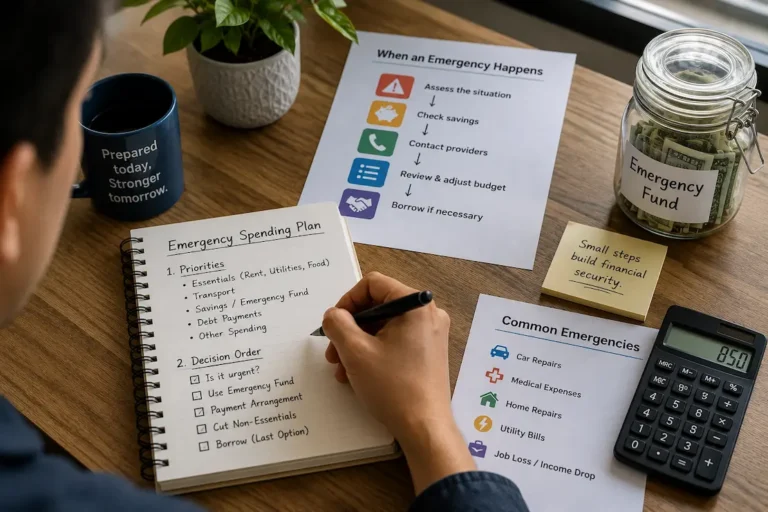
Even the best payment system can’t predict every situation. A vehicle repair, medical expense, damaged phone, or urgent home repair can disrupt an otherwise organized month. The goal isn’t to prevent surprises—it’s to stop them from disrupting everything else.
Many people find it helpful to leave a small portion of their monthly budget unassigned rather than allocating every dollar immediately. This gives you some flexibility when something unexpected happens. It doesn’t need to be a large amount.
Even a modest financial buffer can reduce the temptation to rely on credit or short-term borrowing for relatively small emergencies. A payment system becomes more resilient when it expects occasional surprises instead of assuming every month will go exactly as planned.
Instead of Blaming Yourself, Reflect on Your Financial System.
People often abandon budgets because they feel like a failure. Many financial systems collapse when they don’t align with reality.
Perhaps you’ve started freelancing, moved to a new city, begun paying tuition fees, or taken on new family responsibilities. A payment system you set up a year ago might no longer suit your current situation.
Don’t ask yourself:
- “Why do I always overspend?”
Instead, ask yourself:
- “Does my payment system still align with my spending habits?”
This small shift in perspective will lead to improvement rather than frustration.
By reviewing your settings every few months, you can:
Remove payment methods you no longer use.
- Renew subscriptions.
- Adjust categories to reflect new priorities.
- Identify new spending patterns.
- Stay organized without having to start from scratch.
- A financial system needs to grow with you.
Small Habits That Make Tracking Much Easier
A good payment system is usually based on basic habits, not complex tools.
Here are a few steps:
- Keep digital receipts for major purchases.
- If your bank allows it, give your bank accounts descriptive names.
- Consider reviewing your recurring subscriptions every few months.
- As a freelancer, keeping your business and personal income separate is important.
- Make it a habit to check your bank statement for unrecognized transactions regularly.
- Conduct a monthly financial review. Use a calendar.
These habits don’t require expensive software, but in the long run, they make it easier to understand your spending.
Conclusion
A personal digital payment system does not require a perfect plan or a need to track every single cent. The goal is to create a system that helps you understand your finances and reduce unexpected expenses.
By assigning a specific purpose to each payment method, you can more easily identify major expenses and spot waste, and turn your monthly financial review into a process that takes minutes rather than hours. The best system isn’t necessarily the most complex one. It should be a system you can use consistently as your income, obligations, and financial goals evolve.
Instead of searching for the perfect budgeting method, focus on establishing a clear, practical, and sustainable payment routine. When you have a clear view of where your money goes, you can make financial decisions with greater confidence.
FAQs
1. Can I set up a digital payment system without a budgeting app?
Yes. Many people use online banking, e-wallets, and standard payment methods… Review your plans monthly. Budgeting apps can be helpful, but they aren’t essential.
2. Which payment methods should I use?
There is no standard rule. The most important thing is to use only those payment methods you can easily manage and monitor. If in doubt, consider consolidating multiple accounts to get a better overview of your finances.
3. Should I use just one card for everything?
Using a single payment method simplifies monitoring, but separating certain payments (such as business expenses or recurring bills) can improve financial management. Choose a payment method that gives you a clearer picture of your monthly income and expenses.
4. How often should I review my digital payments?
Many people only need to quickly check when they receive their salary and then check again at the end of the month. If your income fluctuates frequently, you may need to check more often.
5. Is setting up automatic payments always a sensible idea?
Automatic payments are suitable for recurring expenses with a fixed amount. For expenses with variable amounts, it is best to check before each payment to avoid unexpected costs that could disrupt your plans.
6. What are the most common mistakes people make when tracking digital spending?
The problem is that many people focus solely on recording every transaction while ignoring the system as a whole. Instead of manually tracking every expense, it is often more effective to assign a specific purpose to each payment method and review your spending regularly.