New York Assessments: Read the Value Columns
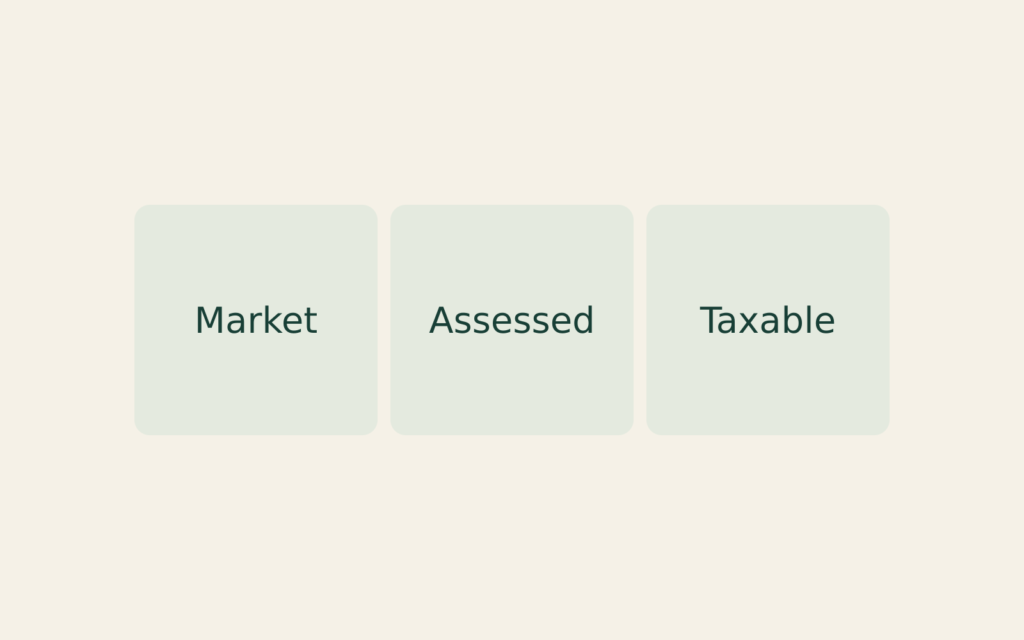
Compare the value columns on New York property-assessment records without treating assessed, market, and taxable values as interchangeable or as a finished tax estimate.
Estimated reading time: 5 minutes
This is a New York document-reading guide, not a property valuation, tax estimate or challenge to an assessment. It supplies no payment instructions and doesn’t change a mortgage obligation.
An assessed value may be only a percentage
New York’s assessment guidance says taxable properties within a municipality generally use a uniform percentage of market value, with different systems in New York City and Nassau County. This guide excludes those two systems.
An assessment below an estimated selling price isn’t automatically an error. First identify whether the community assesses at full market value or a fraction of it. Compare the stated level and the corresponding value column rather than treating every dollar figure as a proposed sale price.
Identify what supports the valuation
The state describes a market approach that compares a property with similar properties recently sold. It also describes cost and income approaches for other valuation circumstances, and computer-assisted mass appraisal techniques. The method and supporting property information matter more than simply finding another number online.
For a residential comparison, ask which characteristics and sales support the estimate. A nearby sale is a starting question, not proof that the properties are interchangeable. If the record describes a different structure or property condition, identify the particular discrepancy rather than supplying only a preferred value.
This is preparation for an assessor conversation, not an appraisal performed by this article or a promise of a reduction.
Don’t add land to a total that includes it
The roll’s total assessment includes land and improvements. Adding the separate land assessment to that total would count land twice.
The tax-map parcel number, also called SBL, connects the roll with the bill. Match identifiers, not similar addresses.
Exemptions on the roll are jurisdiction-specific; don’t copy one taxable-value row into another.
Two dates describe different things
The valuation date fixes the price level used in the assessment cycle. The taxable status date concerns ownership and the property’s physical condition. They aren’t two names for the date you downloaded the record.
The state’s cycle guide also separates the tentative roll, containing proposed assessments, from the final roll, which includes changes. Keep the document’s status visible when comparing two versions. A change notice and an older roll extract may describe different stages rather than an unexplained contradiction.
Dates vary locally. Ask the assessor for the applicable calendar promptly if a record needs clarification. This article supplies no grievance deadline, exemption application deadline or extension of either.
The tax bill needs more than an assessment
A taxable assessment is the assessed value less granted exemptions. The taxing jurisdiction’s budget, other revenue and total taxable assessment base help determine its tax rate. A value on an assessment record therefore isn’t, by itself, the amount owed.
The state commonly expresses rates per $1,000 of taxable assessed value. Read the units before using a rate; a per-thousand figure isn’t the same as a percentage applied directly to every dollar.
Budgets, revenue, taxable values and levy distribution can change a bill, as can an assessment or exemption. Ask which component changed; a higher bill doesn’t prove the assessor increased the value.
Equalization isn’t an individual correction
An equalization rate measures a municipality’s overall level of assessment. These rates aren’t intended to correct unfair individual assessments within a municipality.
The state reviews the locally reported level of assessment. If it can’t confirm that level, it uses an independent estimate of total market value.
For an individual assessment concern, ask the assessor about the property record and applicable review process. A municipal statistic alone doesn’t establish that this parcel’s valuation is correct or incorrect.
STAR credit and exemption leave different records
The STAR exemption reduces the school tax bill. The STAR credit instead provides a payment to the eligible recipient. The state says a homeowner can receive one or the other, not both.
Therefore, looking only for an exemption line can’t establish that no STAR benefit exists. First identify the benefit type in the actual state records, then compare the corresponding bill or payment evidence. Don’t subtract an expected credit from the bill and describe that subtraction as a posted payment.
This distinction doesn’t determine eligibility, payment timing or the amount of a benefit. Nor does it recommend switching programs. Ask the responsible office which benefit record applies.
| Read | Together |
|---|---|
| Value | Column label |
| Rate | Units |
Keep identifying and financial details out of public comments. When requesting clarification, identify the exact page and conflicting entry through the office’s appropriate channel. Retain its actual response, not a paraphrase that silently closes a question the office did not answer.


Roth Conversion and Account Clocks
Separate five-year tests.

ABLE Distributions Across Month-End
Separate retained purposes.