Phone Financing Records
Distinguish a phone’s installment balance, promotional credits and replacement claim. Check the named program’s records before comparing these amounts.
Estimated reading time: 5 minutes
A phone’s installment balance, promotional credit and replacement claim describe different amounts. Read the program’s records before treating them as interchangeable.
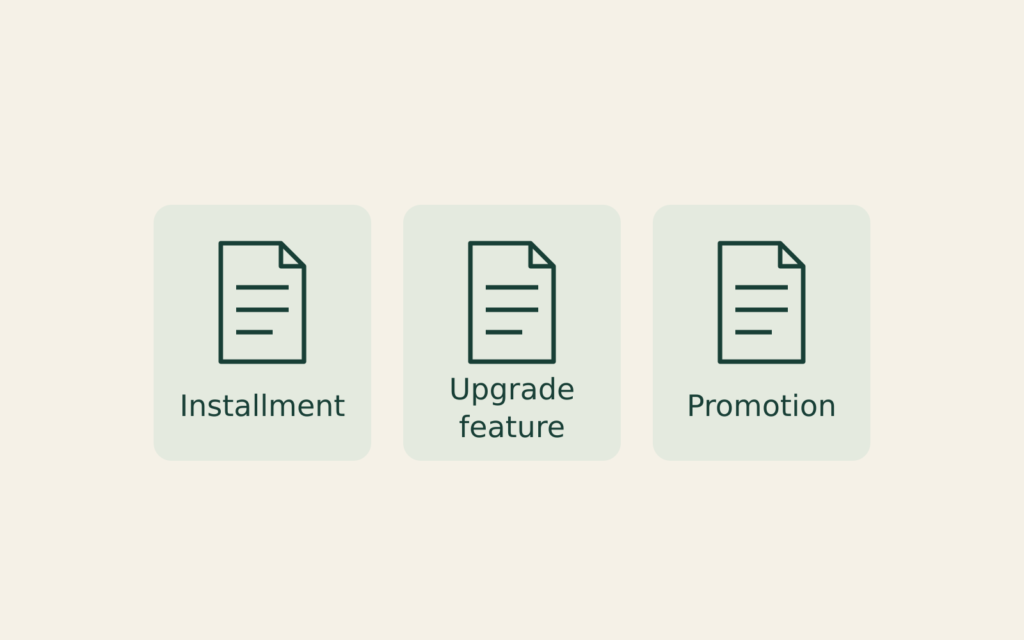
Locate the recurring device promotion
Verizon’s promotion FAQ says its credits appear as “Device Promo” within monthly or one-time charges and credits. They reduce the overall bill and generally take one or two billing periods to appear. The promotional amount is spread across the term, including for qualifying purchases made at full retail price.
Its FAQ identifies early payoff, an early upgrade and a change to an ineligible plan among events that stop credits. A full-price purchase therefore doesn’t automatically mean the entire advertised promotion arrives immediately.
For an existing Verizon offer, the useful evidence is the promotion’s term and the actual Device Promo entries, rather than only the phone’s purchase receipt. Identify which monthly credit has appeared and which remains conditional. Don’t substitute another carrier’s promotion rules for this named explanation.
Separate the upgrade feature from principal
AT&T’s August 21, 2026 explanation describes Next Up Anytime as a separate $10 monthly charge alongside the phone’s 36 installment payments. That charge doesn’t reduce the installment balance. The older Next Up option is no longer available for new enrollment; its described $6 monthly charge likewise doesn’t pay down the phone.
A statement naming an upgrade feature consequently needs its own line in a payment review. Calling the entire combined charge a device installment would overstate the amount being applied to the phone’s price.
The page also distinguishes extra installments from full payoff: it says customers can’t make extra payments against the installment balance, but may pay the full remainder. That’s AT&T’s stated payment structure, not the repayment rule for every device-financing arrangement.
Read the reimbursement evidence and exclusions
T-Mobile’s Keep and Switch guidance requests a previous carrier’s summary-bill PDF showing the carrier, device make and model, financing tenure, mobile number and payoff amount. It requires an eligible device payment plan held for at least 90 days and at least three successful minimum payments, alongside its other participation conditions.
The device used on its network must be the device identified in the previous carrier’s financing agreement.
The published reimbursement excludes taxes on device financing and current or past-due monthly service charges. Its virtual prepaid Mastercard has no cash access and expires in six months. Those limitations describe a restricted reimbursement instrument, not an unrestricted cash deposit covering every line of an old bill. No individual eligibility is established here.
Distinguish the installment from other card charges
Apple’s Monthly Installments explanation says each purchased device has its own installment plan, while the amount financed reduces available Apple Card credit. The installment is included in the card’s minimum payment. Taxes and shipping are outside those installments: they are charged to the card and subject to its variable APR.
Thus, the installment detail and the card statement answer different questions. A zero-interest device installment doesn’t describe the interest treatment of every charge associated with that purchase.
Apple also gives a specific first-bill anchor: installments are billed on the last day of the month, beginning in the month the device ships or is collected from the store. The record to match is that shipment or pickup event, rather than assuming every purchase receives a full month before its first installment appears.
Identify a rejected trade-in chargeback
Samsung’s rejection explanation says a device that fails its requirements is valued at zero and an inspection result is emailed. The trade-in credit used for the new purchase, plus applicable taxes, is then charged to the original payment method.
That sequence gives an unexpected charge a specific set of records: the original credited purchase, inspection email and later payment-account entry. A shipping receipt alone doesn’t state Samsung’s assessment or the amount subsequently charged.
The page separately describes a seven-day opportunity to request the rejected device back, with return conditions. It excludes damaged or swollen batteries from return because they are unsafe to ship. Review the actual notice promptly; this description neither extends that window nor promises a return. It doesn’t instruct anyone to inspect, repair or ship an unsafe device.
Read what a replacement claim actually provides
Asurion’s mobile-protection FAQ says covered devices depend on the wireless provider’s program. A replacement can be new or refurbished, and its color, brand, model or features may differ. Accessory compatibility isn’t guaranteed.
The company describes the deductible as required to complete a claim and ship the replacement. Its requested claim information includes the device’s make and model. Those fields help distinguish the insured item and replacement arrangement from a general purchase-price figure.
Its FAQ also describes an affidavit as additional information sometimes required to process a claim and verify authorized users. A deductible payment, an affidavit request and a replacement shipping record therefore document different parts of that named process. Read the actual carrier program’s coverage and conditions; the general FAQ isn’t a decision that a particular loss is insured or a particular model will be supplied.

Parent Pays Student Loan Interest: Who Deducts?
Separate payment and obligation.

Returned Loan Debit: Two Fees?
Trace the payment and fees.

Rehabilitation Payment Too High?
Check an alternative request.