SBA Disaster Loan Declined: Match the Review Stage
An SBA disaster-loan decline should start two separate tasks: identify the review procedure and connect each stated reason to evidence.
Estimated reading time: 5 minutes
An SBA disaster-loan decline should start two separate tasks: identify the review procedure and connect each stated reason to evidence. Sending a larger version of the original application isn’t necessarily a useful answer to the decision.
This guide concerns business disaster-loan applications for disasters declared on or after July 31, 2023. It doesn’t reopen a closed program, address ordinary bank-loan denials or determine whether a particular applicant can obtain funding. Use the actual notice and seek prompt SBA or qualified legal help when the stage or deadline is unclear.
Match the decision to the review stage
Under 13 CFR 123.13, a non-size decline can be challenged through written reconsideration received by SBA’s Disaster Assistance Processing and Disbursement Center within six months of the decline notice’s date. After six months, a new application is required. A second decline permits a written appeal to the center’s Director or designee, received within 30 days of the decline action. It must identify itself as an appeal and explain why the decision should be reversed.
Size-based declines follow Part 121 instead; this section excludes IDAP loans. These are receipt requirements, not permission to wait until the last day to send something. Don’t assume a phone inquiry preserves a deadline.
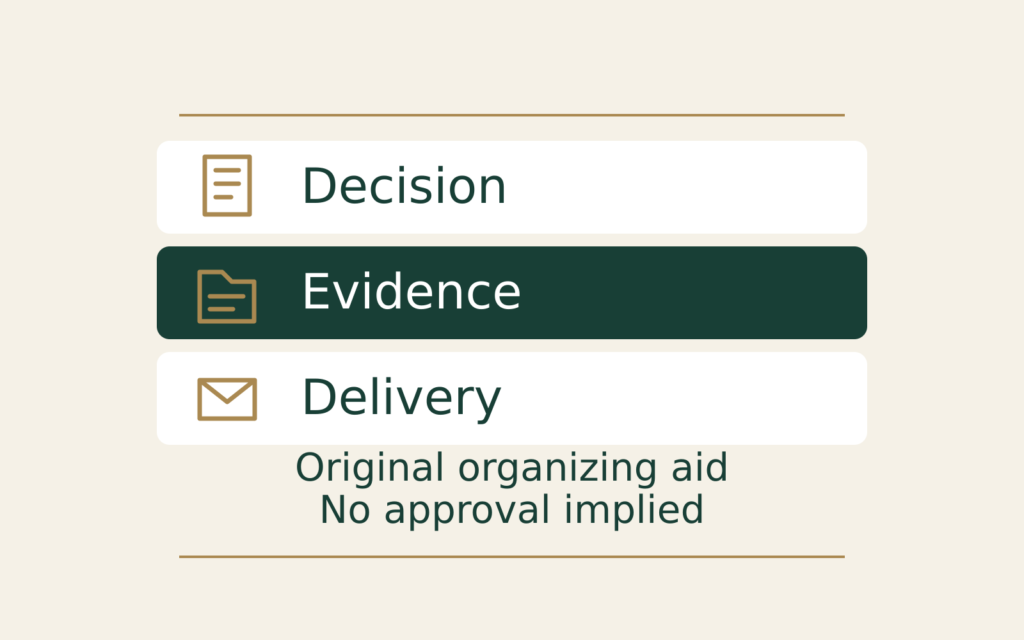
Keep the initial decision, any reconsideration request, its delivery evidence and the later decision together. A second copy of the same initial notice isn’t automatically a second decision. Read the substance and references, not just the number of emails in the folder.
Make a notice index before assembling attachments
Use a private cover sheet with the application reference, disaster identification, decision date, stated reasons and exact submission instructions. Copy the notice’s wording where needed for your own review; don’t rewrite an unclear reason into a more convenient one.
| Record | Question it answers |
|---|---|
| Decision notice | What was decided and why? |
| Earlier submission | What information was already supplied? |
| New evidence index | What changed or clarifies the disputed point? |
| Delivery record | What was sent, where and when? |
If the notice names more than one reason, keep separate entries. Answering a location question doesn’t automatically answer a repayment question. Mark a genuinely unresolved item as unresolved rather than letting a complete-looking attachment list hide it.
Choose evidence that addresses the reason
SBA’s 2023 rule change, applicable to disasters declared from July 31, 2023, removed the blanket requirement for current business financial statements with every business reconsideration request. SBA explained that repayment-ability declines still require them, while other reasons may not. The current rule requires significant new information relied on to overcome the denial.
This isn’t an instruction to withhold documents SBA requests. It explains why a packet should answer the actual issue rather than follow an old universal checklist. Ask what remains necessary when the requested evidence or its purpose is unclear.
Consider a fictional workshop whose decline raises an unresolved operating-location issue. The owner has a newer bank statement showing more cash, plus an omitted lease addendum identifying the premises for the relevant period. The cash statement concerns financial resources; it doesn’t explain the address discrepancy.
The owner can index the lease addendum against the location reason, identifying its date, the relevant passage and how it relates to the address already submitted. This doesn’t establish that the premises qualify or that the addendum will overcome the decline. SBA must assess the actual facts and applicable declaration.
Explain what is new without altering the old file
For each attachment, add a short description: previously omitted document, corrected record from its issuer, additional period of records or explanation of an inconsistency. These are organizational labels, not official findings that the information satisfies SBA’s standard.
If a document corrects an earlier figure or address, preserve the earlier version and explain the correction. Don’t silently overwrite the saved application. A reviewer should be able to follow what changed and who supplied the corrected information.
A useful evidence note answers three questions: Which stated reason does this address? What fact does the attachment support? What uncertainty remains? Avoid claiming that a document proves more than it contains. A lease identifies its parties and premises; it doesn’t by itself establish every aspect of disaster impact or repayment capacity.
Verify the submission route and preserve the result
SBA’s current disaster page links its official Loan Portal for application status and provides disaster-loan help options. Start there to verify a contact or seek clarification; don’t reuse a pandemic-era email address from an online discussion.
Follow the case-specific instructions you verify. Before sending, compare the attachment list with the actual files, check that pages are readable and confirm the correct application reference. Keep sensitive business and owner information inside the approved private process, not a public comment or a message to EasyLoanWorld.
Save the submitted packet and available receipt. If receipt is uncertain, contact SBA promptly; an outgoing message alone shouldn’t be treated as proof that the required office received a complete request. Record what SBA actually confirms without converting acknowledgment into approval.
A review request isn’t available cash. Keep immediate operating needs and any financing decision separate while the outcome remains unresolved. This is general financial education, not individualized legal advice or an appeal filing service.

SBA 504 Payoff: Keep Both Loan Records Separate
Separate loan identities, preliminary estimates and final payoff figures.

SBA Building Purchase: Measure Occupied Space Before Counting Tenant Rent
Build a classified area worksheet before relying on tenant rent. See how an omitted 500 square feet changes a fictional building’s operating-use calculation.

SBA 7(a) Prepayment: Check the Ledger Before Paying Extra
Use a fictional SBA 7(a) payment worksheet to separate assumptions, principal reduction and cash needed before requesting a written lender calculation.