Social Security: When Family Payments Change
A Social Security family maximum can change a child’s payment without reducing the retired worker’s own benefit.
Estimated reading time: 1 minute
A Social Security family maximum can change a child’s payment without reducing the retired worker’s own benefit.
Compare two monthly records
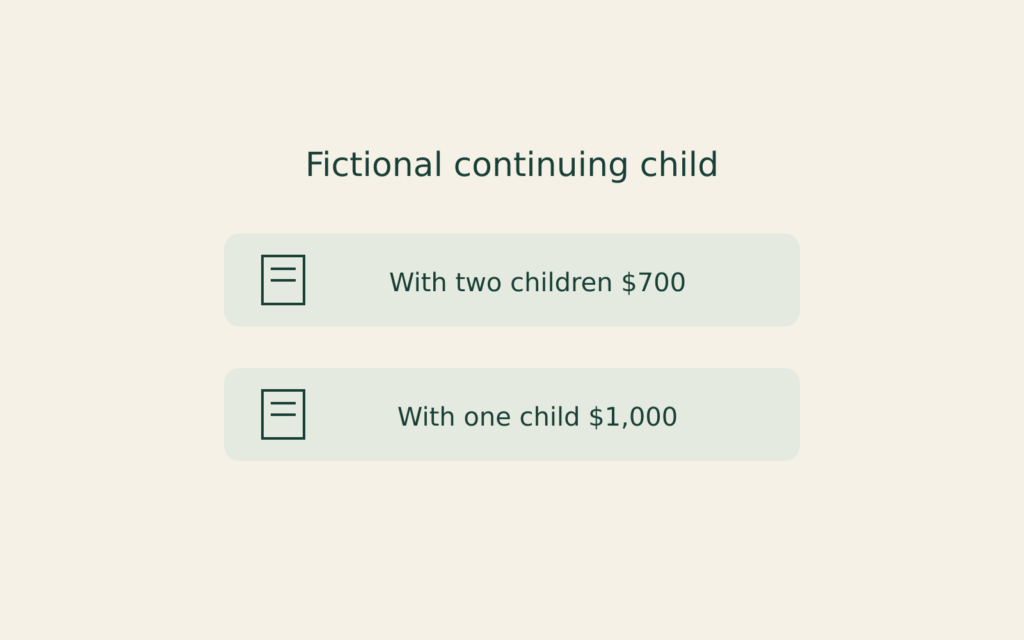
Assume SSA confirms these fictional inputs: a retired worker’s primary insurance amount and unreduced benefit are $2,000; the applicable family maximum is $3,400. Two eligible children each have a $1,000 benefit before the family-maximum adjustment. No other beneficiaries, other earnings records, deductions or special exceptions apply.
SSA’s handbook adjustment method (last revised in 2003) leaves $1,400 after subtracting the worker’s $2,000. The two equal child benefits become $700 each; the worker still receives $2,000.
Next month, assume SSA confirms one child is no longer eligible and nothing else changes. The remaining child receives $1,000, not the entire $1,400 remainder. The total becomes $3,000: $2,000 plus $1,000.
A maximum is not a promised household payment. These supplied inputs illustrate one retirement record, not eligibility or a statutory maximum calculation. Actual notices must establish the beneficiaries and applicable adjustments.
Roth Conversion and Account Clocks
Separate five-year tests.
ABLE Distributions Across Month-End
Separate retained purposes.