Study-Abroad Funding Records
Separate the academic arrangement, billing institution, funding recipient and permitted expense before borrowing for study abroad.
Estimated reading time: 5 minutes
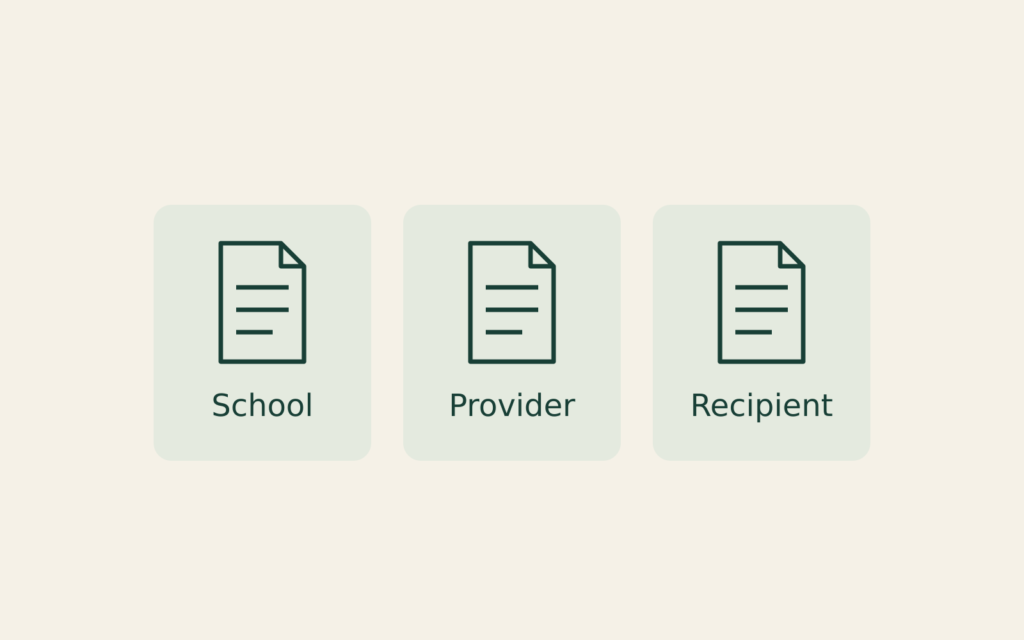
Before borrowing for study abroad, distinguish the academic arrangement, billing institution, funding recipient and permitted expense. Named programs illustrate different questions.
Identify the home school and written arrangement
The 2026–2027 Federal Student Aid Handbook calls the degree or certificate institution the home school. A host school supplies part of the student’s program requirements under an arrangement. The home institution must give credit on the same basis as its own instruction.
A domestic institution’s arrangement with a foreign school is treated as contractual, even when the foreign institution is otherwise eligible for federal student aid. That administrative classification isn’t a conclusion that the student can’t receive aid.
The handbook also describes agreements with organizations representing foreign schools. Their written arrangements must describe each entity’s responsibilities. By contrast, sending the home institution’s faculty and students to a foreign site can involve an additional location rather than this contractual arrangement. Identify which structure the school actually uses; a destination name alone doesn’t answer that question.
Read the home institution’s billing requirements
Penn State’s education-abroad billing page says approved programs are billed through the student account. Semester and summer bills follow the university’s regular billing timeline, procedures and policies. Embedded-program participants instead need the faculty leader’s explanation of how travel fees are collected.
Its registration-system requirements continue while students are abroad, including when financial aid covers billable expenses. The page identifies required forms that may include an online-business consent and a financial agreement submitted annually or each semester. Being away doesn’t by itself remove those requirements.
Penn State’s cost definitions describe non-billable costs as anticipated expenses absent from its bursar bill.
Compare the specific exchange and direct products
ISEP’s budgeting page distinguishes its Exchange and Direct programs. For Exchange, the home institution charges tuition, housing, meals or board, and applicable administrative fees. ISEP charges the student, or sometimes the home institution, for application, placement and health-insurance charges.
For Direct, ISEP charges the student or home university for application, placement and the program fee. Housing is charged for most programs; meals or board are charged for some. The relevant program page supplies the expected inclusions, so the two product labels shouldn’t be treated as identical packages.
ISEP also flags recurring obligations at home and earnings lost while abroad. Its examples include existing loan or credit-card payments and subscriptions.
Distinguish provider deferral from a direct transfer
The University of Kansas guidance identifies placeholder-course and required fees charged to its student account for student-initiated programs.
For these programs, signing up for provider payment deferral doesn’t mean KU transfers aid directly to that provider. KU describes the arrangement as delaying payment until the student receives a financial-aid refund. Aid first pays charges on the KU account; excess is subsequently refunded under its process.
The same page gives a separate scholarship restriction: KU freshman and transfer merit scholarships are available in fall and spring, not summer. For the specified freshman awards used on semester or academic-year programs, tuition use is limited to the standard award or host tuition and fees, whichever is lower. Those restrictions concern named KU awards, not every study-abroad scholarship.
Identify the scholarship’s permitted payment recipient
The Gilman program’s receiving-scholarship page says funds are sent after all recipient requirements have been approved. Its published processing window is two to three weeks following that approval, not simply the date a student first learns of an award.
The program distributes funds only to the recipient’s U.S. checking or savings account. A joint account is acceptable if the recipient is listed. It doesn’t distribute the award to another individual or institution. That recipient restriction is specific to this scholarship.
The page describes email-based Zelle delivery, not telephone-number delivery, and requires matching information. It also lists limited circumstances for requesting an alternative method: an unsupported bank after verification of its transfer capability, or being abroad and unable to complete registration. This describes published payment conditions, not instructions to change account credentials or a confirmation that any particular payment has arrived.
Keep expense classification separate from the package
Invest529’s higher-education guidance distinguishes study-abroad education expenses from travel and sightseeing, which it says don’t qualify. Its separate discussion says transportation, insurance and extracurricular costs are usually ineligible. An item being useful for an overseas trip doesn’t settle its treatment under this guidance.
For room and board, the page specifies at least half-time enrollment and limits off-campus housing costs to the school’s published cost of attendance. The plan also calls for housing-cost documentation. It distinguishes required, curriculum-related school-billed programs from optional field trips or extracurricular activities not required for credit.
Use those classifications to ask about the actual item, enrollment and supporting school record rather than treating an entire travel package as one qualified expense. This describes the plan’s guidance, not a personal tax determination.

Parent Pays Student Loan Interest: Who Deducts?
Separate payment and obligation.

Returned Loan Debit: Two Fees?
Trace the payment and fees.

Rehabilitation Payment Too High?
Check an alternative request.