Credit Report Errors: Build a Clear Dispute and Track the Result
Build a specific evidence packet, track sent and received dates separately, and verify whether a credit-report discrepancy was corrected.

A useful credit-report dispute makes three things easy to find: the exact entry you question, the records that support your position, and the correction you want. Start with the report in front of you, then build a small evidence packet and a record of what happens next.
This guide is for U.S. consumers who already have a report. If you still need one, see how to obtain your free credit reports. This is general educational information, not legal advice. A dispute does not guarantee a deletion, a score increase, or a particular lending decision.
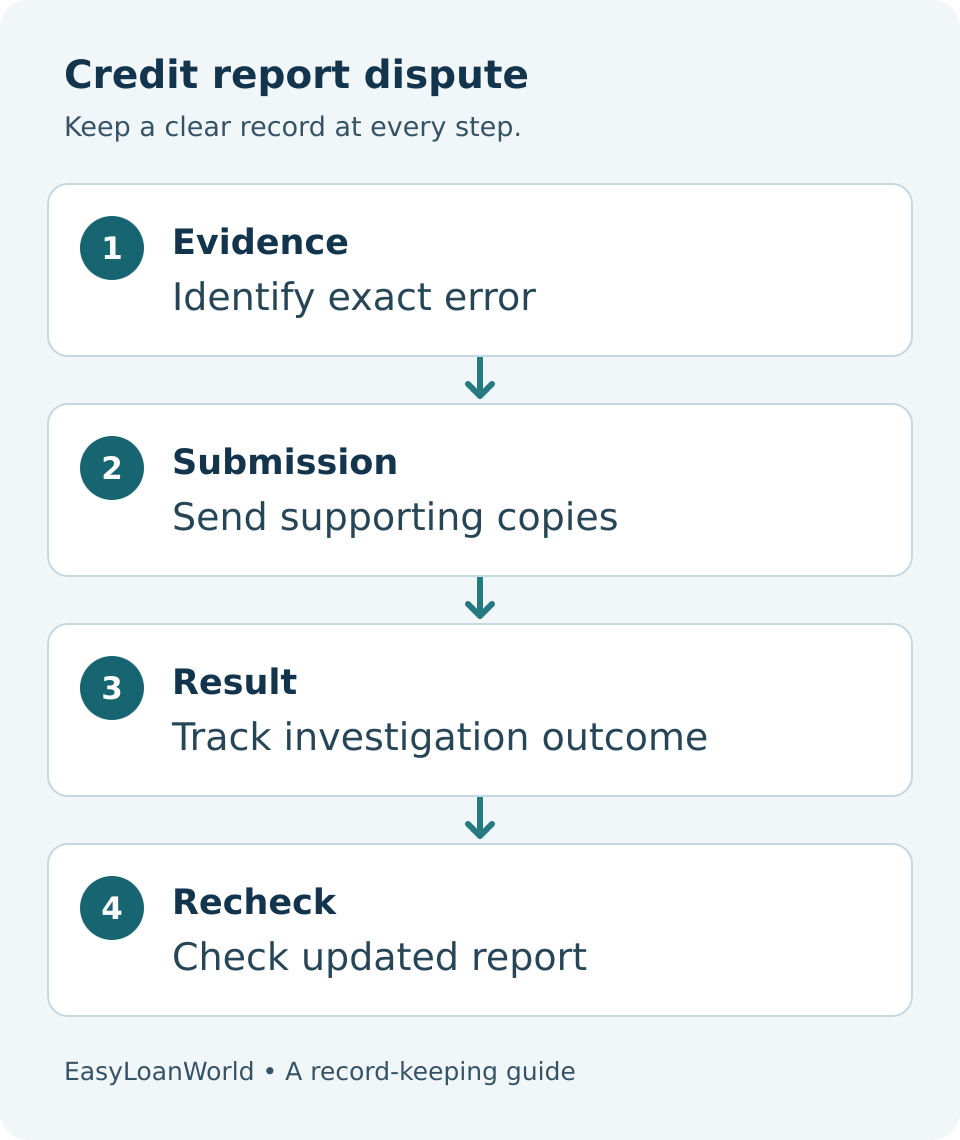
1. Separate an error from a difference in dates
Write down the bureau, report date, account identifier, disputed field, and the date associated with that field. Compare those details with your own records before describing the problem.
A balance on an older report and a balance in today’s lender portal describe different snapshots. Their difference alone does not establish an error. For a credit-card balance, our credit-utilization record check can help you organize the comparison.
Also distinguish inaccurate information from information you dislike. Accurate negative history is not automatically removable just because you dispute it or later pay the account. The FTC explains the distinction between errors and accurate negative information.
If an unfamiliar account suggests someone used your identity, visit IdentityTheft.gov for the federal recovery process. Do not treat suspected identity misuse as only a balance correction.
2. Build an evidence packet around one clear request
Include contact details, the report confirmation number if available, account identification, the disputed entry, your explanation, and requested correction. Attach a marked report section and supporting copies; keep originals. See the CFPB’s dispute instructions.
For your own organization, give each attachment a plain label, such as “A: report entry” and “B: lender balance confirmation.” A short attachment list makes it easier to check that you actually included every record mentioned in your explanation.
Keep the packet private. Do not post your report, account numbers, identification documents, or dispute letter in comments or send them to EasyLoanWorld. Use the intended company’s official dispute channel and follow its identification requirements. Avoid including unrelated financial records.
Worked example: a paid installment account still shows $420
Fictional illustration: Jordan downloads a report on October 12, 2026. An installment account ending 4821 shows a current balance of $420 and an account update date of September 30, 2026. Jordan has a lender letter dated September 20 confirming the account was paid in full with a $0 balance effective September 18.
The confirmation predates the reported update. That gives Jordan a specific discrepancy to ask the companies to investigate. It does not, by itself, prove what the investigation will find.
Jordan’s explanation could read:
I dispute the $420 current balance for the installment account ending 4821 on my October 12, 2026 report. The entry lists September 30, 2026 as the account update date. The attached lender letter dated September 20 confirms a $0 balance effective September 18. Please investigate this discrepancy and correct the current balance to $0 if your investigation confirms the lender’s records. Attachment A is the marked report entry; attachment B is the lender’s paid-in-full confirmation.
Jordan checks that both documents identify the same account. The requested change concerns the current balance; Jordan does not ask to erase the entire account or its payment history.
In this example, Jordan mails the bureau packet on October 13 and records confirmed delivery on October 16. The separate lender packet is mailed October 14 and delivered October 17. Those are different receipt dates for different recipients. Jordan’s tracker says “investigation pending; correction not yet verified.” No successful outcome is assumed.
3. Contact the bureau and the information provider
Dispute with each affected bureau and information provider (furnisher). The FTC’s dispute guide explains this free process.
Use the CFPB’s official bureau dispute links and mailing guidance. Retain submission evidence.
4. Track receipt, investigation, and results separately
A bureau generally has 30 days from receipt to investigate. Some investigations can take up to 45 days, including disputes after a free annual report or when relevant additional information extends the initial period. The bureau has five business days after completing its investigation to notify you of the results. See the CFPB’s timing explanation. These periods are not a promise of correction by a particular date.
Use one tracker entry per recipient:
- Company and disputed account or field
- Submission date and confirmed receipt date
- Confirmation or tracking number
- Documents sent and any later additions
- Investigation status and date results arrive
- Stated outcome and date you verify the report
Keep “sent” and “received” as separate entries. If receipt is unknown, mark it unknown rather than calculating a deadline from an assumed date. Save subsequent correspondence beside the original packet.
5. Verify the actual field after the result arrives
Read the written result, then inspect the report rather than relying only on a case status such as “closed.” If a dispute changes reporting, you receive a free updated report. Verify the disputed entry.
For Jordan, verification means finding account ending 4821 and checking its current balance, update date, and any explanation accompanying the result. A closed case with the same $420 balance is not a verified correction. Record what changed, what did not, and which report you checked.
6. If the discrepancy remains unresolved
Compare the response with your specific request. Did it address the balance and dates you identified? Is there a missing document or an account mismatch? Build any follow-up around that concrete issue rather than repeatedly sending the same unexplained request.
If the bureau considers a dispute frivolous or irrelevant, review the stated reason. Insufficient detail can be a problem. If the furnisher maintains that its reporting is accurate, you can ask the bureau to include a statement explaining the dispute. The CFPB describes these possibilities.
For a CFPB complaint against a credit reporting agency about inaccurate or incomplete report information, first dispute directly with that agency. The CFPB’s current complaint notice says not to submit unless the dispute is no longer pending or 45 days have elapsed since filing. Its attestation refers to a dispute submitted more than 45 days ago or one no longer pending. Review the current notice and attest truthfully before proceeding.
The practical goal is a traceable record: the disputed field, the evidence, proof of receipt, the response, and a fresh check of the entry. Keep the outcome marked unresolved until the report and supporting records justify changing it.
Sources checked October 19, 2026. Cover photograph: Cht Gsml on Unsplash, used under the Unsplash License. The photograph shows general financial paperwork, not an actual credit report.

Credit-Builder Loan vs. Secured Card: A Cash-Access Checklist
Work through three fictional situations and four private questions before deciding whether a new account fits your needs.
Hotel Card Hold: Compare Two Checkout Payment Paths
Compare two fictional hotel checkout choices while keeping the original card’s capacity and the actual payment in separate records.
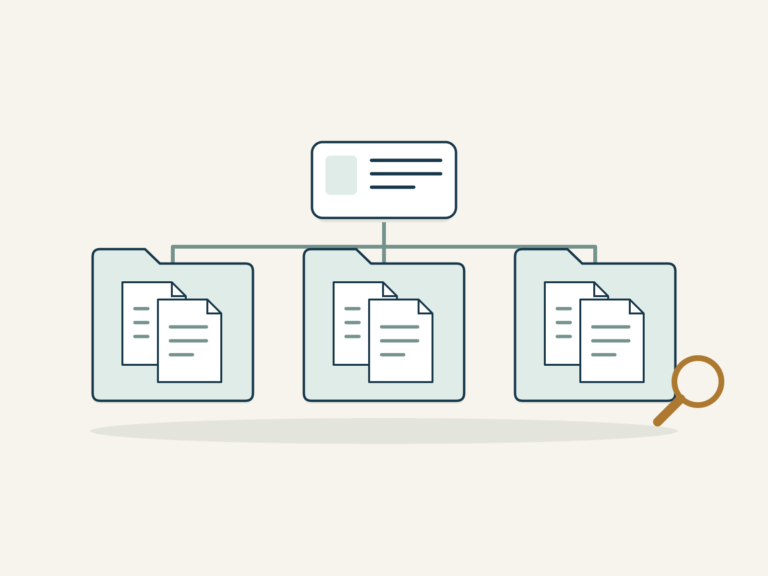
Overdraft Fee? Look Beyond the Online Bill Label
Compare three fictional document packets behind the same $60 ONLINE BILL entry, then identify what the records still leave unexplained.