What an Annual Percentage Rate Really Tells You About a Small Loan
The annual percentage rate, commonly called APR, is one of the figures that can help you understand the cost of credit more completely. Unlike a basic interest rate, APR is intended to reflect the interest rate together with certain finance charges associated with obtaining the credit. That makes it useful when comparing loan offers, although it does not tell you every possible cost or guarantee that one loan will be cheaper for your particular situation.
For someone considering a small loan, APR becomes especially important because fees and repayment terms can have a noticeable effect on the overall cost. A loan with a lower advertised interest rate is not automatically the better deal if it carries additional finance charges. Understanding what APR includes—and what it does not—can make a loan offer much easier to evaluate.
APR Is More Than the Interest Rate
The interest rate tells you the percentage used to calculate interest on the outstanding balance under the loan’s terms. APR is broader. Under U.S. federal lending rules, APR is a measure of the cost of credit expressed as an annual rate, and it incorporates the interest rate along with certain finance charges. This distinction matters because lenders can structure loans with different combinations of interest and fees.
Imagine two lenders offer similar small loans. Lender A advertises a lower interest rate but charges an upfront finance fee. Lender B, on the other hand, has a somewhat higher interest rate but fewer applicable finance charges. Looking only at the interest rates could make Lender A appear cheaper. Looking at the APR gives you another way to compare the cost of the credit. APR should therefore be viewed as a comparison tool rather than simply another word for interest rate.
Why a Small Loan Can Have a High APR
APR percentages can look surprisingly large on small-dollar loans. That does not necessarily mean the lender has made a mathematical error. The reason is partly related to how fixed fees interact with a relatively small amount borrowed. Consider a simplified illustration. Suppose you borrow $500 and pay a $50 finance charge. A $50 cost represents 10% of the original amount borrowed. If you repay the loan over a short period, expressing the cost as an annualized percentage can make the APR look much larger.
The annual percentage is designed to provide a standardized way of expressing the cost of credit over a yearly period. It does not mean you will necessarily pay that percentage as a simple annual fee on the amount you borrowed. The actual amount you pay depends on the loan’s balance, payment schedule, interest calculation, fees, and repayment period. That is why the APR should be read alongside the loan amount, payment schedule, and total repayment amount rather than viewed in isolation.
APR Can Help You Compare Different Loan Offers
One of the most useful purposes of APR is comparing credit offers that have different interest rates and finance charges. Suppose you are considering two loans for approximately the same amount:
| Loan | Interest Rate | Upfront Finance Charge | APR |
|---|---|---|---|
| Loan A | 12% | $100 | 18% |
| Loan B | 15% | $0 | 15% |
These numbers are illustrative rather than quotes for an actual loan.
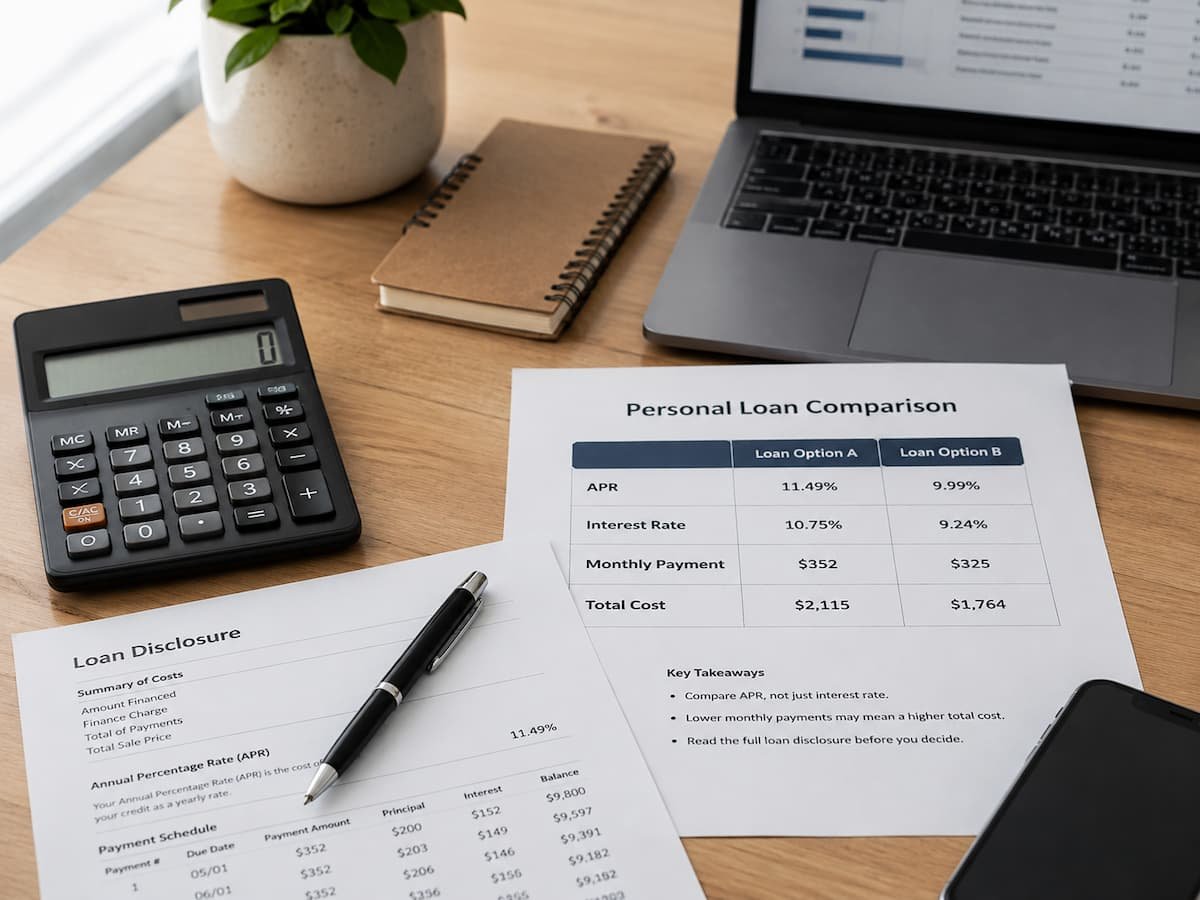
Loan A has the lower stated interest rate, but its additional finance charge can make its APR higher. If you compared only the interest rate, you could reach the wrong conclusion about which offer has the lower overall credit cost. This is one reason regulators require APR disclosures for many consumer credit products. The standardized figure gives borrowers another way to compare offers rather than relying solely on a headline interest rate.
However, APR comparisons work best when the loans have similar amounts, repayment periods, and structures.
APR Does Not Tell You the Total Amount You Will Pay
A common misunderstanding is treating APR as though it were the total cost of the loan. It is not. APR is an annualized measure of the cost of credit. Your actual financial obligation depends on the loan’s principal, interest, fees, payment schedule, and term.
For example, a borrower might see an APR of 12% and assume that borrowing $1,000 means paying exactly $120 in interest. That is not how most installment loans work. Interest is generally calculated according to the loan’s terms and outstanding balance, so the amount of interest paid depends on how quickly the balance declines and how the loan is structured.
The total of payments or total repayment amount can therefore be more useful when you want to know how many dollars will leave your pocket over the life of the loan.
A sensible comparison uses both figures:
- APR helps compare the cost of credit.
- Total repayment helps show the dollars you are expected to repay.
Loan Term Changes the Meaning of the Numbers
The repayment period can make a major difference to the financial impact of a loan. A short-term loan may have a higher required payment but allow you less time to accumulate interest. A longer loan may reduce the required monthly payment while extending the period during which interest can accrue.
Consider a hypothetical $2,000 loan. A borrower might have one option requiring repayment over 12 months and another over 36 months. Even if the longer-term option produces a smaller monthly payment, that does not automatically make it cheaper overall.
This is why monthly payment alone can be a poor way to compare loans. A smaller payment can simply mean that you are spreading the debt across more months. When reviewing a small loan, look at the payment amount, number of payments, payment frequency, APR, and total amount scheduled to be repaid. The combination tells you considerably more than any single number.
Fees Can Change the Real Cost of Borrowing
Fees deserve particular attention because they can be easy to overlook when a lender emphasizes the interest rate. Depending on the type of credit and applicable law, finance charges may include certain fees associated with obtaining credit. The exact treatment of a fee can vary, so borrowers should review the disclosures accompanying the particular loan rather than assume every charge is included in APR.
For example, an origination or administrative fee may affect the cost of credit and the APR calculation when it meets the applicable definition of a finance charge. Other charges may not be included in APR.
This is an important limitation: APR is not a universal “everything you could possibly pay” number.
Read the loan agreement and disclosures to identify late fees, optional products, penalties, and other charges that may affect your actual cost.
APR and APY Are Not the Same Thing
APR is sometimes confused with APY, but the two figures serve different purposes. APR is commonly used when describing the cost of borrowing. APY, or annual percentage yield, is generally used for deposit accounts and reflects the effect of compounding on the amount earned.
If you are comparing a savings account with a loan, you may encounter both terms, but they should not be treated as interchangeable. For a borrower evaluating a small loan, APR is the relevant borrowing-cost measure to examine alongside the loan’s other terms.
A Lower APR Is Usually Useful, But It Is Not the Only Question
If two loans have similar amounts and repayment structures, a lower APR can generally indicate a lower cost of credit. But real loan comparisons can be more complicated. Suppose Loan A has a lower APR but requires repayment over 48 months, while Loan B has a slightly higher APR but must be repaid over 12 months. The loans may have different monthly payments and different total dollar costs.
The borrower also needs to consider whether either loan has a variable rate, unusual fees, optional insurance or other products, early payoff provisions, or other terms that affect the decision. The right comparison is therefore not
“Which loan has the lowest APR?”
It is:
“Which loan gives me the financing I need at a cost and repayment schedule I can reasonably manage?”
APR is one of the most useful numbers in answering that question, but it should not be the only one.
Read the Loan Disclosure Before Signing
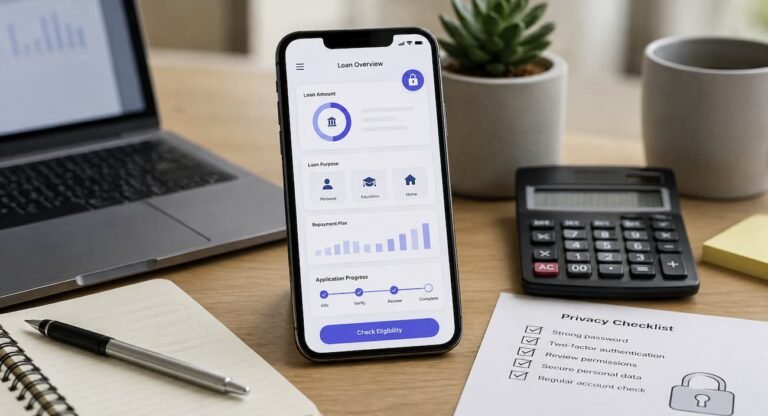
For many consumer credit products, lenders are required to provide standardized disclosures that allow borrowers to understand important loan terms. In the United States, the Truth in Lending Act and Regulation Z govern many of these disclosure requirements. Before accepting a loan, look for the amount financed, finance charge, APR, payment schedule, and total of payments where applicable.
Do not stop at the promotional statement on a website. The formal disclosure is where the details become clearer. Pay attention to whether the advertised APR assumes particular conditions, whether the rate is fixed or variable, and whether fees or optional products change the amount you actually receive or repay. If a number is unclear, asking the lender to explain it before signing is preferable to trying to interpret the contract after the money has been deposited.
Use the APR Alongside the Total Cost
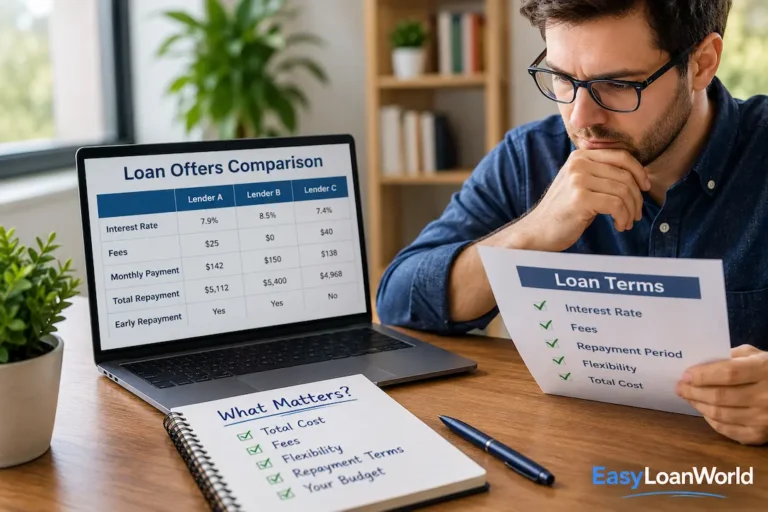
A practical way to compare two small loans is to create a simple side-by-side worksheet. Record the amount you will receive, APR, interest rate, finance charges, scheduled payment, number of payments, and total repayment amount. Then ask what happens if you pay the loan early or make additional payments, if the contract permits that. Also check whether the loan has fees that could arise later, such as late-payment charges.
This approach helps distinguish between the price of the credit and the cash-flow demands of the loan.
For example, a loan might have an attractive APR but a payment that is difficult to fit into your monthly budget. Another might have a somewhat higher APR but a payment structure that better matches your circumstances. That does not automatically make the second loan preferable. It simply shows why affordability and cost need to be evaluated together.
Be Careful With Very Short-Term Borrowing
Small loans with very short repayment periods deserve additional scrutiny because fees can represent a substantial portion of the amount borrowed. A borrower who needs $300 for a brief period may focus on receiving the payment quickly. But if the financing involves a significant fee, you may have to repay considerably more than you received.
This is one reason annualized rates can appear particularly high for short-term credit. Before accepting such a loan, calculate the actual dollar amount you will repay and compare it with alternatives that may be available. Potential alternatives could include delaying a nonessential purchase, negotiating a bill’s due date, using existing savings, or comparing another form of credit with different terms. The point is not that every small loan is unsuitable. It is that a small amount borrowed can still carry a meaningful financial cost.
APR Does Not Measure Whether You Can Afford the Loan
A loan can have a reasonable APR and still be unaffordable for a particular borrower. APR measures the cost of credit under the applicable calculation. It does not know whether your income is stable, whether you have other debts, or whether an unexpected expense would make the monthly payment difficult. That distinction matters because borrowing decisions involve two separate questions.
- First: How expensive is the credit?
- Second: Can I comfortably meet the repayment obligation?
A borrower should be able to answer both before taking on new debt. If the payment would leave little room for essential expenses or emergencies, a loan’s APR alone should not be used as evidence that borrowing is financially safe.
What to Compare When Shopping for a Small Loan
When you receive multiple offers, place the important numbers next to one another instead of comparing advertisements from memory.
| Loan Detail | Why It Matters |
|---|---|
| Amount borrowed | Shows how much credit you are receiving |
| Amount actually received | Helps account for applicable upfront charges |
| Interest rate | Shows the stated rate used to calculate interest |
| APR | Provides a broader annualized measure of credit cost |
| Finance charges | Shows certain costs associated with obtaining credit |
| Monthly or periodic payment | Shows the immediate cash-flow requirement |
| Number of payments | Shows how long repayment lasts |
| Total of payments | Shows the scheduled amount repaid over the loan |
| Late-payment charges | Identifies potential additional costs |
| Rate type | Helps determine whether the rate can change |
| Prepayment terms | Shows what happens if you repay early |
Not every loan will use identical terminology or have every category.
The important thing is to compare equivalent information.
Conclusion
The value of the Annual Percentage Rate (APR) lies in the fact that it gives borrowers a more complete picture of the cost of credit than the interest rate alone. This distinction is crucial for small loans. Even if advertised interest rates are low, loans may include financing costs that result in a higher effective annual rate. Furthermore, the APR is not the exact amount you will ultimately pay, nor does it guarantee that a particular loan is the best option.
When comparing APRs, you should consider the loan amount, financing costs, repayment amounts, the repayment term, and total repayments. Then, consider whether the repayments fit within your budget. The most effective loan comparisons are not based on an attractive figure, but on a full understanding of the entire loan agreement before taking out a loan.
FAQs
1. What does the Annual Percentage Rate (APR) mean for small loans?
The Annual Percentage Rate (APR) refers to the annualized interest rate. It represents the cost of credit as an annualized rate, usually including the interest and certain financing costs associated with obtaining credit.
2. Does a lower APR always mean a cheaper loan?
Not necessarily. The APR can be used to compare credit costs, especially when the loan structure is similar. However, you should also compare the loan term, total repayments, the repayment schedule, and other costs that may not be included in the APR.
3. Why are APRs on small loans relatively high?
Fixed costs can make up a large portion of the cost of small loans. When you calculate costs on an annual basis—especially with shorter repayment terms—the resulting annual interest rate can appear very high.
4. Does the annual interest rate tell me how much interest I have to pay?
No. The annual interest rate is an annualized measure of the cost of credit, not a direct calculation of the total interest you will actually pay. The actual amount depends on the loan amount, how the interest is calculated, the repayment schedule, fees, and the loan term.
5. Should I compare annual interest rates or monthly payments?
You should compare both, but for different reasons. The annual interest rate helps you estimate the cost of credit, while monthly payments indicate how much of your budget the loan consumes per repayment period. Sometimes, lower monthly payments do not result from lower total costs, but rather from a longer repayment period.
6. Are all loan costs included in the annual interest rate (APR)?
No. The annual interest rate (APR) includes certain financing costs as required by applicable regulations, but you should not assume that every cost you might incur is included. Consult your official loan documents and agreement for a complete overview of the costs.
7. Will the annual interest rate (APR) change over the life of the loan?
This depends on the specific loan. Some loans have a fixed interest rate, while others may have a variable rate under certain conditions. Consult your loan agreement to determine if—and under what circumstances—the interest rate and APR might change.