Upstart Arbitration Opt-Out: Which Agreement Does Your Notice Cover?
A fictional mailing resolves only one document’s status.

Estimated reading time: 8 minutes
An Upstart arbitration opt-out under its platform Terms doesn’t automatically reject the clause in a separate creditor’s promissory note. Review each agreement’s version, trigger date and notice requirements, then match the proof of each election to the document it actually covers.
Upstart’s published Terms, updated August 17, 2026, are independent of creditor agreements. Their arbitration opt-out applies only to those Terms. Don’t assume a platform election also changes your loan agreement.
The separately published CRB promissory note, labeled September 14, 2026, contains its own opt-out. This exercise concerns a personal loan and a borrower who isn’t covered by the Military Lending Act; the Note excludes covered borrowers from its arbitration section.
Upstart arbitration opt-out: compare the two triggers
Terms §17.P requires a signed written notice naming you, your address and account/loan number, stating your election. Its envelope must be postmarked within 30 calendar days after agreeing to the Terms.
Note §17.K similarly requires a signed mailed notice with your name, address and account number, but its 30-calendar-day postmark period starts when you sign the Note. Its election applies only to that Note; other provisions and loan obligations remain.
| Document | Trigger for the stated postmark period | Election applies to |
|---|---|---|
| Upstart Terms, §17.P | Date you agreed to those Terms; 30 calendar days. | Those Terms only. |
| CRB Note, §17.K | Date you signed that Note; 30 calendar days. | That Note only. |
Both examples refer to the envelope’s postmark. A date typed at the top of a letter is a different piece of evidence. Keep the signed notice and the mailing record together, and don’t silently substitute an email, telephone conversation or later loan date for the requirement in your own document.
Upstart arbitration opt-out: one completed election
Imagine Terms accepted October 1 and a Note signed October 8. An October 20 letter expressly identifies only the platform clause. For this exercise, assume that election was valid and that the file contains its signed copy and postmark evidence. No separate Note election or confirmation is supplied.
Record the platform election as confirmed under that assumption. The later Note-signing date doesn’t replace the Terms’ trigger date.
Keep the Note election unresolved. A successful platform opt-out doesn’t establish that the Note’s clause was rejected. This is a document-scope check, not a finding that either clause is enforceable.
The file has two agreements but evidence addressing only one. A folder label reading “arbitration handled” would hide the missing connection. Label each record with the document and version it actually addresses; leave the unsupported conclusion open.
| Record | Evidence supplied | Status in the exercise |
|---|---|---|
| Platform Terms accepted October 1 | October 20 signed notice expressly covering the platform clause, with postmark evidence. | Confirmed only because the exercise stipulates validity. |
| Note signed October 8 | No separate Note election or confirmation supplied. | Unresolved; the platform record does not fill the gap. |
Changing only the folder name or copying the platform confirmation into the Note folder wouldn’t supply the missing evidence. Conversely, the missing record alone doesn’t prove that no notice was ever sent; it tells you what you still need to locate or clarify.
Test an acknowledgment with limited scope
Return to the fictional file with Terms accepted October 1, a Note signed October 8 and the stipulated valid October 20 platform election. Suppose a later message says, “We received your letter,” without identifying an agreement or clause.
Retain that message, but don’t expand its scope beyond what it says. The original exercise already stipulates the platform election’s validity. The new generic acknowledgment supplies no separate evidence that a Note election was made or became effective.
A focused clarification question is: “Which agreement and version does this acknowledgment concern?” Keep the answer with the actual signed notice and mailing evidence. A response naming only the platform Terms still doesn’t establish the separate Note conclusion.
Likewise, a customer-service message about a loan account can concern payment servicing rather than arbitration. Match the subject and document reference instead of assuming that every response from the same company addresses every pending question.
This exercise classifies evidence, not enforceability. An acknowledgment, absence of a response or a folder status can’t by itself decide the legal effect of an actual notice. Obtain independent advice if that effect is uncertain.
Upstart arbitration opt-out: keep two notices identifiable if both are located
For a new independent file variation, suppose the borrower locates two signed notice copies: one expressly identifies the platform Terms, and one expressly identifies the Note. This is different evidence from the original single-notice file.
Give each copy its own document record showing the agreement title, version, clause, named recipient and associated mailing evidence. Don’t mark both legally effective merely because both drafts exist. The actual instructions and evidence still need review.
If both copies are associated with one mailing record, preserve what establishes the contents of that mailing. Don’t invent a separate postmark for each notice or declare that one envelope necessarily satisfies or defeats both elections. That question requires the applicable documents and facts.
If one saved copy is unsigned, label it as the copy you actually have. A later recreated signature or rewritten letter doesn’t establish what the earlier mailing contained. Preserve the original evidence and identify the missing link.
If mailing evidence concerns a different date or destination, record that mismatch explicitly. The goal is a file another reviewer can assess, rather than a convenient set of labels that conceals uncertainty.
Distinguish the dates in the file
The Terms acceptance date and Note signature date are separate triggering facts in the published examples. A letter’s preparation date, signature date, envelope postmark and delivery date are also distinct records. Keep their actual labels.
Suppose a working note says “letter dated October 20,” while an envelope record shows a different postmark. Don’t copy October 20 into a field labeled postmark merely because it’s the most prominent date on the letter.
Similarly, a loan funding date or first-payment date doesn’t automatically replace either agreement’s stated trigger. Ask what evidence supports the relevant acceptance or signature event in the actual file.
This organizer calculates no personal deadline and supplies no notice template. If a date is missing or a period may be running, seek prompt qualified help rather than waiting to complete a perfect archive.
Upstart arbitration opt-out: preserve the accepted version with the election record
A current public sample is useful for identifying questions, but it may differ from the agreement actually accepted. Save the applicable version and any supplied amendments alongside the event record. Don’t silently replace it with the newest download.
For the platform and Note files separately, note what is confirmed, what is inferred and what is absent. An exact document reference supports a stronger conclusion than a general label such as “Upstart paperwork.”
Keep a short unresolved-items list: applicable version, triggering event, notice content, signature, destination, mailing evidence and the scope of any response. The list should identify the question, rather than certify effectiveness without support.
Finally, retain loan-payment and other agreement obligations as separate records. Rejecting a clause under the stated process isn’t the same as canceling the loan or eliminating other promises. The article doesn’t recommend an election, send a notice or decide a person’s rights.
Use private document codes in a general summary rather than copying names, addresses, account numbers and signatures into every note. Preserve the actual signed records securely. A masked working reference helps organize the file, but it isn’t a replacement for the evidence an authorized adviser may need to review.
Check your own signed documents
Verify the applicable clause, trigger date, recipient, mailing address, signature and required identifiers in your own documents. These published examples don’t establish your terms.
- Save the actual agreement. Record the creditor or platform entity, document title, version and the clause being reviewed. The latest public page may differ from what you accepted.
- Locate the triggering event. Use the evidence of accepting the Terms or signing the Note, as the particular clause requires. Keep both dates if they differ.
- Check the notice instructions. Identify the required content, signer, recipient and mailing address from the applicable documents. If the address or scope is ambiguous, obtain qualified help promptly; don’t borrow an address from an unrelated notice provision and assume it applies.
- Keep evidence tied to that agreement. Retain the signed copy, envelope/postmark evidence and any response. Label a response according to what it actually confirms.
- Leave unresolved questions explicit. A notice drafted, a notice mailed and a legally effective election are different conclusions. This checklist can’t certify the last one.
Seek independent legal advice if the clause’s effect or your election is unclear. This guide doesn’t recommend accepting or rejecting arbitration.
Published sources rechecked October 25, 2026: Upstart Terms; CRB Note. Use your own accepted or signed version for an actual decision.
Keep the signed agreements with your personal-loan document file. If the loan has collateral, also review secured and unsecured borrowing risks as a separate contract question.
Changing Loan Autopay: Check the Notice
Compare the debit and notice.
Approved for a Loan, but Received a Risk-Based Pricing Notice?
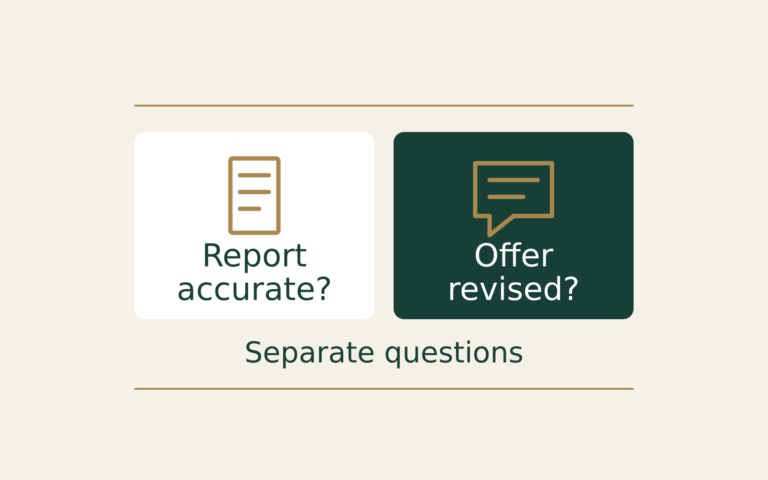
Identify the document and separate report-review questions from the actual loan offer.