
Keep Business and Personal Expenses Separate Without Extra Complexity
Separation Does Not Have to Mean More Paperwork
Keeping business and personal expenses separate can sound like another complicated responsibility for someone who is already handling clients, invoices, taxes, and everyday business decisions. It does not have to be. For many self-employed people, a simple system built around separate accounts, clear payment habits, and a regular review is enough to make financial records much easier to understand.
The main purpose of separating expenses is not to create more bookkeeping. It is to make the business’s financial activity easier to identify when you need to review it. When client payments, software subscriptions, supplies, and other business transactions are mixed with groceries, household bills, entertainment, and personal purchases, even simple bookkeeping can become unnecessarily difficult.
The IRS recommends keeping business and personal accounts separate because this can make it easier to identify business transactions and maintain appropriate records. Separation does not determine whether an expense is deductible, but it creates a cleaner trail showing what happened financially. That distinction is important because organization and tax treatment are related, but they are not the same thing.
Give the Business Its Own Starting Point
For many self-employed people, the easiest place to begin is with a dedicated business checking account. Business income can be deposited there, and ordinary business expenses can be paid from the same account. Personal income and household spending can remain in personal accounts, creating a basic boundary between the two sides of your financial life.
This does not require opening several accounts immediately. A freelancer with a small number of monthly transactions may find that one business checking account and one dedicated payment card provide enough separation. The right setup depends on the size and structure of the business, so adding accounts simply because someone else uses them can create unnecessary administrative work.
A dedicated account also makes monthly reviews much easier. Instead of searching through an account containing rent, groceries, subscriptions, client payments, and business purchases, you can begin with an account that is primarily concerned with business activity. That narrower view can make missing receipts, unusual transactions, and recurring expenses easier to spot.
Keep Business Income Out of the Personal Spending Stream
Once a business account exists, try to make it the normal destination for business income. Client payments, platform payouts, and other business receipts can generally be directed there rather than flowing into a personal account first and being sorted out later. This creates a cleaner connection between revenue and the records supporting it.
For example, a freelancer who receives payments from several clients can record those payments against invoices while they enter the business account. When the bank statement is reviewed later, the incoming transactions can be compared with the business’s income records without first removing unrelated household activity.
This approach also makes it easier to understand the amount of money actually moving through the business. The account can show incoming revenue, operating expenses, and transfers to the owner without being crowded by unrelated personal purchases. The IRS emphasizes maintaining records that adequately establish income and expenses reported on a tax return.
Use a Dedicated Payment Method
A separate business credit or debit card can make the system even easier to maintain. If software, advertising, supplies, professional services, and other routine business purchases consistently appear on one payment method, there is less sorting required when transactions are reviewed later.
The benefit is mostly organizational. You can quickly identify which transactions need receipts, which subscriptions are still active, and which purchases require a closer look. It can also make it easier to hand organized records to a tax professional instead of providing a mixture of household and business transactions.
A business card does not change the nature of a purchase, however. If you accidentally use it to buy something personal, the purchase does not become a business expense simply because the card has the business’s name on it. Record the transaction accurately and correct the bookkeeping rather than allowing it to remain in a business expense category.
Create a Simple Rule for Everyday Purchases
A useful daily rule is to ask what the purchase is primarily for before choosing which account or card to use. If the purchase exists because of the business, the business payment method is usually the natural starting point. If it is primarily for the household, use the personal account instead.
Some purchases will not fit neatly into either category. A computer may be used for client work and personal entertainment, while an internet connection may serve both business and household activities. These situations should not be solved by automatically treating the entire cost as business or automatically treating the entire cost as personal.
Instead, flag genuinely mixed-use expenses for separate consideration. This small habit is much easier than trying to reconstruct the circumstances surrounding dozens of purchases at the end of the year. It also encourages you to think about the actual use of an expense rather than simply choosing the category that appears most favorable.
Mixed-Use Expenses Need More Attention
Mixed-use expenses are one of the main reasons that separating accounts does not completely solve bookkeeping problems. A person can maintain perfectly separate bank accounts and still have expenses that serve both the business and personal sides of life.
Vehicles are a common example. A self-employed person might drive to meet a client, pick up supplies, take a family member somewhere, and run personal errands using the same vehicle. The existence of business driving does not make every mile a business mile, which is why the IRS has specific substantiation requirements for vehicle expenses.
The same general issue can arise with computers, phones, internet services, and other resources. Instead of choosing an arbitrary percentage simply because it feels reasonable, keep records that help establish actual business use. The appropriate treatment can depend on the specific expense and the applicable tax rules.
Do Not Treat the Business Account as a Personal Wallet
One of the easiest ways to undermine an otherwise good separation system is to use the business account for ordinary personal spending. A quick grocery purchase or household subscription may seem harmless, especially when the business account has enough money available to cover it.
The problem is that repeated personal transactions make the account less useful as a business record. Every personal purchase has to be identified and separated during bookkeeping, and a growing number of these transactions increases the possibility of errors.
A better approach is to move money from the business to the personal side according to an appropriate process for your business structure, then pay household expenses from the personal account. The exact tax treatment of money taken from a business varies between sole proprietorships, partnerships, corporations, and other structures, so the transfer itself should not be treated as a universal tax rule.
Paying Yourself Does Not Mean Mixing Accounts
A business owner naturally needs to use business earnings for personal living expenses. The goal of separation is not to prevent that. The goal is to make the movement of money between business and personal finances understandable.
For example, instead of using the business debit card every time you buy groceries, you can move an appropriate amount from the business account to your personal account and use the personal account for household spending. This keeps the original business transactions easier to review while still allowing the owner to use business earnings personally.
The correct method for owner compensation or withdrawals depends on how the business is organized. A sole proprietor’s situation can be very different from that of an owner of an S corporation or C corporation. If the business is incorporated, follow the accounting and tax procedures appropriate to that entity rather than relying on a generic owner-transfer approach.
Keep Receipts Where You Can Find Them
Separating accounts is only one part of good recordkeeping. Supporting documents should also have a predictable home so that you are not searching through email, photographs, paper folders, and unrelated cloud storage whenever a transaction needs to be verified.
A practical system might store receipts, invoices, statements, and other business records in one organized digital location. The specific software is less important than whether you can consistently locate the information later.
The IRS recognizes electronic recordkeeping when records are maintained in a way that satisfies applicable requirements and can be reproduced when needed. Keeping records digitally can therefore work well for a small business, particularly when receipts are captured soon after purchases rather than collected in a large pile months later.
Add the Business Purpose While It Is Fresh
A receipt can prove that money was spent, but it may not explain why the purchase was made. A transaction labeled simply “Office Store — $86.40” might be obvious today and completely unclear six months later.
Adding a short note when the purchase occurs can solve that problem. You might record that the purchase was for shipping supplies, replacement equipment, client materials, or another specific business purpose. The note does not need to be lengthy; it simply needs to preserve information that might otherwise disappear from memory.
This is especially useful for unusual or mixed-use expenses. When tax season arrives, you will have something more useful than a vague transaction description. You will have a contemporaneous explanation that helps connect the expense to the business activity that produced it.
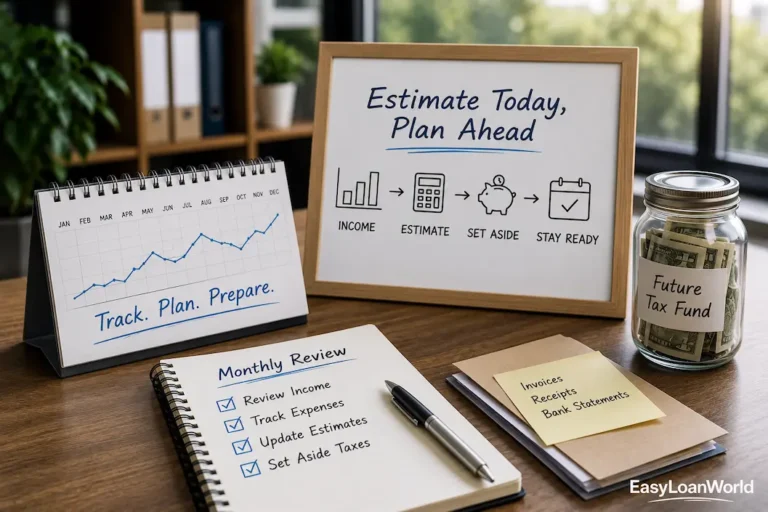
Review the Accounts Once a Month
A small business does not necessarily need to examine every transaction every day. For many self-employed people, a short monthly review is a more practical routine that still catches mistakes while they are relatively easy to correct.
During the review, look at incoming payments, ordinary business expenses, missing receipts, unusual purchases, recurring subscriptions, and transactions that may have been personal by mistake. You can also compare payments received with invoices or other income records to identify anything that has not been recorded properly.
The value of a monthly review is that it prevents small bookkeeping problems from accumulating for an entire year. A personal purchase that needs correcting is much easier to identify when you remember making it than when you are trying to reconstruct the transaction many months later.
What If You Accidentally Pay a Business Expense Personally?
Separating accounts does not mean that every legitimate business purchase becomes invalid if you accidentally use a personal card. Real businesses occasionally pay for business items using the wrong payment method, especially when someone is traveling or making an unexpected purchase.
If that happens, keep the receipt and record the transaction properly in the business records. The important issue is documenting what was purchased, why it was purchased, and how it should be reflected in the bookkeeping rather than pretending the transaction never happened.
For example, a freelancer might use a personal credit card to purchase $75 of supplies while away from the office. The fact that the card was personal does not by itself explain the tax treatment of the underlying purchase. Proper bookkeeping should capture the business transaction and the appropriate treatment for the owner’s circumstances.
What If You Accidentally Pay a Personal Expense From the Business Account?
The opposite mistake should be handled just as carefully. If a personal purchase is accidentally charged to the business account, do not leave it categorized as a business expense simply because the transaction has already cleared the bank.
Identify the transaction as personal in your records and follow the appropriate accounting treatment for your business structure. The sooner you correct it, the easier the transaction is to understand and the less likely it is to become part of a larger year-end cleanup.
This is one reason a monthly review is valuable. You do not need a perfect system in which mistakes never happen. You need a system that makes mistakes visible and gives you a routine for correcting them before they become difficult to trace.
Keep Recurring Charges Under Control
Automatic payments deserve a regular review because small monthly charges can continue long after their original purpose has disappeared. A business may accumulate software subscriptions, cloud services, memberships, advertising tools, and other recurring costs without anyone noticing that some are no longer needed.
Create a simple list of recurring business charges and review it periodically. Confirm that each service is still being used, that the amount is expected, and that the payment is actually connected to the business.
This review can also identify personal subscriptions that accidentally ended up on the business card. Removing those charges from the business payment system keeps future bookkeeping cleaner and prevents another year of transactions from needing correction.
Keep the Bookkeeping Categories Practical
Separating accounts becomes less useful if the bookkeeping system itself is unnecessarily complicated. A small freelancer usually does not need dozens of expense categories that are difficult to distinguish from one another.
Choose categories that reflect how the business actually operates. Depending on the business, that might include software, advertising, supplies, professional services, contractor costs, travel, or other meaningful groups of expenses.
The purpose of categorization is to make financial activity understandable and support accurate reporting. If several categories are so similar that you repeatedly wonder which one to use, the system may need simplifying rather than adding even more detail.
Do Not Automatically Classify Every Business-Related Purchase as Deductible
There is an important difference between an expense being connected to a business and the expense receiving a particular tax treatment. The IRS rules for business expenses include concepts such as ordinary and necessary expenses, but certain categories can have additional limitations or requirements.
For example, vehicles, meals, travel, home-office expenses, and long-lived equipment can require more analysis than simply placing the transaction into a general “business expense” category. Some costs may need to be allocated between business and personal use, while others may be subject to separate tax rules.
Good bookkeeping should therefore record what actually happened first. The tax treatment can then be determined using the rules applicable to that particular transaction. This is safer than starting with the assumption that every purchase that helps the business should automatically reduce taxable income.
A Simple Monthly System Can Be Enough
For a small self-employed operation, the entire separation process can be built around a few consistent habits. Business income goes into the business account, routine business expenses are paid through the business payment method, and personal spending remains on the personal side.
Once a month, review the transactions and identify anything that does not fit the pattern. Find missing receipts, correct accidental personal purchases, document unusual expenses, and check recurring charges that may no longer be necessary.
This system is intentionally simple. It does not attempt to replace accounting software, professional bookkeeping, or tax advice when those services are needed. Its purpose is to create a clean foundation that makes the financial activity of the business easier to understand.
When the Simple Approach Is No Longer Enough
A basic separation system can work well for a freelancer with a relatively small number of transactions. As a business grows, however, additional financial responsibilities can make professional bookkeeping or more advanced accounting software worthwhile.
Employees, contractors, inventory, multiple business locations, significant equipment purchases, partnerships, corporations, sales-tax obligations, and high transaction volumes can all introduce additional complexity. At that point, the cost of professional assistance may be easier to justify because the consequences of inaccurate records can become more significant.
Starting simply does not mean staying simple forever. The better approach is to add complexity when the business actually needs it rather than building an elaborate system before there is a practical reason to do so.
The Real Benefit Is Financial Clarity
Separating expenses is often described as something you do for tax preparation, but the benefit extends throughout the year. Clear records can help a self-employed person understand how much the business earns, where the money goes, which expenses repeat every month, and how much cash remains available.
That information can support better decisions about pricing, spending, savings, and cash flow. It can also make conversations with a tax professional or bookkeeper more productive because the underlying transactions are already organized.
In other words, separation is not just about making tax season easier. It creates a clearer picture of the business itself, which can be useful whenever you need to make a financial decision.
Final Takeaway
Keeping business and personal expenses separate does not require an elaborate accounting operation. For many self-employed people, a dedicated business account, a separate payment method, organized records, and a short monthly review can provide most of the structure they need to avoid unnecessary financial confusion.
The system should also reflect reality. A personal purchase does not become a business expense because it was charged to a business card, while a legitimate business purchase does not automatically become personal because it was accidentally paid from a personal account. Mixed-use expenses require additional attention because their business and personal components may need to be distinguished.
The most useful system is ultimately the one you can maintain consistently. Keep the business financial activity visible, document unusual transactions while the details are fresh, correct mistakes promptly, and seek professional guidance when the business structure or expense is too complicated for a general rule to answer confidently.
Frequently Asked Questions
Do I need a separate bank account if I am self-employed?
The IRS recommends keeping business and personal accounts separate because doing so can make it easier to identify business transactions and maintain appropriate records. The exact banking arrangement depends on the business, but a dedicated business account is a practical starting point for many self-employed people.
Do I need a separate credit card for my business?
A separate business card is not a substitute for proper bookkeeping, but it can make expense tracking much easier. Having routine business purchases in one place reduces the number of personal transactions that need to be reviewed when preparing financial records.
What should I do if I accidentally use my business card for something personal?
Record the transaction as personal rather than leaving it in a business expense category. Correcting the transaction promptly helps keep the business records accurate and prevents personal spending from becoming mixed into the business’s financial history.
Can I pay for a business expense with my personal card?
A business purchase does not automatically become personal simply because you used a personal payment method. Keep the supporting documentation and record the transaction appropriately in the business records, following the accounting treatment applicable to your business structure.
How often should I separate and review my expenses?
A monthly review is a practical routine for many small businesses. Businesses with larger transaction volumes or more complicated financial activity may need more frequent reviews, but the important point is to avoid allowing transactions to remain unexplained for long periods.
Should every purchase made through my business account be treated as a business expense?
No. The account used to pay for something does not determine its tax treatment. Personal purchases made through a business account should remain identifiable as personal, while legitimate business expenses should be evaluated under the applicable tax rules.