Loan Scams: Verify the Lender and Offer Before Sharing Data
Check a loan offer’s company, contact channel and payment request before sharing data. Use an independent-verification worksheet and official reporting links.

Estimated reading time: 9 minutes
Loan scams can use the name of a real company. Before sending money or documents, verify three things separately: the legal entity, the contact channel and the specific request. A matching company record doesn’t authenticate the sender or the offer.
Already sent money, credentials or personal information? Go first to the steps for what was exposed. Contact the real payment provider promptly about recovery when money was sent; don’t finish a lengthy lender investigation before asking for help.
Step away from the incoming message and use an independently confirmed route. These checks reduce uncertainty; they don’t certify a loan as genuine, affordable or risk-free. Pressure to act quickly is a reason to slow down.
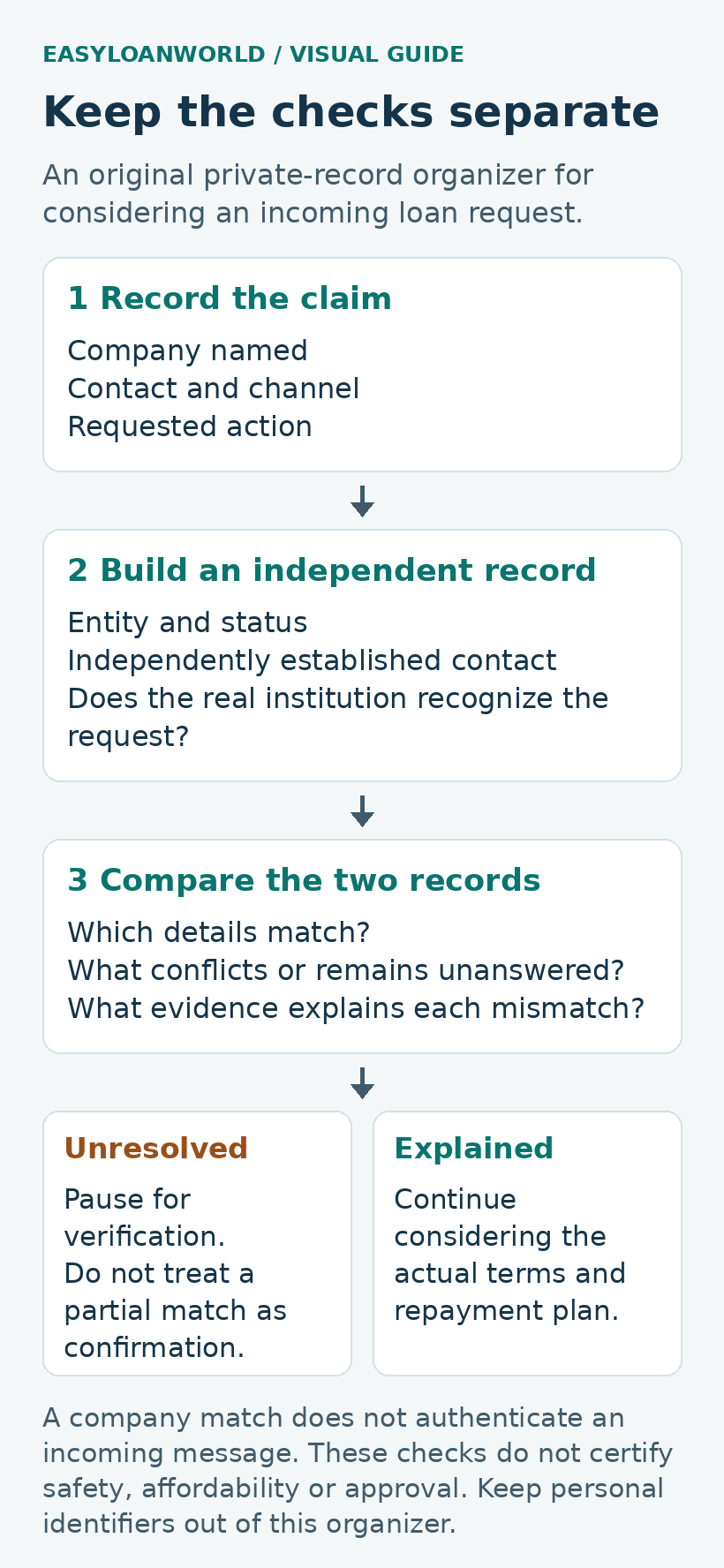
Loan scams: start with what actually happened
Did you actually apply to this company? Is the message about an application you recognize? Record the claim without accepting it as true.
The FTC warns about unexpected loan-application texts that seek confirmation or personal details. Don’t reply or click a link merely to deny or cancel an application you never made. Use your phone’s report-junk option or forward suspicious texts to 7726.
If you’re concerned a real application exists, contact the actual institution independently. The suspicious message’s cancellation link and callback number aren’t independent verification routes.
Distinguish a fee from a fee-for-guaranteed-credit promise
The FTC’s advance-fee loan guidance warns about paying for promised or guaranteed credit. It also explains that legitimate lenders can charge application or appraisal fees before considering an application. An upfront fee alone isn’t proof of fraud.
In a suspicious loan-release demand, requests for gift-card numbers, cryptocurrency or a transfer deserve particular caution. Don’t make a small “test” payment to establish whether the promise is real.
Ask what the charge buys, who receives it, when it becomes payable and where it appears in the proposed terms. Does the caller claim payment guarantees approval? Has the actual institution confirmed the request through an independent channel?
A written label such as “insurance” or “processing” doesn’t resolve those questions. This guide doesn’t decide whether a particular fee is lawful, refundable or worthwhile.
Identify the entity before choosing a lookup
Write down the exact legal entity named in the proposed agreement. Clarify whether the contact claims to represent the lender, an intermediary or another service. If a brand and legal name differ, ask the real institution to explain the relationship rather than assuming fraud.
Lookup routes differ. For example, Washington’s financial regulator directs consumer-loan-company checks to NMLS Consumer Access and provides separate routes for banks, credit unions and other activities. That’s a Washington example, not a nationwide licensing rule.
Don’t assume every lender must appear in NMLS, hold the same state license or be FDIC-insured. Ask the appropriate authority which license, charter or exemption applies to the particular entity and activity. A missing search result calls for clarification, not an automatic fraud verdict.
The CFPB’s state bank-regulator directory is a starting point; check the current official agency site.
Record which authority and lookup you used, the entity matched, the status shown and the date checked. A result about a similarly named business isn’t a match. Even a correct match doesn’t authenticate this offer.
Loan scams: connect the message to the real company
The FDIC warns that scammers can copy bank identities and misuse its logo. For a claimed FDIC-insured bank, its guidance points to BankFind to check the name and website. A logo alone is insufficient. Use independently known contact details to verify the request.
For an existing relationship, a trusted statement or card can provide a contact route. Otherwise, establish the official site independently. Ask the institution whether it recognizes the representative, application reference, offer and proposed document-upload or payment route.
A bank-directory result concerns the institution it covers. It isn’t a universal lender-license search or a safety rating for an incoming offer. Likewise, a polished website or a lack of complaints doesn’t settle who contacted you. A complaint deserves investigation rather than an automatic conclusion about a similarly named company.
Keep two records and a list of contradictions
This is a private comparison method, not a compliance form. Don’t put Social Security numbers, account numbers or login details in it.
| Question | What the message claims | What an independent route confirms |
|---|---|---|
| Which company? | Brand and exact legal entity in the proposed agreement. | Matched entity, appropriate authority or status, source and check date. |
| Who contacted me? | Domain, callback number and representative’s name. | Official contact route and whether the real institution recognizes the sender. |
| What application or offer? | Application reference and claimed loan terms. | Whether the real institution recognizes that reference and offer. |
| What must I do? | Requested payment, document or information and destination. | Whether the institution confirms that exact request and submission route. |
For every row, add the unresolved mismatch, the question you asked, the dated answer and the evidence still needed. “Company found” shouldn’t fill the sender or payment-route cells. “No result” should stay unresolved until the appropriate authority explains the search or status; it isn’t, by itself, a fraud finding.
Don’t smooth over a conflicting domain or unrecognized representative because another detail matches. Equally, don’t label a real business a scam solely because a search was inconclusive. Leave the request unresolved until you have an adequate explanation.
Loan scams: turn a partial match into a specific verification question
Imagine that a fictional offer correctly names a real institution, but its message directs documents to a different upload address. The company lookup can support one part of your record while the submission route remains unconfirmed. Don’t mark the whole offer verified because the easiest detail matched.
Contact the institution through the independent route you established. Describe the request without first uploading the requested documents. A concise question could be: “I received a message claiming to concern an application. Does your institution recognize this representative, reference and document request? Which official route should I use if the request is yours?” Provide only the details needed through that verified conversation.
| Question | What to preserve |
|---|---|
| Which institution did I reach? | Independent contact source, date and department |
| Which request did I describe? | Document type, stated purpose and claimed destination |
| What was confirmed? | The precise answer and supporting official instructions |
| What remains unresolved? | Any unrecognized sender, reference, fee or upload route |
Loan scams can move the explanation after you challenge it: a supposed representative may send another logo, letter or contact number. Material supplied by that same unverified sender doesn’t become an independent check merely because it looks different. Ask the institution you reached independently to explain a contradiction.
If it can’t confirm the request, leave the request unresolved and don’t send documents through the disputed route. This is a practical way to screen suspected loan scams, not a public allegation about a similarly named business or a finding that an institution is fraudulent. Keep sensitive evidence private and follow the exposure-specific steps below if money or information has already left your control.
Two fictional decisions
A company record matches, but the contact doesn’t
An invented message names a company found in the appropriate official lookup. Reached independently, the real company says the sender and upload request aren’t theirs.
The company record did not authenticate the sender. Don’t use that upload link or send documents. Preserve the message safely and use official reporting guidance. This scenario names no real business and makes no allegation about one.
A caller promises a loan after an “insurance” transfer
In this separate fictional scenario, the caller promises unconditional approval after an advance transfer. The recipient can’t independently confirm the caller or request. Don’t pay for that promise.
A disclosed application fee from an independently verified provider would be a different situation, but it would still not guarantee approval, affordability or a refund. Confirm the actual terms and contact; a fee label isn’t a shortcut to either acceptance or rejection.
Loan scams: resolve the document request before sharing
Copy these prompts into your private record:
- Who exactly will receive the information, through which verified channel?
- What document or information is requested, and for what stated purpose?
- Has the real institution confirmed the request and submission route?
- Is the requested information more extensive than the explained purpose?
- What remains inconsistent? Who resolved it, when and with what evidence?
- Decision: pause for verification, decline, or continue considering through the verified route.
“Continue considering” doesn’t mean “safe” or “approved.” Review the borrowing need, repayment plan and actual terms separately. Ask the verified institution what an application requires rather than assuming blanket redaction will leave it complete.
Don’t send documents to EasyLoanWorld or post them in comments. Don’t give an unsolicited contact remote control, login secrets or authentication codes.
If money or information was already sent
Follow the FTC’s steps after a scam:
- Money: Promptly contact the real bank or payment service and ask whether reversal or recovery is possible. A refund isn’t guaranteed.
- Credentials: Use the real service’s recovery and security steps, including password and two-factor-authentication guidance.
- Personal information: Use IdentityTheft.gov guidance for what was exposed. Report the suspected scam at ReportFraud.ftc.gov.
Keep dates, messages, screenshots, payment confirmations, a description of information shared and official support references together privately. Avoid publicly reposting sensitive details. Don’t confront the suspected sender or pay a second fee to recover the first payment. Reporting isn’t a promise of reimbursement or an individual response.
U.S. consumer education. Verification and reporting options depend on the institution, activity and circumstances. Selected FTC and CFPB guidance rechecked October 25, 2026.
For an actual application, use the secure document checklist to track requested records and confirm the submission channel.
Featured photo: Photo by MJ Duford on Unsplash. Used under the Unsplash license. Illustrative stock photograph of a magnifying glass and laptop. It doesn’t depict an actual lender, investigation or verified loan offer. Photo by MJ Duford on Unsplash.
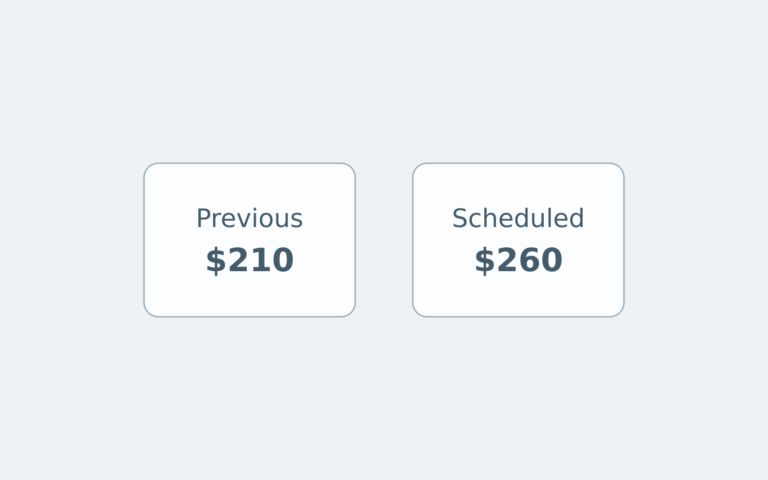
Changing Loan Autopay: Check the Notice
Compare the debit and notice.
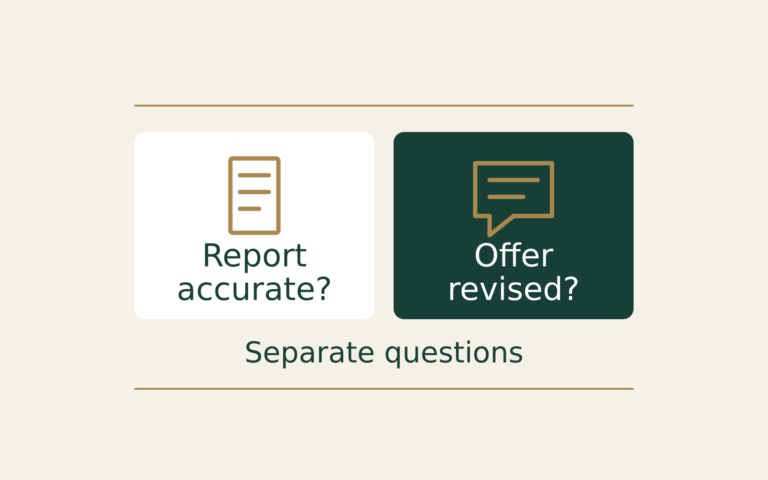
Approved for a Loan, but Received a Risk-Based Pricing Notice?
Identify the document and separate report-review questions from the actual loan offer.