Residual Credit Card Interest: Reconcile a Bill After Payoff
Use a final-bill worksheet to check dates, compare an interest estimate and organize records after a credit-card payoff.

Residual interest, or trailing interest, can follow repayment of an already interest-bearing credit-card balance. The CFPB explains that interest may continue between the billing date and payment receipt. Check your agreement for account-specific rules.
Start by identifying exactly what the later bill contains. Then match the charge to the balance, dates and payment record. A familiar-looking interest amount still deserves checking; an unfamiliar one does not automatically establish an error.
Identify the charge before paying or disputing it
Open the statement rather than relying only on a notification or account-home-screen total. Make a short list of every item added since the previous statement:
- Interest, including the balance category named beside it.
- New purchases or recurring charges.
- Fees, with the stated reason for each.
- Payments, credits, refunds or adjustments.
This separates a question about interest calculation from a question about a transaction you do not recognize. Use the issuer’s explanation and supporting records to resolve each line individually.
Before treating a displayed balance as a payoff figure, ask whether it includes unbilled interest.
This concerns interest-bearing balances. For purchase exceptions, see our grace-period guide.
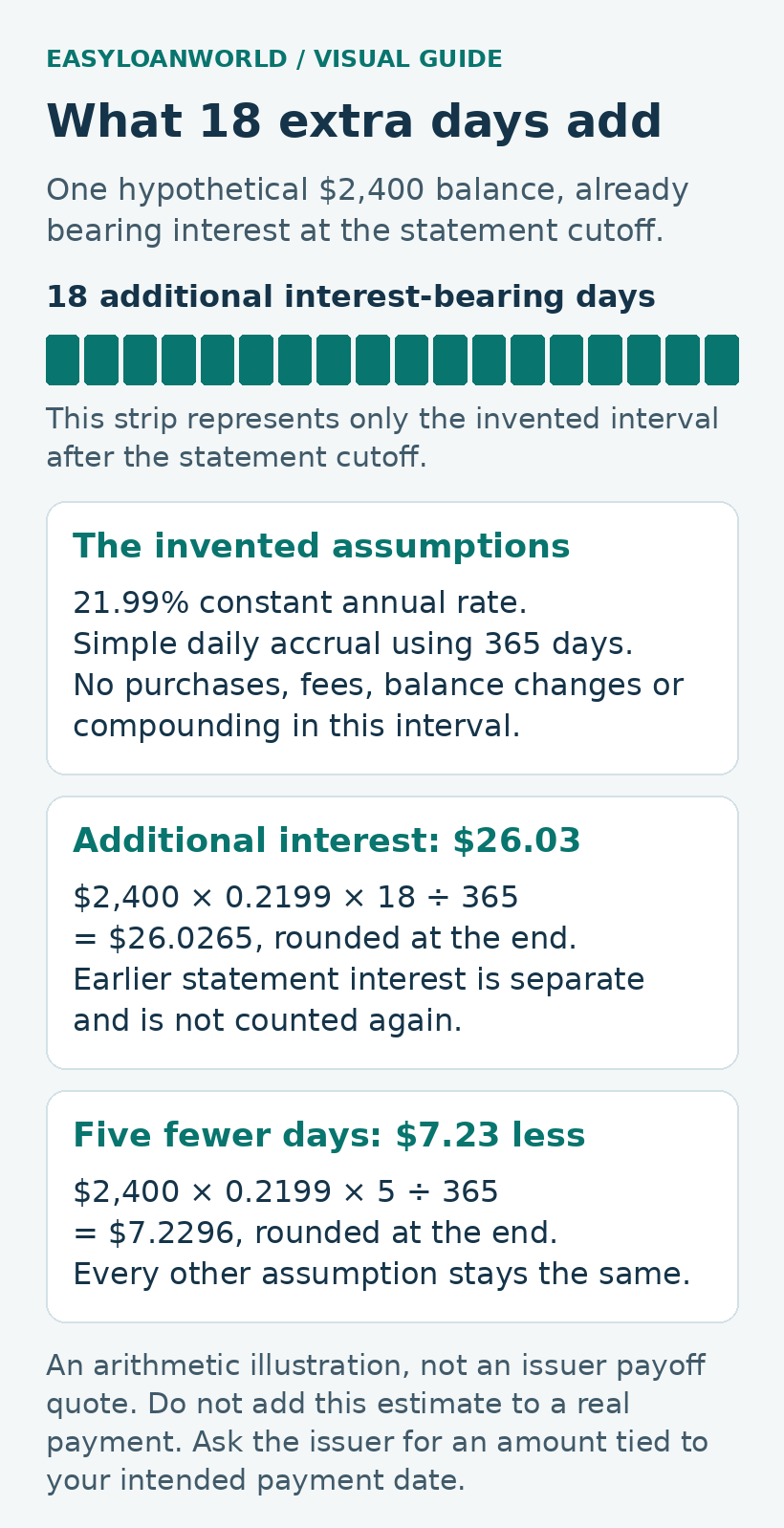
A hypothetical 18-day gap creates $26.03
Consider a deliberately simplified example. An account has an already interest-bearing $2,400 purchase balance at the statement cutoff. Assume a constant 21.99% annual rate, simple daily accrual using 365 days, and exactly 18 additional interest-bearing days before payment. There are no purchases, fees, balance changes or compounding during that interval. Interest included in the earlier statement is separate.
Additional interest estimate: $2,400 × 0.2199 × 18 ÷ 365 = $26.0265, rounded to $26.03.
The calculation covers only those 18 additional days. It does not count the earlier statement’s interest again. It also does not produce a guaranteed payoff quote: do not simply add $26.03 to a real account payment.
Under the identical assumptions, shortening the interval by five days reduces this example’s interest by $7.23. That change follows from $2,400 × 0.2199 × 5 ÷ 365. The useful comparison is the number of interest-bearing days, not an expectation that another card will charge these amounts.
Many issuers calculate interest daily; APRs can vary by balance category. See the CFPB’s calculation guide. Actual balance methods, day counting, allocation and rounding can differ; verify your issuer’s calculation.
Request a payoff amount for a specific date
Before sending what you intend to be the final payment, choose its intended arrival date and ask the issuer:
- What amount would clear this account as of that date?
- Does that figure include accrued but unbilled interest?
- What payment method and timing are needed for it to arrive as intended?
- Could further interest appear after that amount is credited? If so, how should I check and resolve it?
- What must happen before new purchases qualify for a grace period again?
Save the answer, date and reference number. If the issuer cannot give a final figure, record what it can confirm and what remains uncertain. Avoid inventing an extra “cushion” payment based on a guessed interest amount.
Also ask whether an automatic payment is already queued and how a separate payment affects it. Check that answer before changing autopay or sending a second payment. The goal is to cover the required amount while avoiding an unintended duplicate withdrawal.
A payoff-reconciliation worksheet
Copy these four short sections into a private note. Use account nicknames or the last four digits instead of full account numbers.
1. Record the starting position
- Statement closing date and statement balance: ______
- APR and balance for each interest-bearing category: ______
- Purchase grace-period status confirmed by issuer: ______
- Pending purchases, recurring charges and adjustments: ______
2. Document the payment
- Issuer’s quoted or estimated amount and valid-through date: ______
- What that amount includes or excludes: ______
- Payment method, amount and confirmation number: ______
- Date scheduled or sent; date received or credited: ______
- Issuer-confirmed date used to stop accrual on the paid balance: ______
- Any automatic debit still pending: ______
3. Reconcile the later statement
- Remaining charge, balance category and applicable APR: ______
- Issuer’s accrual start and end dates: ______
- Balance or balances used in its calculation: ______
- Difference from your records and explanation requested: ______
- Amount resolved, next required action and due date: ______
4. Keep completion evidence together
- Payment shows as completed, with supporting confirmation.
- Remaining charges or credits have been reconciled.
- Issuer has answered whether it expects further interest.
- Subsequent statement has been checked.
These checks organize evidence; they cannot guarantee that no later fee, new purchase or adjustment will occur. Continue reviewing while a charge or payoff question remains unresolved. Closing the account is not a substitute for reconciling the bill.
If the interest still appears wrong
Contact the issuer promptly and keep copies of your records. A phone call alone does not replace a required written billing-error notice. The CFPB outlines the dispute process.
To preserve Regulation Z’s billing-error protections, the issuer must receive your written notice at its disclosed billing-inquiries address within 60 days after it transmitted the first statement showing the alleged error. Identify yourself and the account, the error’s type, date and amount, and why you believe it is wrong. Use an electronic route only if the issuer designates it for these notices. Keep paying undisputed amounts. See 12 CFR 1026.13(b) and (d).
Keep proof of your notice. Do not delay formal notice while seeking an informal answer.
U.S. consumer education. Sources checked October 19, 2026. The example is hypothetical; account terms and individual circumstances vary. This guide is not personalized financial or legal advice.
Featured photo: Photo by Cht Gsml on Unsplash. Used under the Unsplash license. Illustrative stock photograph of calculation tools. It does not depict the example account or an actual payoff statement. Photo by Cht Gsml on Unsplash.

Credit-Builder Loan vs. Secured Card: A Cash-Access Checklist
Work through three fictional situations and four private questions before deciding whether a new account fits your needs.
Hotel Card Hold: Compare Two Checkout Payment Paths
Compare two fictional hotel checkout choices while keeping the original card’s capacity and the actual payment in separate records.
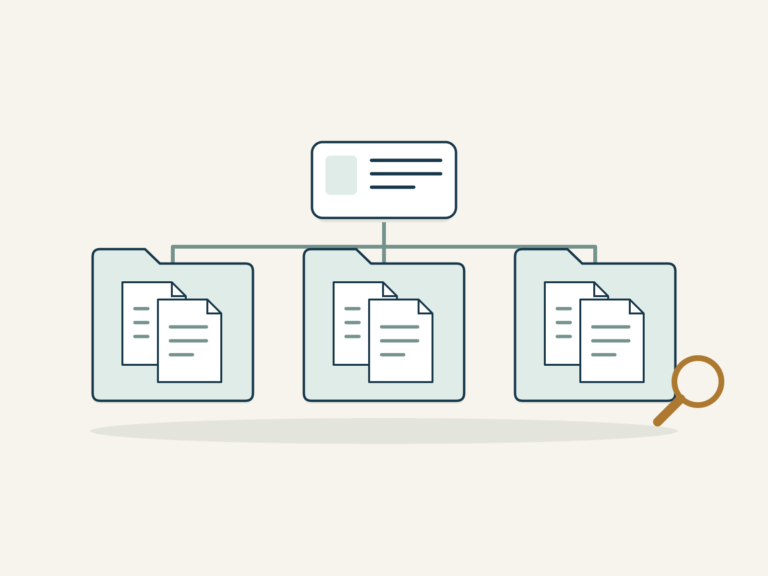
Overdraft Fee? Look Beyond the Online Bill Label
Compare three fictional document packets behind the same $60 ONLINE BILL entry, then identify what the records still leave unexplained.