Interactive calculator inputs and results
Before comparing: This simplified installment model assumes you pay any entered upfront fee separately from the loan payments. A fee deducted from loan proceeds changes the cash you actually receive and needs separate analysis. The entered rate is a nominal annual interest rate; this tool does not calculate a lender’s legally disclosed APR. Compare results with each lender’s actual disclosure.
Interactive calculator unavailable: JavaScript is required to process your own inputs. The worked example, calculation assumptions and related guidance on this page remain available without JavaScript.
Worked comparison you can read without running the calculator
Two lenders may advertise different interest rates, yet the offer with the lower stated rate is not necessarily the one with the lower total borrowing cost. This simplified model assumes each offer is a fixed-rate installment loan with an unchanged principal, equal payments at the end of each month, and the stated upfront fee paid separately in addition to the scheduled loan payments. Both offers are fictional, not actual loan disclosures.
| Input or output | Offer A | Offer B |
|---|---|---|
| Principal borrowed | $1,000 | $1,000 |
| Stated annual interest rate | 12% | 15% |
| Term | 12 months | 12 months |
| Upfront fees paid separately | $50 | $0 |
| Calculated monthly payment, before separate fee | $88.85 | $90.26 |
| Total of 12 unrounded monthly payments | $1,066.19 | $1,083.10 |
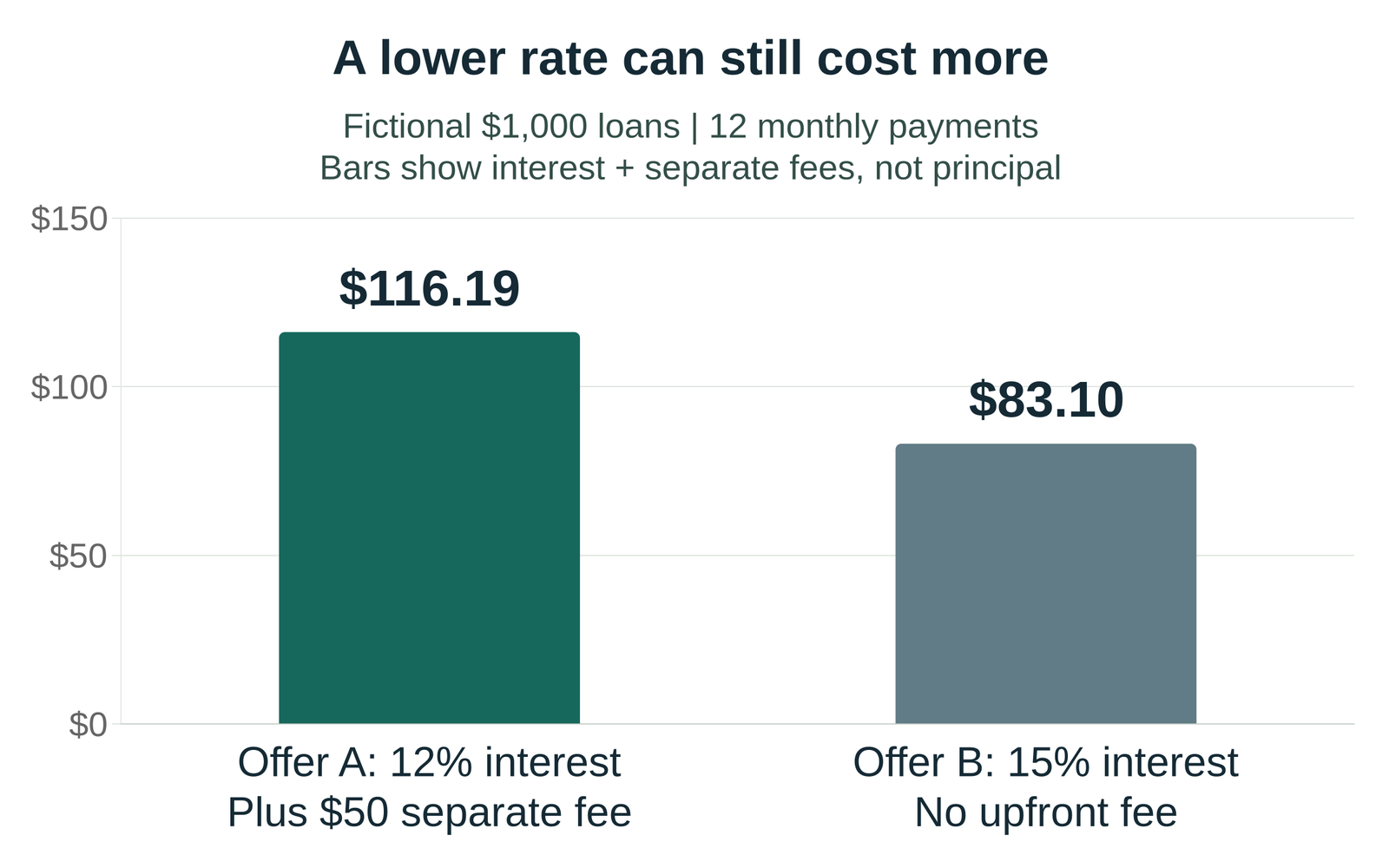
| Estimated interest plus separate upfront fee | $116.19 | $83.10 |
| Total cash paid including that separate fee | $1,116.19 | $1,083.10 |
Interpretation: A has a lower monthly payment and a lower stated interest rate, but its $50 separate fee raises the modeled financing cost above B’s by approximately $33.09. Choose neither offer from this table alone: read the lender’s actual disclosure, late-payment terms, when the money is available, and whether every scheduled payment fits your reliable cash flow.
How to reproduce the installment math
For principal P, monthly rate r equal to the entered annual interest percentage divided by 1,200, and n monthly payments, the model uses P × r ÷ [1 − (1+r)−n]. At 0% interest it divides principal by the number of payments. It then multiplies the unrounded payment by n and adds the separately entered fee. The display rounds to cents, so multiplying the displayed monthly payment can differ slightly from the displayed total.
What this tool cannot conclude
It does not calculate the legally disclosed annual percentage rate (APR). If a fee is withheld from the proceeds rather than paid separately, the borrower receives less cash and a separate cash-flow and regulatory APR analysis is required; using this model’s “total cash paid” as the amount actually remitted could double-count a withheld fee. It also excludes variable rates, irregular payment dates, early payoff, payment penalties, optional products and state-specific requirements.
Verify the actual loan disclosures
Use the worked table and formula above to check the model, then compare every result with the actual offer. The lender’s payment schedule, fee treatment and required disclosures take precedence over this simplified illustration.
The CFPB explains that an interest rate and APR are not the same and that loan fees can increase total borrowing cost. Compare the calculator result with the lender’s actual disclosures before making a decision: interest rate vs. APR and personal-loan fees.
Compare what reaches your account, not just what you borrow
A borrower can receive less cash than the face amount of a loan. For example, a fictional lender might approve a $1,000 principal but withhold a $50 fee at disbursement, leaving $950 usable proceeds. Payments and interest may still be based on the full contractual balance. By contrast, this calculator models an upfront fee paid separately and does not automatically adjust the cash disbursed. Do not enter a withheld fee as though it were an identical separate cash payment.
Five disclosure fields to write down for each offer
- Usable proceeds: The dollars available after any withheld charges, and whether the amount is sufficient for the actual purpose.
- Disclosed APR: The lender’s applicable annual percentage rate; never replace it with the calculator’s nominal interest input.
- Payment schedule: Each required amount and due date, not simply the advertised typical installment.
- Total financing cost: Interest, required fees and other applicable terms taken from the real contract.
- Failure scenario: What happens if a payment is late or the loan is repaid early, subject to the agreement and applicable law.
Decision rule: First reject comparisons that do not provide the same usable amount or the required disclosures. Then compare the disclosed borrowing costs and whether the payment dates fit a cautious cash-flow forecast. A lower monthly payment can come from a longer term and higher lifetime interest.
For a more detailed fixed-rate illustration, the Financial Decision Lab lets you test rate and term changes and inspect the repayment schedule. The loan-offer worksheet records each actual source document. Check CFPB’s APR explanation for the distinction between rate and total credit cost. This comparator is educational; it neither produces a regulated APR nor recommends a lender.