What Your Digital Wallet History Can Reveal About Your Spending Habits
For many people, a digital wallet serves one simple purpose: making payments quickly. Whether you buy groceries, pay for transportation, order food, or shop online, you complete the transaction in seconds and quickly forget it. A few days later, another payment takes its place, and the cycle continues. What often goes unnoticed is that every one of those transactions becomes part of a detailed financial record that can reveal far more than just where your money went.
Most people only open their digital wallet history when they need to confirm a payment or check whether money has been deducted correctly. They rarely use it as a tool for understanding their own financial behavior. Yet that history quietly records routines, preferences, seasonal spending, impulse purchases, and recurring commitments that can be difficult to recognize from memory alone.
Learning to review your transaction history with curiosity instead of simply checking balances can provide valuable insights. Instead of treating your payment history as a list of completed purchases, you begin to see it as a map of your everyday financial decisions—one that can help you make smarter choices in the months ahead.
Patterns Are More Valuable Than Individual Transactions
Looking at a single payment rarely tells you anything meaningful. Buying lunch one afternoon or paying for a streaming service once doesn’t say much about your overall financial habits. However, when dozens of similar transactions appear over several weeks or months, they begin to form patterns that deserve attention.
For example, someone might believe they only order takeaway meals occasionally. After reviewing three months of digital wallet history, they may discover that food delivery appears three or four times every week. The issue isn’t necessarily the spending itself, but the gap between perception and reality. Many financial habits develop gradually, so they can seem almost invisible until you look at them over a longer period.
Rather than focusing on isolated purchases, try reviewing your history with questions like these:
- Which merchants appear most often?
- What categories receive the largest share of my spending?
- Are there certain days when I consistently spend more?
- Which purchases happen automatically without much thought?
Answers to these questions often reveal habits that are much easier to improve than expected.
Recurring Payments Can Reveal Hidden Financial Commitments
One of the easiest things to overlook is recurring digital payments. Subscription services, cloud storage plans, music platforms, learning apps, fitness memberships, and software renewals often continue quietly in the background because the payments happen automatically. Individually, many of these charges seem insignificant, but together they can represent a noticeable portion of your monthly budget.
Your wallet history provides a convenient way to identify these recurring commitments because they usually appear on similar dates every month. Reviewing several months of transactions side by side makes these patterns much easier to recognize than checking a single monthly statement.
The following table shows how small recurring payments can gradually add up.
| Monthly Subscription | Monthly Cost | Annual Cost |
|---|---|---|
| Video streaming | $12 | $144 |
| Music service | $10 | $120 |
| Cloud storage | $5 | $60 |
| Productivity app | $8 | $96 |
| Premium fitness app | $15 | $180 |
| Total | $50 | $600 |
This doesn’t mean every subscription should be canceled. Instead, it encourages asking whether each recurring payment still provides enough value to justify its ongoing cost.
Your Spending Often Follows Predictable Triggers
Many purchases happen because of routines rather than conscious decisions. Once you begin reviewing your wallet history, these triggers often become surprisingly obvious. A coffee purchased every weekday morning, online shopping during weekend evenings, or frequent convenience purchases after work can all become visible when transactions are viewed together instead of individually.
These habits are not necessarily negative. In fact, recognizing them is the first step toward making intentional choices rather than automatic ones. For instance, if you notice that most impulse purchases occur late at night while browsing online stores, you may decide to delay non-essential purchases until the following day. Occasionally, a simple pause is enough to prevent spending that no longer feels necessary after a night’s rest.
Instead of asking, “Why did I spend so much?” a more useful question is, “What usually happens before I spend?” Understanding the circumstances surrounding your purchases often provides better answers than focusing only on the amounts themselves.
Small Transactions Can Have a Bigger Impact Than Expected
When reviewing financial records, people naturally pay attention to large purchases because they stand out immediately. However, digital wallet histories often reveal that smaller payments occur much more frequently. Individually, they may seem harmless, but together they can quietly shape your monthly spending more than one expensive purchase.
Imagine someone who spends only a few dollars several times each day on convenience items such as snacks, coffee, parking, or in-app purchases. None of these payments appears significant on its own, yet their combined total at the end of the month can exceed larger planned expenses. Because each payment feels minor, it’s easy to underestimate their cumulative effect.
A simple comparison demonstrates how this works.
| Spending Habit | Average Daily Cost | Approximate Monthly Total |
|---|---|---|
| Coffee purchases | $5 | $150 |
| Convenience snacks | $4 | $120 |
| Parking fees | $3 | $90 |
| In-app purchases | $2 | $60 |
| Combined Total | $14 | $420 |
Reviewing transaction history allows you to spot these trends before they become permanent habits. Often, reducing just one or two recurring small expenses creates more financial flexibility than eliminating an occasional larger purchase.
Comparing Different Months Can Reveal Lifestyle Changes
Looking at a single month’s transaction history provides only a snapshot. Comparing several months side by side, however, can reveal how your financial behavior changes over time. You might notice higher transportation costs after changing jobs, increased online shopping during holiday seasons, or reduced dining expenses after beginning to cook more meals at home.
These comparisons are particularly useful because they help separate temporary spending from long-term habits. A single expensive month may simply reflect an unusual event, while consistent increases across several months may indicate a lifestyle change that deserves closer attention.
Instead of reviewing your wallet history only when you’re concerned about money, consider making it a regular monthly habit. Looking back over several months provides context that individual transactions can never offer, making it much easier to recognize whether your financial decisions are moving in the direction you intended.
Your Wallet History Can Help You Build a More Realistic Budget
One reason many budgets fail is that they’re based on expectations rather than actual behavior. People often estimate how much they spend on groceries, transportation, or entertainment without verifying those numbers. As a result, the budget looks reasonable on paper but quickly falls apart because it doesn’t reflect everyday reality.
Your digital wallet history provides something much more reliable than guesswork. By reviewing several months of transactions, you can identify average spending across different categories and build a budget around real numbers instead of assumptions. This approach doesn’t guarantee perfect financial discipline, but it creates a plan that’s far easier to follow because it’s based on how you actually spend money rather than how you think you spend it.
For example, if your wallet history consistently shows that transportation costs average around $180 each month, budgeting only $100 won’t solve the problem. A realistic budget acknowledges your current habits first and then gradually adjusts them if necessary.
Merchant Names Can Reveal Spending Habits You Forgot About
Most people remember large purchases for weeks or even months, but smaller transactions disappear from memory surprisingly quickly. Looking through your wallet history often brings back purchases you completely forgot making, especially those related to online shopping, food delivery, digital services, or mobile applications.
Merchant names can also show whether you concentrate your spending in just a few places. You may notice that the same online retailer appears repeatedly throughout the month or that multiple purchases come from similar types of businesses. This doesn’t automatically mean you’re overspending, but it does provide an opportunity to ask whether those purchases reflect genuine needs or simply convenient habits.
Over time, these observations become more valuable than focusing on individual transaction amounts. They help you understand not just where your money goes, but why certain businesses become regular parts of your spending routine.
Use Categories to See the Bigger Financial Picture
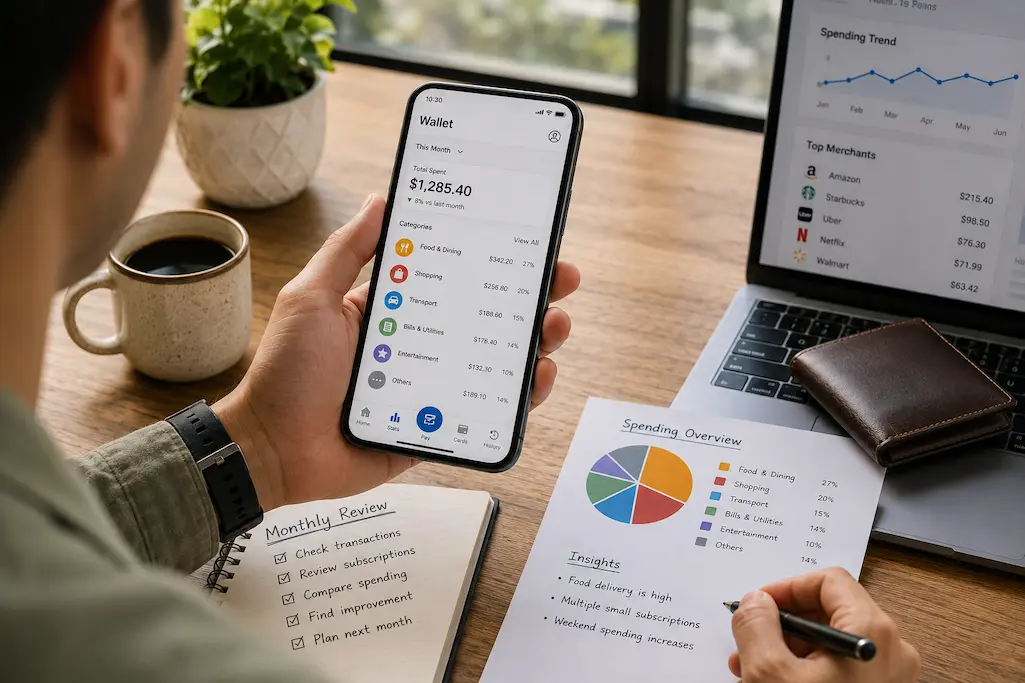
Scrolling through hundreds of individual transactions can feel overwhelming. Categorizing those transactions into broader groups makes your spending much easier to understand because patterns become visible almost immediately.
A simple monthly review might look like this:
simple monthly review might look like this:
| Spending Category | Percentage of Monthly Spending | Questions Worth Asking |
|---|---|---|
| Housing & Bills | 38% | Are recurring payments accurate? |
| Food & Groceries | 24% | How much is dining out versus groceries? |
| Transportation | 12% | Have commuting costs changed recently? |
| Shopping | 10% | Were these planned purchases? |
| Entertainment | 8% | Which subscriptions are actively used? |
| Miscellaneous | 8% | Should these expenses be categorized differently? |
Viewing your finances in categories shifts the focus away from isolated purchases and toward broader spending behavior. Instead of worrying about one expensive weekend, you begin evaluating whether your overall financial priorities still align with your goals.
Your Transaction History Can Strengthen Financial Security
Reviewing your wallet history isn’t only useful for budgeting. It also plays an important role in protecting your finances. Small unauthorized transactions often show up before larger fraudulent activity, especially if someone has compromised your payment details. Regularly checking your transaction history makes it much easier to notice unfamiliar merchants, duplicate payments, or purchases that don’t match your activity.
Even legitimate transactions deserve occasional attention. Forgotten subscriptions, accidental duplicate purchases, and services that continue charging after cancellation requests are easier to identify when you review your account consistently rather than only checking your balance.
A monthly review doesn’t need to take long. Spending ten or fifteen minutes looking through recent transactions can help you catch problems while they’re still easy to resolve.
Turn Your Transaction History Into Better Financial Decisions
The value of your wallet history doesn’t come from simply reading it—it comes from acting on what it reveals. Once you’ve identified recurring habits, unnecessary subscriptions, or spending patterns that no longer match your priorities, small adjustments become much easier to make.
Rather than trying to change everything at once, focus on one improvement at a time. You might decide to reduce food delivery orders, review subscription services every three months, or set a monthly spending limit for discretionary purchases. These gradual changes are usually easier to maintain than dramatic financial overhauls.
A practical monthly review checklist can help keep the process simple:
- Check for unfamiliar transactions.
- Review recurring subscriptions.
- Compare spending with the previous month.
- Identify one category that increased unexpectedly.
- Note one spending habit you’d like to improve next month.
Over time, these small reviews create greater awareness, which often leads to better financial decisions without requiring complicated budgeting systems.
Conclusion
Your e-wallet history is more than just a record of completed payments. It reflects your daily choices, habits, priorities, and spending patterns as they accumulate over time. Individual transactions may seem ordinary, but when viewed together, they reveal insights often overlooked in everyday life.
This does not mean you need to scrutinize every purchase or eliminate unnecessary spending. The goal is simply to help you understand where your money naturally flows, enabling you to plan future expenses more effectively. Financial awareness stems not from a perfect budget but from gradually developing one by regularly evaluating your habits.
Incorporating a monthly review of your transactions into your routine allows you to identify positive trends, pinpoint areas for improvement, and gain confidence in your financial decisions. The best financial advice doesn’t always come from new apps or budgeting methods; sometimes, it lies hidden in a payment history you’ve never examined before.
Frequently Asked Questions
How often should I check my e-wallet history?
Most people only need to check their transaction history once a month. However, if you frequently make digital payments or do freelance work, checking your history weekly can help you spot unusual activity more quickly.
Can my transaction history help me save money?
Absolutely. It can reveal recurring subscriptions, impulse purchases, and expenses that are quietly draining your budget. Once you recognize these patterns, you can make informed adjustments.
Should I keep transaction records from several months ago for comparison?
In general, keeping transaction records for three to six months provides a better picture of your spending habits than keeping records for just one month. This helps you distinguish between short-term and long-term spending patterns.
What should I do if I see an unfamiliar payment?
Check whether the payment is related to a subscription, a family member, or a recent purchase. If you still find the transaction suspicious, please contact your wallet provider or financial institution immediately to report the activity.
So, is it worth tracking small digital payments?
Absolutely. Small purchases occur frequently, whereas large transactions do not. Even small individual amounts can add up to a significant portion of your monthly spending.
Can digital wallet transaction statements be used as a budgeting tool?
For many people, yes. By regularly reviewing transaction statements, categorizing expenses, and comparing monthly spending, you can effectively manage your finances without specialized budgeting software.