Creating an Emergency Spending Plan That Reduces the Need for Micro-Credit
An unplanned cost almost never comes up at a good time. A car won’t start before work, a home gadget breaks, or a medical bill arrives unexpectedly. A lot of people don’t feel like they’re making a financial choice at that point; they feel like they’re trying to resolve a problem before it gets worse. This is one reason why micro-credit is becoming more and more popular. When you need money quickly, borrowing it may seem like the best way to get things back to normal. But speed doesn’t always resolve the real problem. If every unexpected cost leads to another short-term loan, the stress on your finances often moves from today’s emergency to next month’s payment.
Having a lot of money saved up for every possible emergency isn’t the best long-term plan. That’s just not possible for many families. It’s better to make an emergency spending plan instead. This is a simple outline that helps you figure out what to do before an unexpected cost forces you to make a quick choice.
Think of Emergencies as Different Types of Problems
A mistake that many people make is to treat all unexpected costs with the same amount of importance. In reality, emergencies are completely unique. Some people want things to happen right away because waiting will have worse financial or personal effects. Some things seem important right away, but you can wait a few days while you consider your choices. Putting situations into groups makes it easier to make choices because it takes some of the emotion out of the situation.
For instance, you should not replace a perfectly functional phone just because it’s inconvenient when there is a burst water pipe that could damage your home. Both require spending money that wasn’t planned, but only one could get much pricier if it’s ignored. Thinking about goals instead of panic makes borrowing a solution possible instead of the first thing that comes to mind.
Build Your Plan Before You Ever Need It
An emergency spending plan is much easier to create during a normal month than during a financial crisis. When there is no immediate pressure, you have time to think clearly about what expenses matter most and how you would realistically handle different situations. Rather than creating a complicated financial document, start by answering a few practical questions:
- Which monthly expenses must always be paid first?
- Which expenses could be delayed for a short period if necessary?
- Do I have any savings that should exclusively be used for genuine emergencies?
- Who would I contact first if I needed more time to pay a bill?
- At what point would borrowing become my last reasonable option?
You don’t need perfect answers. The goal is simply to remove uncertainty before an emergency arrives.
Focus on Protecting Essential Cash Flow
Many people immediately focus on the size of an emergency expense, but the more important question is how that expense affects the money you’ll need over the coming weeks. Imagine receiving an unexpected repair bill. Paying it today might solve the immediate problem, but if doing so leaves you unable to cover rent, groceries, or transportation next week, you’ve simply exchanged one financial challenge for another.
Instead of asking, “Can I pay this bill?” consider asking, “What happens to the rest of my month if I do?”
This small shift encourages better decisions because it looks beyond the immediate expense. Protecting your ability to meet essential obligations often reduces the need for additional borrowing later in the month.
Create a Decision Order Instead of a Spending Limit
Budgets usually focus on how much money you can spend. An emergency spending plan works differently. It focuses on the order in which you should make financial decisions.
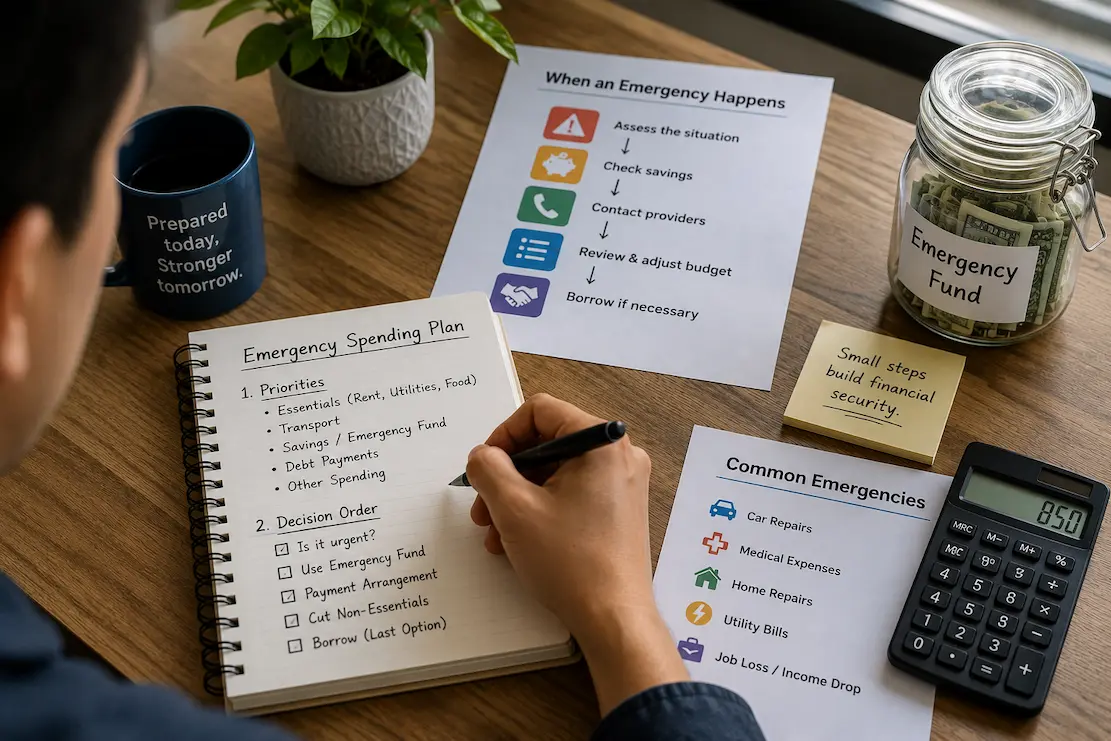
For instance, before considering micro-credit, you might work through a sequence like this:
- Confirm whether the expense truly requires immediate payment.
- Review available emergency savings, if any.
- Contact the service provider to ask about payment arrangements.
- Identify discretionary spending that can be reduced temporarily.
- Evaluate whether borrowing is still necessary after considering the previous options.
Notice that borrowing hasn’t disappeared from the plan—it has simply moved lower in the decision process. This creates space for alternatives that people often overlook when they feel pressured to solve a problem immediately.
Small Financial Buffers Matter More Than Large Emergency Funds
There’s a common belief that financial security begins only after saving thousands of dollars. While having a substantial emergency fund is certainly beneficial, many people spend years believing they can’t prepare for emergencies until they reach that goal.
In reality, even modest financial reserves can make a meaningful difference. Setting aside a relatively small amount each month may not cover every emergency, but it can reduce the amount you need to borrow—or eliminate the need to borrow altogether for smaller unexpected expenses. More importantly, building a habit of creating financial buffers encourages confidence. Instead of viewing every surprise as a crisis, you begin approaching unexpected costs with a plan already in place.
One Question Can Change the Way You Handle Financial Emergencies
Before you spend, delay, or borrow, take a moment to ask yourself:
“Is this expense creating a temporary problem or revealing an ongoing financial issue?”
If it’s temporary—a delayed client payment, an unexpected repair, or a one-time medical expense—your response will likely focus on short-term solutions.
If similar emergencies keep appearing month after month, however, the issue may no longer be the emergencies themselves. It may be a budget that leaves no room for life’s normal uncertainties. Recognizing that difference is often the first step toward reducing long-term dependence on micro-credit.
Prepare for the Emergencies You Can Actually Predict
It may sound contradictory, but many financial emergencies aren’t completely unexpected. While you can’t predict the exact day your car will need repairs or an appliance will stop working, you can reasonably expect that these events will happen eventually. Treating them as impossible surprises often leads to rushed financial decisions.
A more practical approach is to think about the expenses you’ve already experienced over the last two or three years. Vehicle maintenance, healthcare costs, school-related expenses, home repairs, or replacing essential household items often repeat over time. Instead of waiting until they happen again, include them in your financial planning as occasional costs rather than unexpected disasters.
This mindset changes how you view emergencies. Instead of reacting with urgency every time something goes wrong, you begin expecting that life will occasionally require additional spending. That expectation alone can reduce financial stress because you’re no longer caught completely off guard.
Review the Plan After Every Real-Life Emergency
An emergency spending plan isn’t something you create once and forget. Its real value comes from improving it after each situation you experience.
For example, imagine you needed unexpected dental treatment and realized your emergency savings covered only part of the cost. Rather than viewing that as a failure, ask yourself what the experience taught you. You may have discovered that your savings target was too low, or you may have learned that contacting the clinic about payment options would have reduced the immediate pressure.
These reflections don’t need to be complicated. Keeping a few notes after each financial challenge helps your plan become more realistic over time because it’s based on your experiences rather than general financial advice.
Include the Whole Household Whenever Possible
Emergency spending plans work best when everyone responsible for household finances understands the basic approach. If one person follows the plan while another makes decisions independently during stressful situations, confusion can quickly replace coordination.
A short conversation about priorities can prevent unnecessary disagreements later. Decide in advance which expenses should always come first, who should be contacted if a large unexpected bill arrives, and what situations would justify using savings or considering borrowing. Even if your household finances are simple, having these discussions before an emergency occurs makes decision-making easier when emotions are high.
Borrowing Should Support Recovery, Not Replace Planning
Microcredit has a legitimate role in certain situations. There are times when a genuine emergency cannot wait, and borrowing becomes the most practical option available. The important difference is how that borrowing fits into your overall financial plan.
If borrowing is consistently the first response to every unexpected expense, it may indicate that your emergency strategy needs adjustment. On the other hand, if you’ve already reviewed your budget, considered available resources, explored payment arrangements, and still face an urgent need, borrowing may simply be one part of a carefully considered decision. The goal isn’t to avoid every loan. This approach aims to reduce situations where borrowing becomes the only option due to a lack of prior planning.
Signs Your Emergency Spending Plan Is Working
You don’t need a perfect financial record to know your plan is improving. Often, progress appears through small but meaningful changes in the way you respond to unexpected situations.
You may notice that:
- You pause before making financial decisions instead of reacting immediately.
- Unexpected bills no longer create the same level of panic.
- You’re comparing several solutions instead of focusing only on borrowing.
- Small emergencies are handled without disrupting the rest of your monthly budget.
- You’re becoming more aware of recurring expenses that deserve advance planning.
These changes may not seem dramatic, but they reflect stronger financial decision-making over time.
A Practical Mindset Is More Valuable Than a Perfect Budget
Many people postpone financial planning because they believe they need ideal circumstances before getting started. They tell themselves they’ll create an emergency fund once their income increases or they’ll prepare a spending plan after paying off existing obligations.
The reality is that financial stability often develops in the opposite direction. It begins with practical habits rather than perfect finances.
Creating an emergency spending plan doesn’t require advanced budgeting software or a detailed spreadsheet. It simply requires taking time to think through your likely responses before an unexpected expense demands immediate action. The more familiar you are with your financial priorities, the easier it is to make decisions that protect your current needs and future financial well-being.
Before the Next Emergency Arrives
Financial emergencies will always be part of life. Some will be small inconveniences, while others will require difficult choices. What often determines the outcome isn’t the size of the expense but the level of preparation behind the response.
An emergency spending plan won’t eliminate unexpected costs, but it can reduce the pressure to solve every problem with borrowed money. By understanding your priorities, protecting essential cash flow, and reviewing your options before turning to micro-credit, you give yourself greater control during situations that might otherwise feel overwhelming.
Over time, these small planning habits can become one of the most effective ways to strengthen your financial resilience. When you respond to emergencies with a process you have already thoughtfully considered, rather than with uncertainty, you will be better prepared.