Credit Card Cash Advance Costs: Find the Fee Floor First
Use two fictional withdrawals to see how a minimum cash-advance fee changes the cost, then check interest and ATM charges separately.
A small cash withdrawal can have a surprisingly large fee relative to the money you receive. Start with the dollar charge, then add the interest for your intended borrowing period. A lower cost percentage on a larger withdrawal does not make the larger debt cheaper.
The CFPB explains that credit-card ATM withdrawals can involve a transaction fee, an ATM fee and interest starting when you withdraw. See its cash-advance guidance. This guide focuses on the fee calculation; for purchase rules, use our credit-card grace-period guide.
The fictional example: assumptions before amounts
This is a made-up calculation, not an issuer offer or a payoff quote. Every rate, fee and calculation method below is invented. We compare one completed withdrawal delivering exactly $100 with one delivering exactly $500.
- The issuer charges a fee: the greater of $10 or 5% of cash received, once per withdrawal. It is added to the card balance, not withheld from the dispensed cash.
- The invented annual simple interest rate is 30%, using actual/365 and exactly 14 chargeable days. Those days are stipulated; a pair of calendar dates does not establish your card’s day count.
- The base example charges interest only on the withdrawn cash. There is no compounding, interest on fees, minimum interest charge, other balance, new transaction, prior unpaid charge, late fee or interim payment.
- Payment is credited after those 14 chargeable days and settles every modeled amount. All contractual minimums are assumed met. This assumption is limited to the example.
- An ATM operator fee is excluded from the main comparison and introduced separately later.
All calculations keep full precision until display. Dollar figures and percentages are rounded to two decimal places.
Find the crossover before calculating interest
In this invented fee rule, compare the two branches:
- $100 withdrawal: 5% × $100 = $5. The $10 minimum wins, so the fee alone equals 10% of the cash received.
- $500 withdrawal: 5% × $500 = $25. The percentage branch wins, so the fee equals 5% of the cash received.
The branches meet at $10 ÷ 0.05 = $200. Below $200, the $10 branch is larger; above $200, the 5% branch is larger. At $200, either calculation gives $10.
This crossover is a feature of our invented formula, not a recommended borrowing amount. Taking extra cash to reduce the fee percentage increases your debt and, in this comparison, your dollar cost.
Build the 14-day cost in dollars
For the cash-only base, interest = cash received × 0.30 × 14 ÷ 365. Add the fee to obtain the cost above the cash you received. Add that cost to the original cash amount to obtain the modeled card repayment.
| Calculation | $100 cash received | $500 cash received |
|---|---|---|
| Transaction fee | $10.00 | $25.00 |
| Interest on cash only | $1.15 | $5.75 |
| Cost above cash received | $11.15 | $30.75 |
| Modeled card repayment | $111.15 | $530.75 |
| 14-day cost as a share of cash received | 11.15% | 6.15% |
The last row divides the unrounded cost by cash received, then multiplies by 100. These are cost percentages for this 14-day example, not APRs. Do not compare them directly with a card’s disclosed annual rate.
The $500 example has the smaller cost share but costs $30.75 rather than $11.15. It also leaves $500 of original cash to repay rather than $100. Compare options for the cash amount you actually need.
Change one assumption: interest also applies to the issuer fee
This is a separate invented branch, not a claim about standard card practice. Keep every base assumption except the interest-bearing amount: include the issuer fee from the start for all 14 days. Interest now equals (cash + fee) × 0.30 × 14 ÷ 365.
- $100 cash: interest on $110 is $1.27; cost is $10 + $1.27 = $11.27; modeled card repayment is $111.27.
- $500 cash: interest on $525 is $6.04; cost is $25 + $6.04 = $31.04; modeled card repayment is $531.04.
The original transaction fee is counted once. Only its interest treatment changes. Daily compounding would require another formula and is absent from both branches.
Change a different assumption: pay an operator fee separately
Restart from the cash-only base, not the fee-interest branch. Invent a $3 operator charge paid from separate funds. It is neither deducted from the $100 or $500 received nor added to the interest-bearing card balance.
| Amount | $100 cash received | $500 cash received |
|---|---|---|
| Total modeled cost, including $3 | $14.15 | $33.75 |
| Cost as a share of cash received over 14 days, not APR | 14.15% | 6.75% |
| Modeled card repayment, unchanged | $111.15 | $530.75 |
| All cash outflow: card repayment plus separate fee | $114.15 | $533.75 |
All outflow includes returning the original borrowed cash; it is not the borrowing cost. For example, $114.15 of outflow less $100 received leaves $14.15 of cost.
Check how an actual operator collects its charge. If it reduces usable cash, revise the cash-received denominator. If it is financed on the card, rebuild the balance and interest calculation. The separate-payment treatment above is only an assumption.
What paying sooner changes in this model
Reducing 14 chargeable days to seven halves this model’s simple interest. The cash-only interest becomes $0.58 on $100 or $2.88 on $500 after rounding. The $10 or $25 transaction fee stays the same. Halving a rounded displayed number may differ by a cent from rounding the actual seven-day calculation.
For a carried balance, interest generally continues until payment is received. Check the agreement and payment receipt timing. See CFPB guidance on interest when paying a balance. Our residual-interest guide covers the separate question of later charges.
Replace the fictional inputs before relying on an estimate
Card calculations can use a 360- or 365-day divisor and daily compounding. The CFPB daily-periodic-rate explanation shows why our simple actual/365 model is not a universal card formula.
Payment allocation also matters: amounts above the minimum generally go toward higher-rate balances first, while the issuer generally decides how to allocate the minimum. See the CFPB explanation of credit-card interest.
Before borrowing, write down these account-specific inputs:
- Cash needed and received; the issuer fee minimum and percentage; the operator fee and how it is collected.
- The cash-advance rate and day-count method; whether fees enter the interest-bearing balance.
- The chargeable start and end dates, payment posting and cutoff timing.
- Other balances and which portion of your planned payment will actually reach the cash-advance balance. Do not assume a payment reduces that category dollar for dollar.
- The issuer-confirmed settlement amount for your intended payment date.
If an input is unknown, keep the estimate provisional. The useful result is a clear dollar comparison for your actual cash need, with every unresolved assumption identified before you act.
Hotel Card Hold: Compare Two Checkout Payment Paths
Compare two fictional hotel checkout choices while keeping the original card’s capacity and the actual payment in separate records.
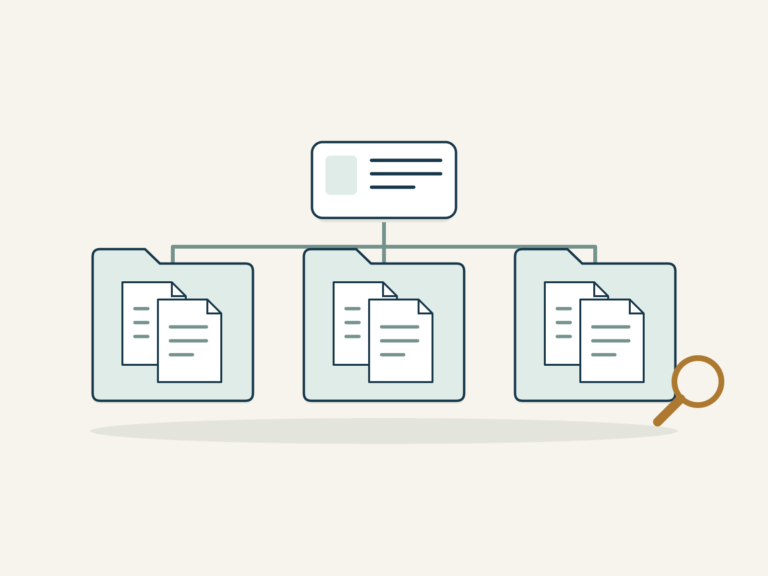
Overdraft Fee? Look Beyond the Online Bill Label
Compare three fictional document packets behind the same $60 ONLINE BILL entry, then identify what the records still leave unexplained.
Temporary Debit Credit: Reconcile What Stays and What Reverses
Follow a fictional $800 checking-account snapshot through three separate outcomes, then compare a $50 removal with reversing $300 and rebooking $250.