Hedge Funding Peaks
A matched terminal receipt does not specify the largest borrowing balance along the way. This fictional example connects both calculations using one price…
Estimated reading time: 4 minutes
A matched terminal receipt does not specify the largest borrowing balance along the way. This fictional example connects both calculations using one price path.
Define the isolated cash arrangement
A business will sell one unit at a final price of 8. A separate position starts at a price of 10 and pays cash equal to the previous price minus the new price at every observation. Thus a price increase requires a payment; a decrease produces a receipt. The two prices match exactly in this model.
The business also posts 2 of returnable collateral, locked separately until the end. That collateral never pays an interim settlement. There is no starting cash. An unlimited reusable loan finances the collateral and subsequent cash shortages. Every receipt first repays outstanding debt; any remainder stays available for later payments. The loan charges no interest or fees.
All amounts use the same monetary unit. There are no taxes, production costs, quantity differences, settlement failures or other cash flows. Prices and observations are stipulated, not forecasts. These unusually simple rules isolate funding arithmetic; they are not an actual broker’s margin policy or a credit offer.
Hold the endpoint fixed and change the route
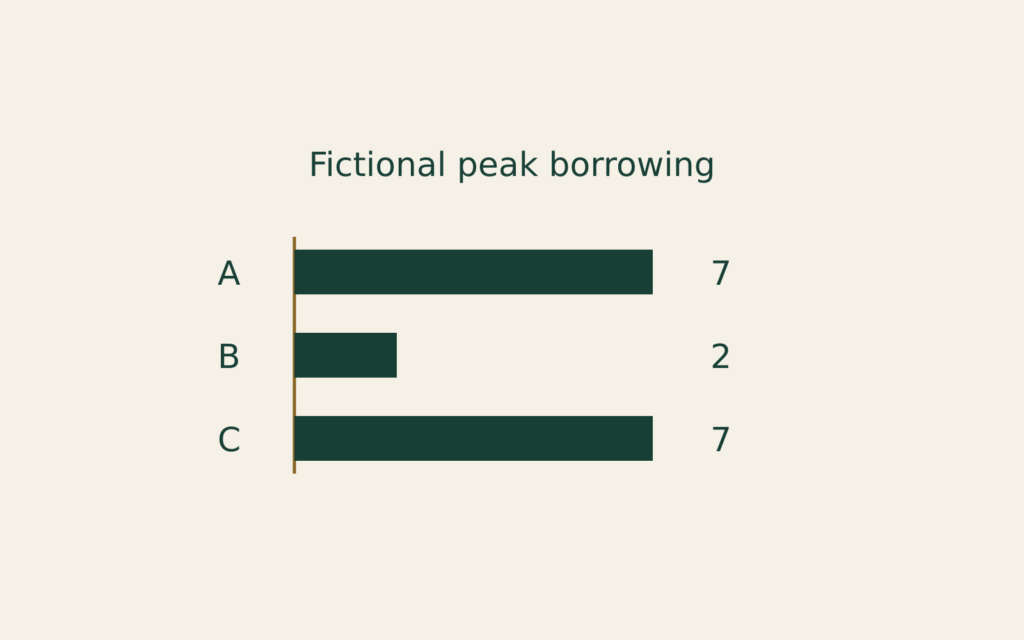
Path A is 10, then 15, then 8. Posting collateral creates an initial loan balance of 2. The rise to 15 requires a payment of 5, raising debt to 7. The fall to 8 produces a receipt of 7, which clears the loan. Its largest outstanding balance is therefore 7.
Path B is 10, then 9, then 8. The initial debt is again 2. Each price decrease produces a receipt of 1. Debt falls first to 1 and then to zero. Its largest outstanding balance is 2, even though both paths begin at 10 and end at 8.
At the end of either path, the business receives its collateral back and sells the unit. With the loan already repaid, it holds 2 + 8 = 10. The five-unit difference between the funding peaks has not created a difference in this final cash amount.
Explain why the terminal sum agrees
Write the observed prices as P₀, P₁, …, Pₜ. Adding the settlement receipts, with payments negative, gives (P₀ − P₁) + (P₁ − P₂) + … + (Pₜ₋₁ − Pₜ). Every intermediate price cancels. The result is P₀ − Pₜ, or 10 − 8 = 2 here.
Adding the sale receipt Pₜ leaves 10. Returned collateral is not another gain: posting and returning it cancel, as do borrowing and repaying principal. The final 10 is gross cash, not business profit.
Do not add every payment to the peak
Path C is 10, 15, 8, 12, 8. Its settlements are −5, +7, −4 and +4. Starting with the collateral borrowing, the successive debt balances are 2, 7, 0, 4 and 0. The receipts make previously borrowed capacity reusable under the stipulated arrangement.
The two negative settlements total 9. Adding the initial 2 would produce 11, but no observation requires 11 outstanding. The first receipt has extinguished the earlier debt before the second payment arrives. The peak is 7, just as in A. C nevertheless has more gross payment activity: 9 rather than 5.
Recover the balance from each observed price
Before collateral is returned, cumulative settlements through price P equal 10 − P. Subtracting this from the locked 2 gives net funding of P − 8. Under the repay-first rule, debt and retained cash cannot both be positive: any available cash would already have reduced the debt.
Consequently debt is max(P − 8, 0), while retained cash is max(8 − P, 0). Their difference is P − 8. For example, a price of 5 produces retained cash of 3, not negative debt. If the next price is 12, the required payment of 7 uses that 3 and borrows 4, exactly matching 12 − 8.
Include the initial price when finding the maximum. The largest price is 15 in A and C, giving peak debt of 7; it is 10 in B, giving 2. A hypothetical facility limit L of at least 2 suffices for this model precisely when every observed price is no greater than 8 + L.
Keep the model separate from actual terms
The CFTC describes performance bonds and marking positions to market. CME describes changing margin requirements with volatility. Those explanations do not establish the constant collateral and free financing stipulated here.
Customer Overlaps
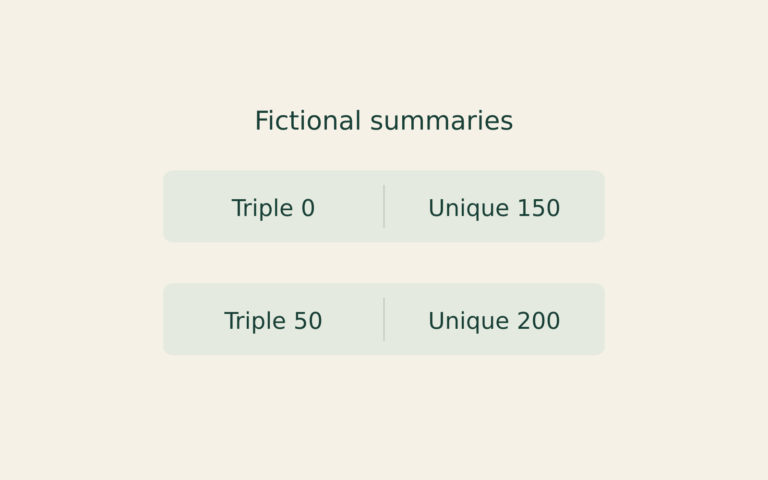
A business worksheet can contain every pairwise channel overlap yet still leave its unique-customer total unresolved.
Equity Returns
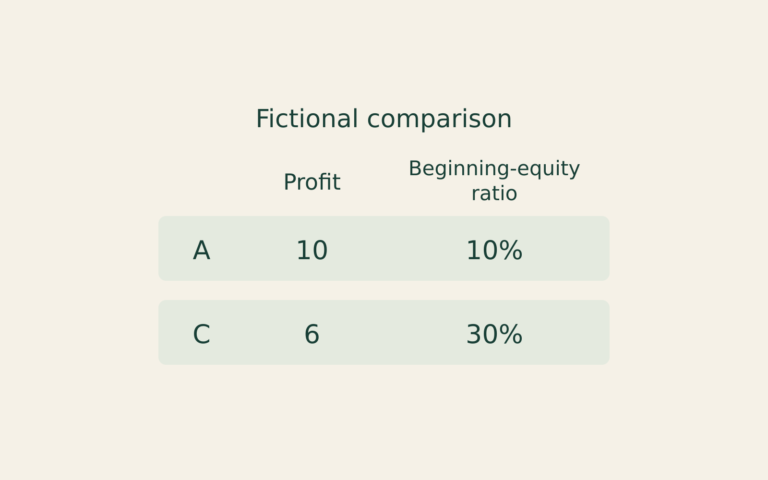
A higher profit-to-equity percentage need not mean more profit. This fictional comparison holds operations constant and then reverses the calculation.
Inventory Margins
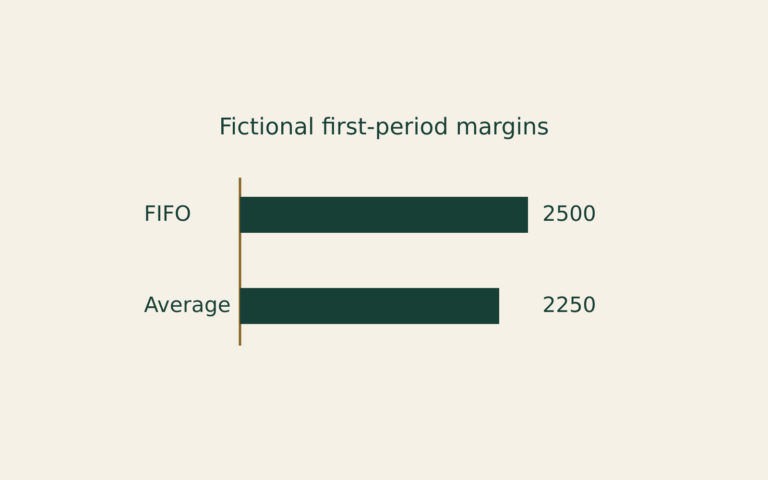
Two inventory reports can show different period margins even when purchases, sales and cash match.