Inventory Margins
Two inventory reports can show different period margins even when purchases, sales and cash match.
Estimated reading time: 5 minutes
Two inventory reports can show different period margins even when purchases, sales and cash match. A fictional two-period comparison isolates the cost assignment.
Keep the transactions identical
A business starts with no inventory. It buys 100 interchangeable units at 10 monetary units each, then another 100 at 20 each. It pays all 3,000 of purchase cost. During the first period it sells 150 units for 30 each and collects all 4,500. Fifty units remain. There are no other expenses, taxes, returns, losses, write-downs or financing transactions in this exercise.
We compare two cost assignments applied to those same transactions. FIFO assigns the earliest purchase costs to units sold first. Periodic weighted average pools the entire period’s available cost and units before allocating an average cost. These are cost assignments, not instructions about which physical unit leaves a shelf.
Assign the first period’s cost
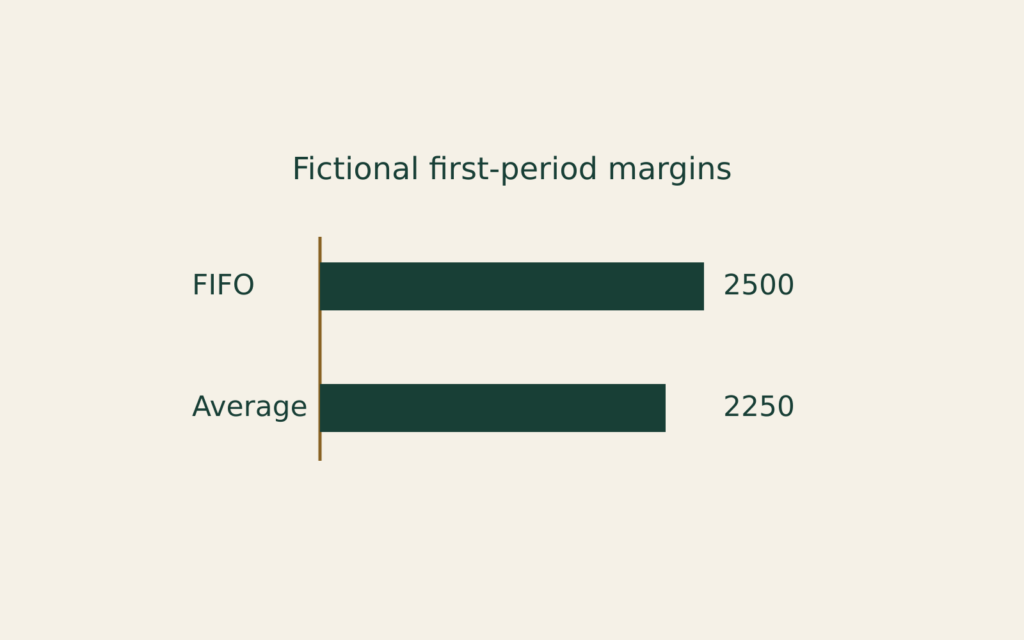
Under FIFO, the first 100 units sold receive the earlier cost of 10 each. The next 50 receive the later cost of 20. Cost assigned to the 150 units sold is therefore 100×10 + 50×20 = 2,000. The remaining 50 units carry the later cost: 50×20 = 1,000. Sales less assigned cost is 4,500−2,000 = 2,500.
Under periodic weighted average, available cost is 3,000 and available quantity is 200. The pooled cost is exactly 15 per unit. Assigning that amount to 150 sold units produces cost of 2,250; assigning it to the remaining 50 produces inventory carrying cost of 750. Sales less assigned cost is now 4,500−2,250 = 2,250.
The FIFO margin exceeds the average-cost margin by 250, and its ending inventory carrying amount also exceeds the other amount by 250. Neither report contains more physical stock: both describe 50 remaining units. Nor did either assignment create an additional receipt. Both versions have collected 4,500 and paid 3,000, leaving the same 1,500 net cash from these stipulated transactions.
Sell the remaining units
In the second period, assume no new purchases. Sell all remaining 50 units for the same price of 30 and collect the resulting 1,500. Under FIFO, their assigned cost is the 1,000 carried forward, leaving a second-period margin of 500. Under average cost, their assigned cost is 750, leaving a margin of 750.
The first-period advantage has reversed by exactly 250. Across both periods, FIFO reports margins of 2,500+500 = 3,000; average cost reports 2,250+750 = 3,000. All 200 units have now been sold, total sales are 6,000 and total purchase cost is 3,000. Ending inventory is zero under both versions. There is no unsold cost left to carry into another period.
Reverse only the purchase order
Now construct a separate control. Buy 100 units at 20 first and 100 at 10 second. Keep every purchase quantity, total purchase cost, sale quantity, selling price and cash amount unchanged. This is not an additional purchase in the earlier example; it replaces that example’s order of acquisition.
FIFO now assigns 100×20 + 50×10 = 2,500 to first-period sales. The final 50 units carry 500, so the first-period margin is 4,500−2,500 = 2,000. The average calculation remains 3,000/200 = 15: its first-period cost stays 2,250 and margin stays 2,250.
FIFO has moved from 250 above average cost to 250 below it, despite identical aggregate purchases and sales. Its own first-period margin changes by 500, from 2,500 to 2,000. In the liquidation period, FIFO’s margin becomes 1,500−500 = 1,000. Adding 2,000+1,000 again gives 3,000. Average cost still produces 2,250+750.
Locate the largest difference
For the original purchase order, let q be any integer quantity sold from 0 through 200. Up to 100 units, FIFO assigns cost 10q versus average cost 15q, so its margin advantage is 5q. From 100 through 200, FIFO assigns 1,000+20(q−100), making its advantage 1,000−5q. The gap reaches 500 at 100 sold units, then declines to zero at 200. Our 150-unit case lies halfway down that decline. More sales do not always shrink the gap: the first 100 increase it.
Explain why the totals reconcile
With no other adjustments, assigned cost of units sold plus cost carried in remaining inventory equals available purchase cost. Once every unit is sold, the remaining amount is zero. Cumulative sales less cumulative assigned cost must therefore equal total sales less total purchase cost.
Here that identity can be checked without estimating a resale value: the two original first-period splits are 2,000+1,000 and 2,250+750, both 3,000. The reversed-order FIFO split is 2,500+500, also 3,000. The second period exhausts the second term in each split. None of those carrying amounts is a prediction that the remaining stock could be sold for precisely that amount.
Read the method with the period
OpenStax’s periodic-inventory explanation describes these cost-allocation methods. This exercise uses period-end pooling, not a moving average recalculated between sales. It does not select an accounting policy, establish tax treatment or turn a reported margin into cash available for loan payments.
Customer Overlaps
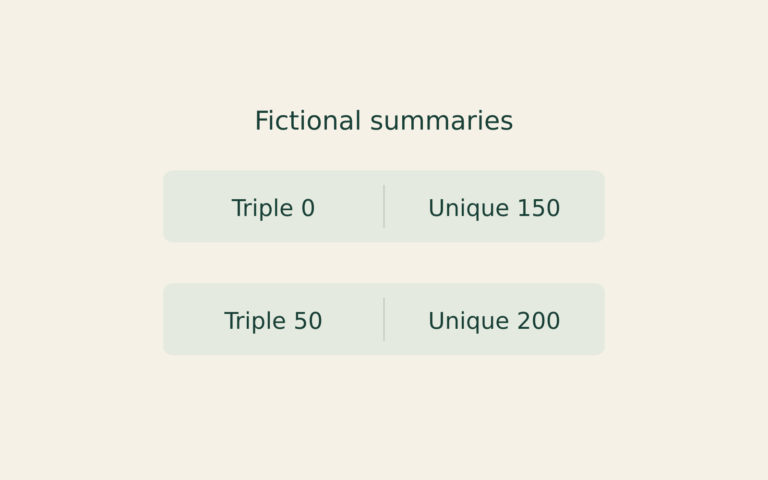
A business worksheet can contain every pairwise channel overlap yet still leave its unique-customer total unresolved.
Equity Returns
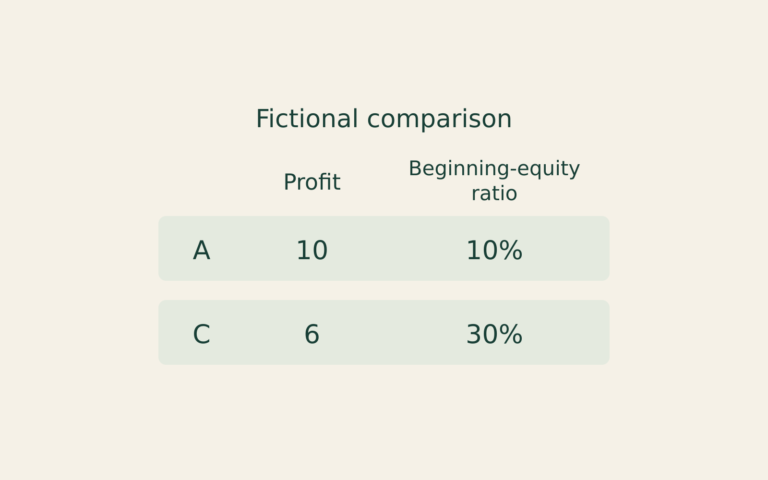
A higher profit-to-equity percentage need not mean more profit. This fictional comparison holds operations constant and then reverses the calculation.
Hedge Funding Peaks
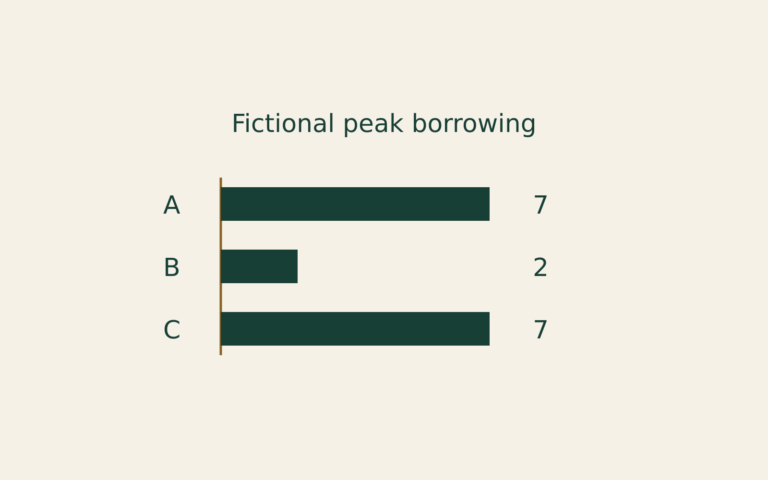
A matched terminal receipt does not specify the largest borrowing balance along the way. This fictional example connects both calculations using one price…